
Shanghai · China · Visited June 2025
Steel Spires and Red Lanterns: My June Weekend in Shanghai
100% real visits · photos we took ourselves
The photos in this story were taken by the World by City team on this trip. No AI images, no stock photos. Taken June 20, 2025 – June 22, 2025 (18 photos, 18 with location data).
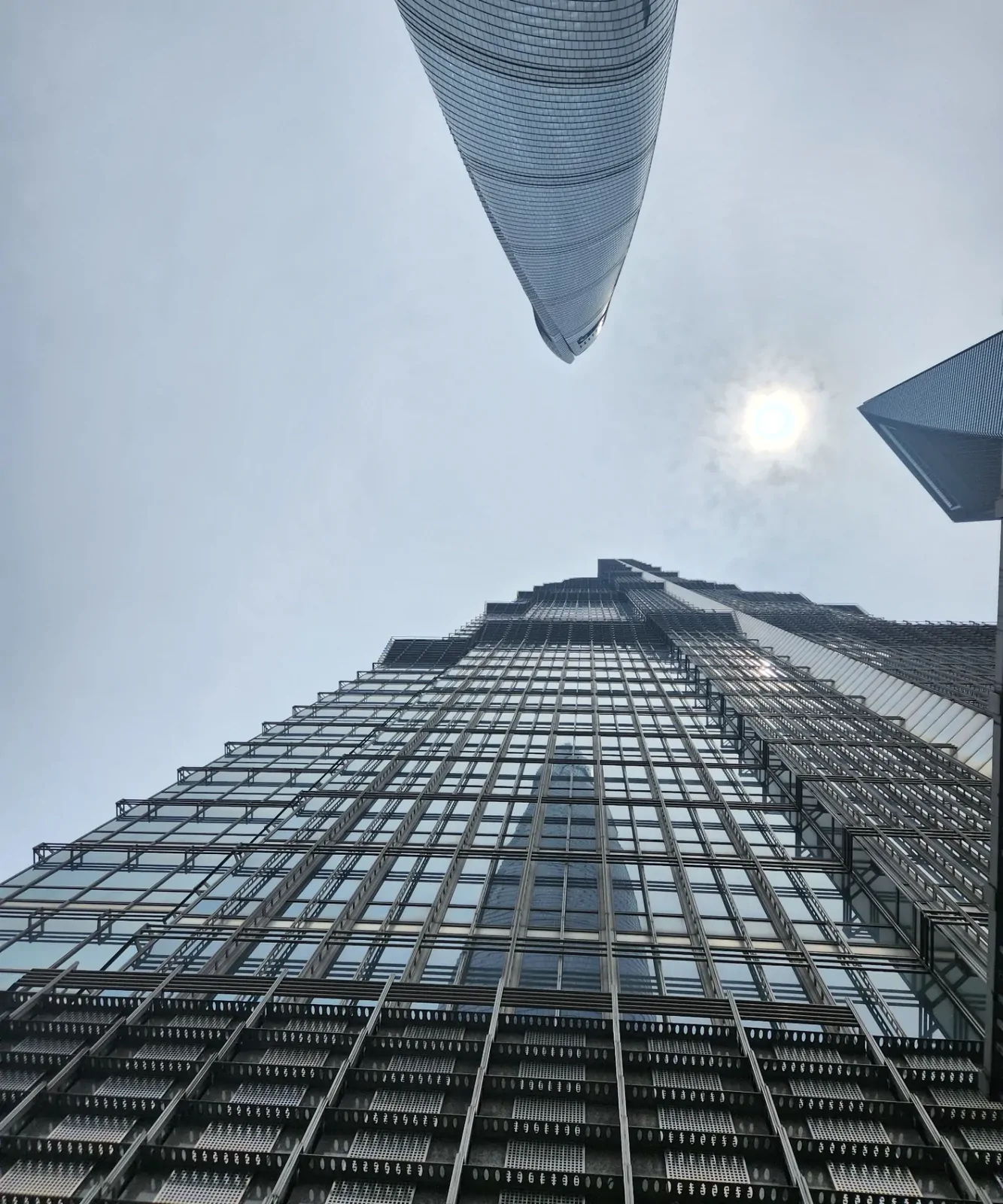
I arrived in Shanghai on a humid June afternoon, immediately feeling the sheer scale of the city. My goal for this short trip was to experience the tension between the hyper-modern skyline and the traditional echoes of the past. The air was thick, and the sky was a muted grey, but the energy of the streets was undeniable. I spent my first few hours simply looking up, trying to comprehend how humans could build structures that seemed to pierce the clouds.
The Vertical World of Lujiazui
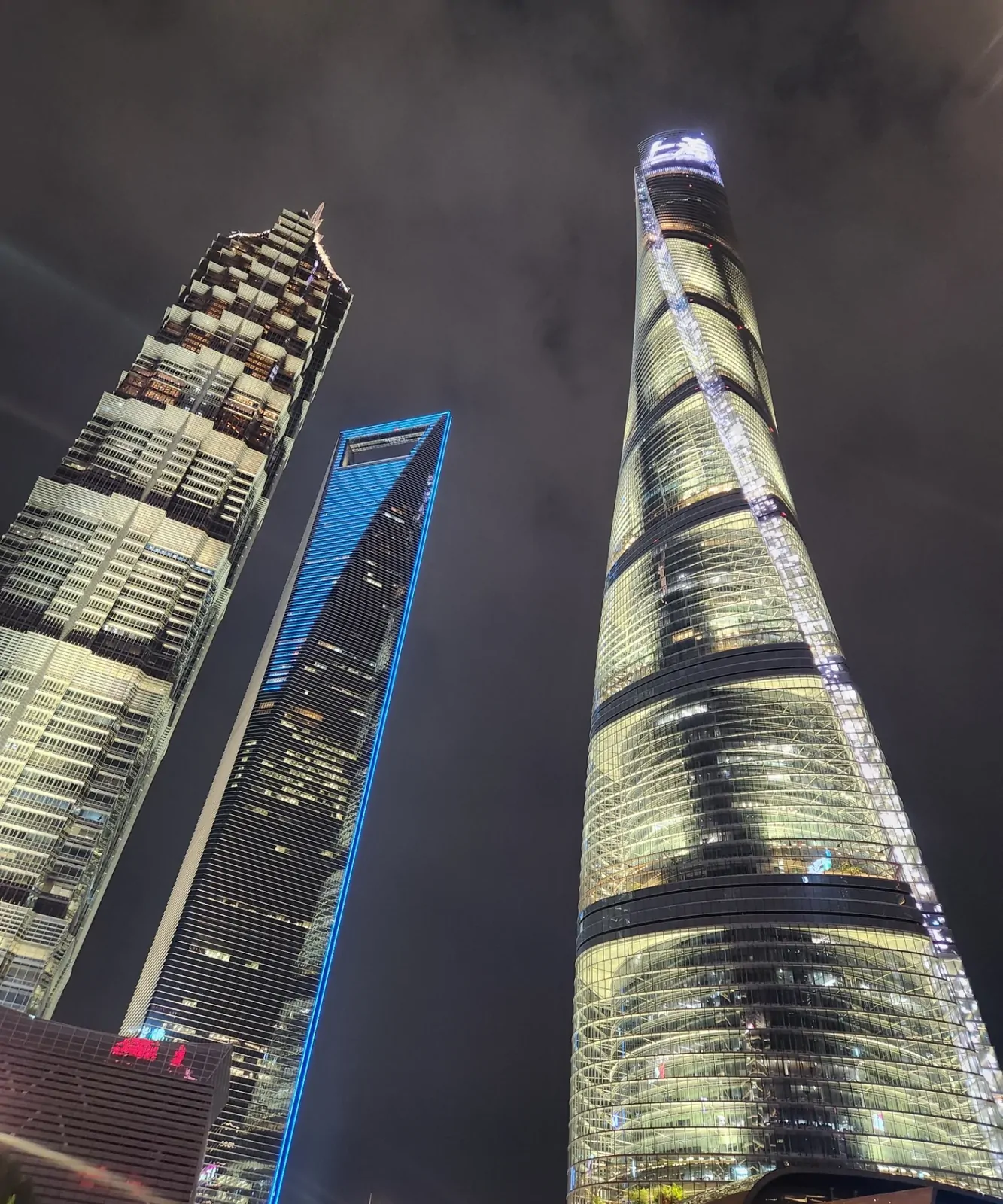
My first stop was the Lujiazui financial district, where the architecture feels less like buildings and more like sculptures of glass and steel. I stood at the base of the Shanghai Tower, tilting my head back until my neck ached, watching the curved glass walls spiral upward into the haze. The perspective from the street level is humbling; the buildings don't just tower over you, they seem to lean in, creating a canyon of corporate power. I spent a long time just observing the way the light hit the glass surfaces, reflecting the grey sky in a way that made the towers look almost translucent.
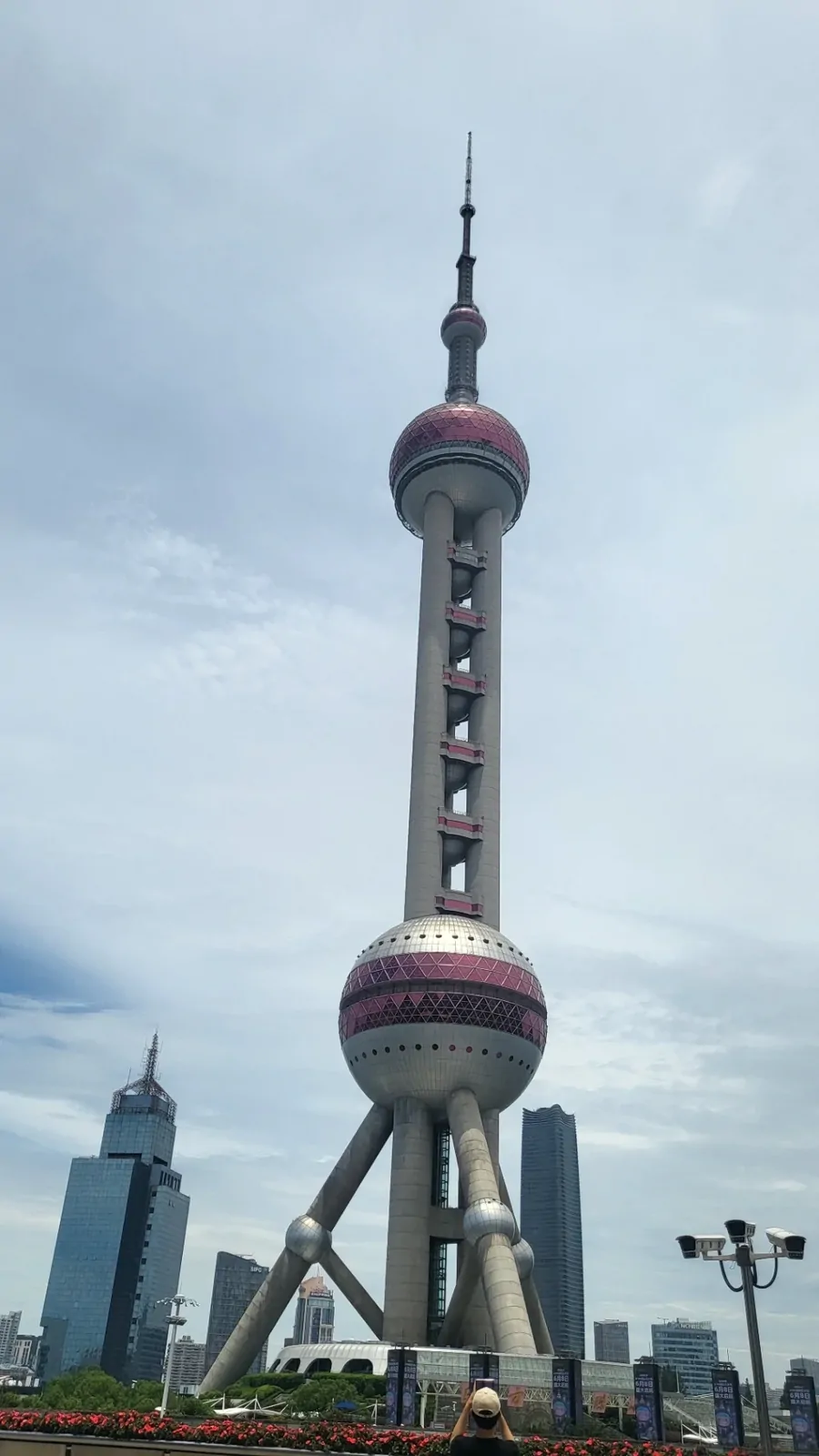
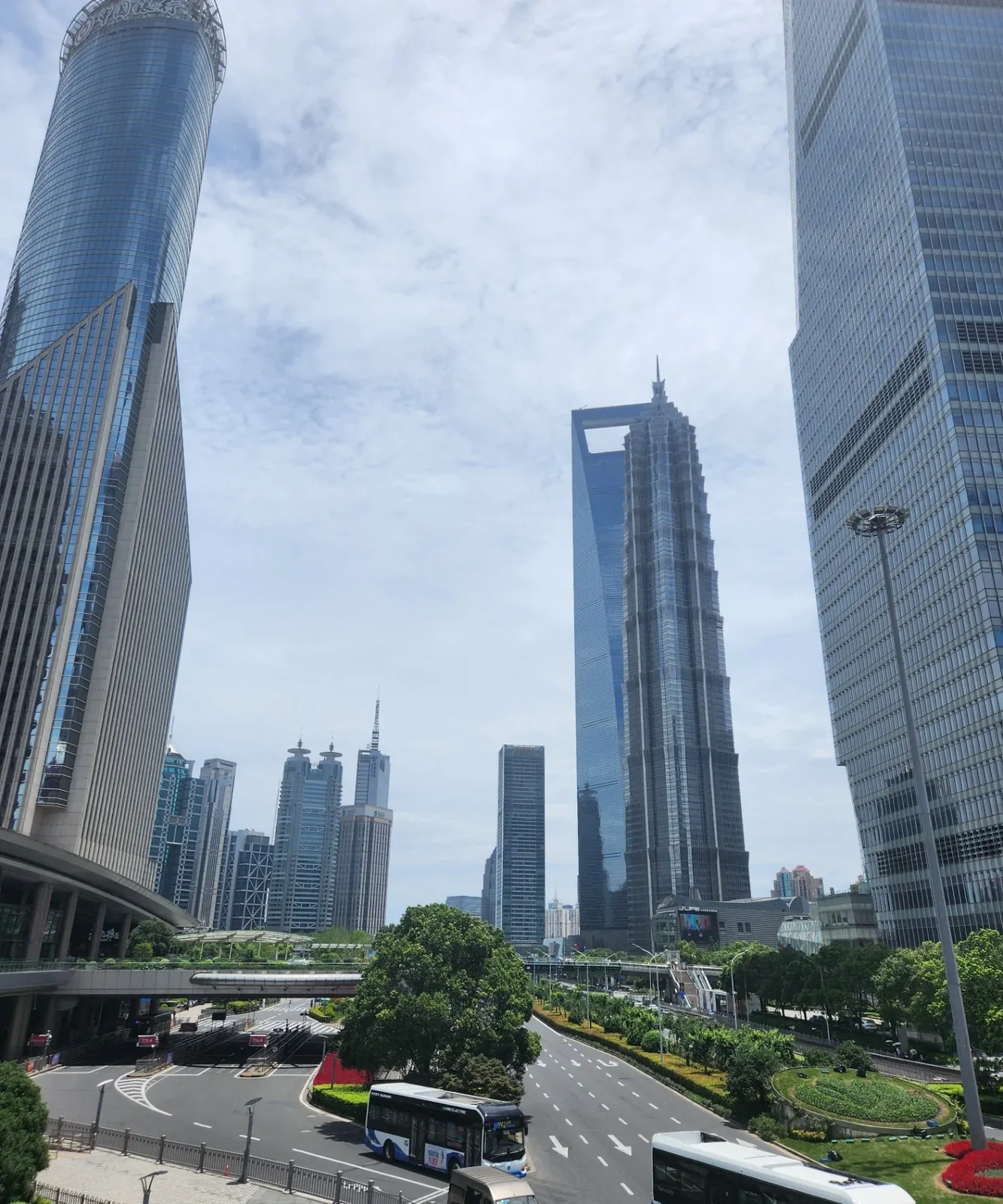
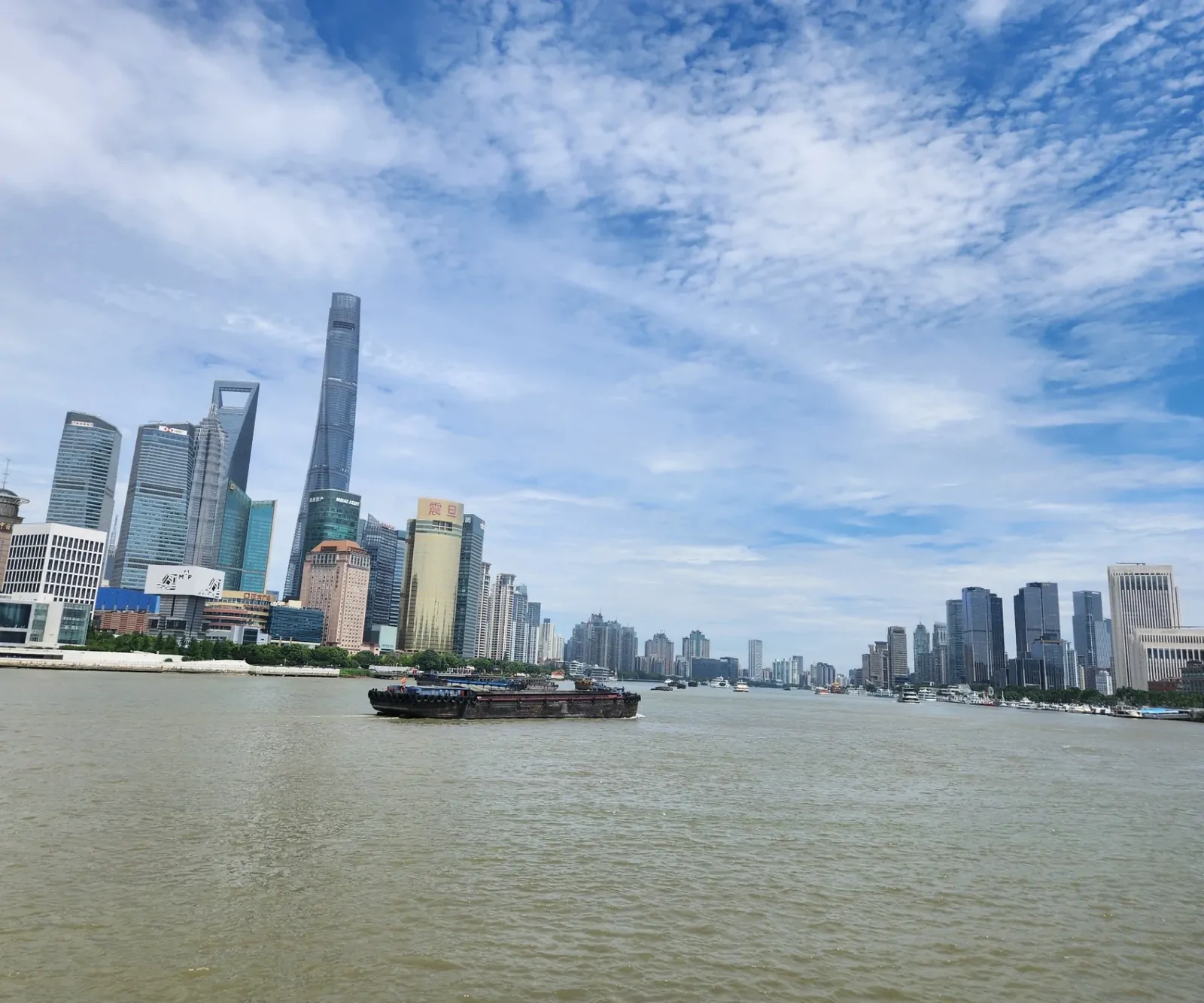
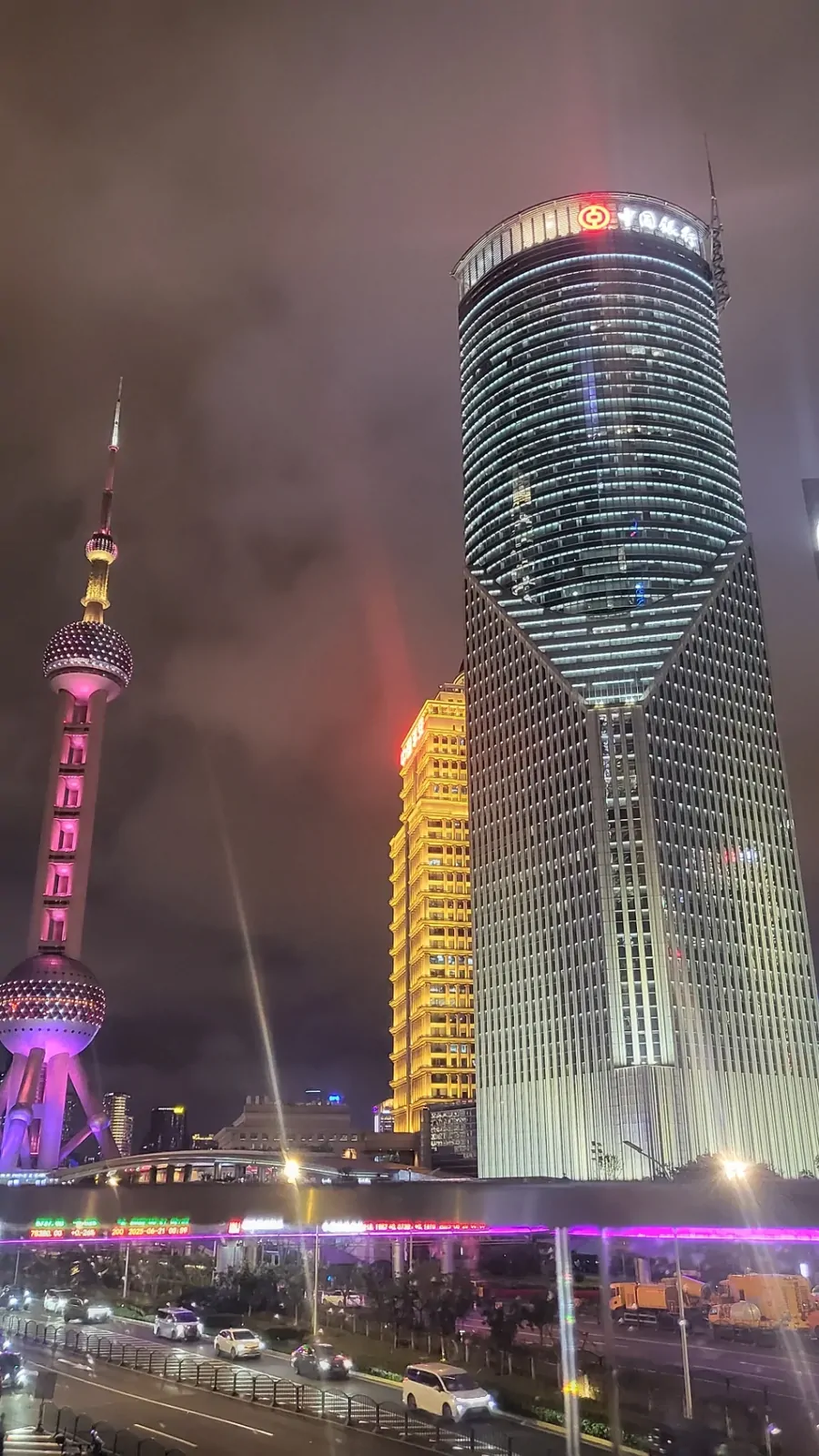
As I walked further into the district, I encountered the Oriental Pearl Tower. Under the overcast sky, its distinct spheres looked like giant pearls strung together, standing as a sentinel over the city's modernization. I watched the city's rhythm from the roadside, where buses navigated the wide lanes between these giants. Later, I crossed over to the Huangpu River, where I watched heavy barges slowly drift through the water. From the riverbank, the Pudong skyline looked like a futuristic city from a movie, a dense cluster of skyscrapers that redefined my understanding of an urban horizon.
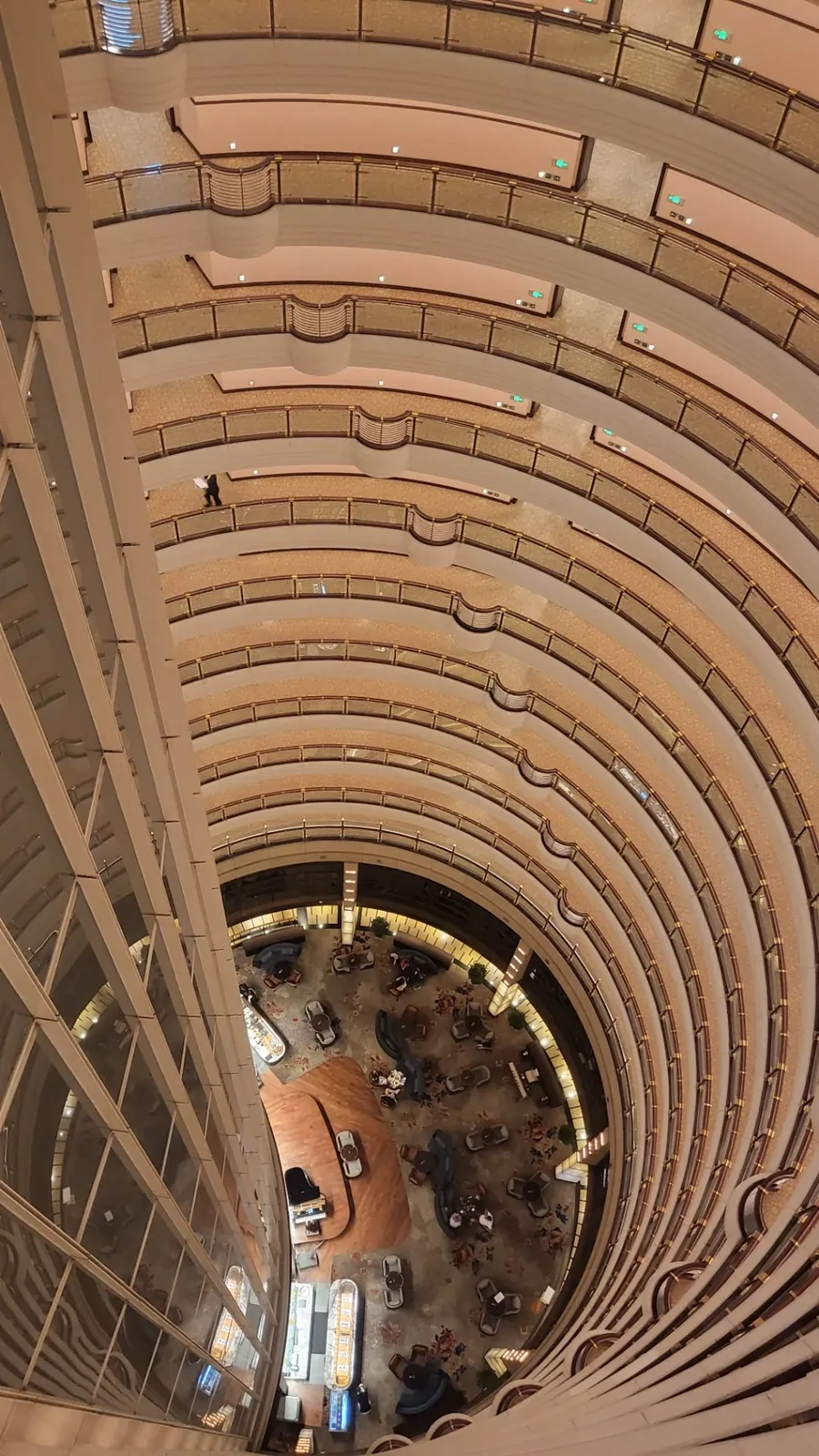
To get a different perspective, I stepped inside the Jin Mao Tower. Looking down into the atrium, I was struck by the spiral architecture that mirrored the exterior's traditional Chinese influence but executed in modern materials. The way the floors stacked in a twisting pattern created a dizzying sense of depth. By the time night fell, I returned to the district to see the transformation. The Shanghai World Financial Center, the Jin Mao Tower, and the Shanghai Tower all lit up simultaneously, turning the skyline into a glowing forest of light that dominated the night sky.
Red Lights and Ancient Eaves
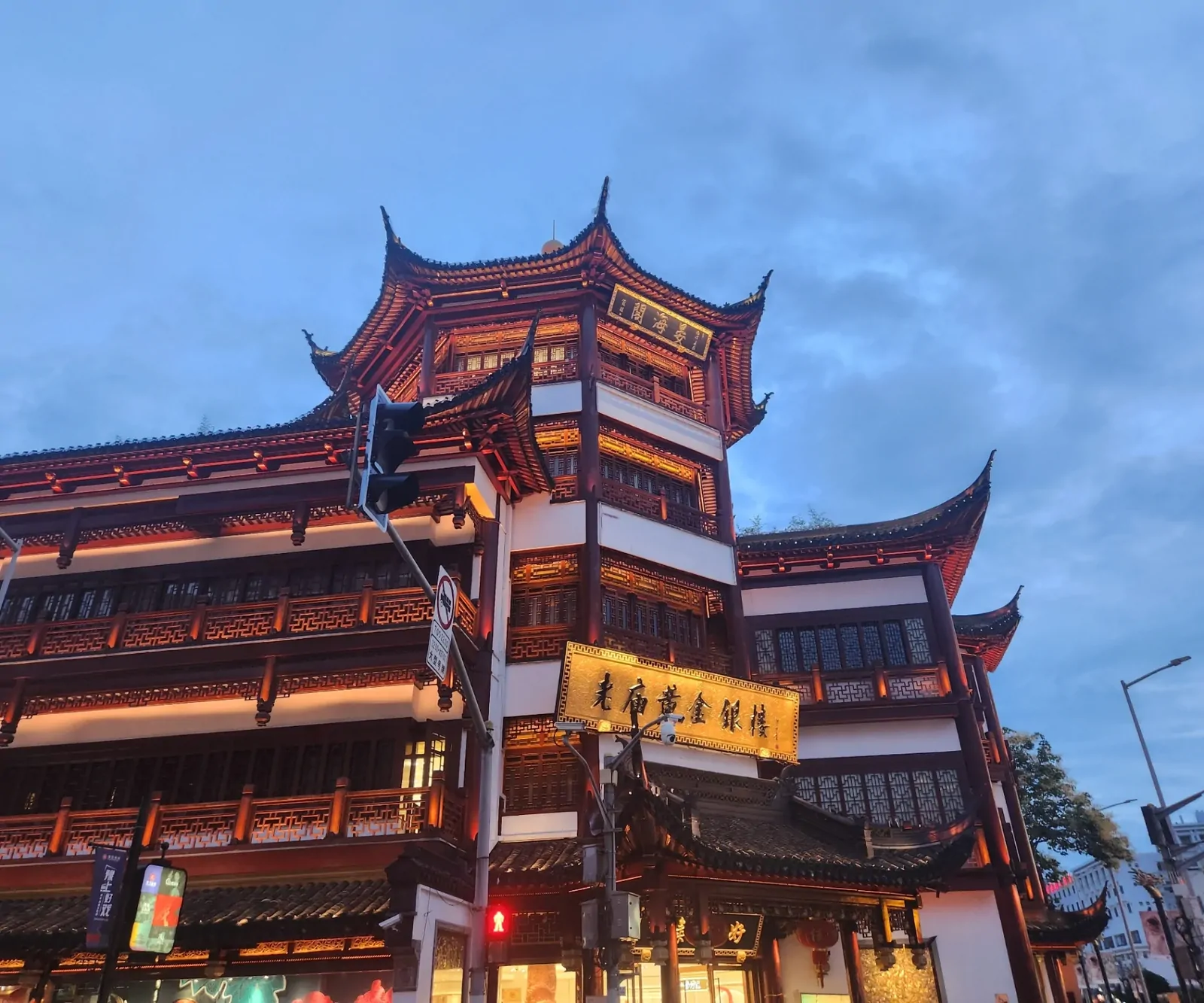
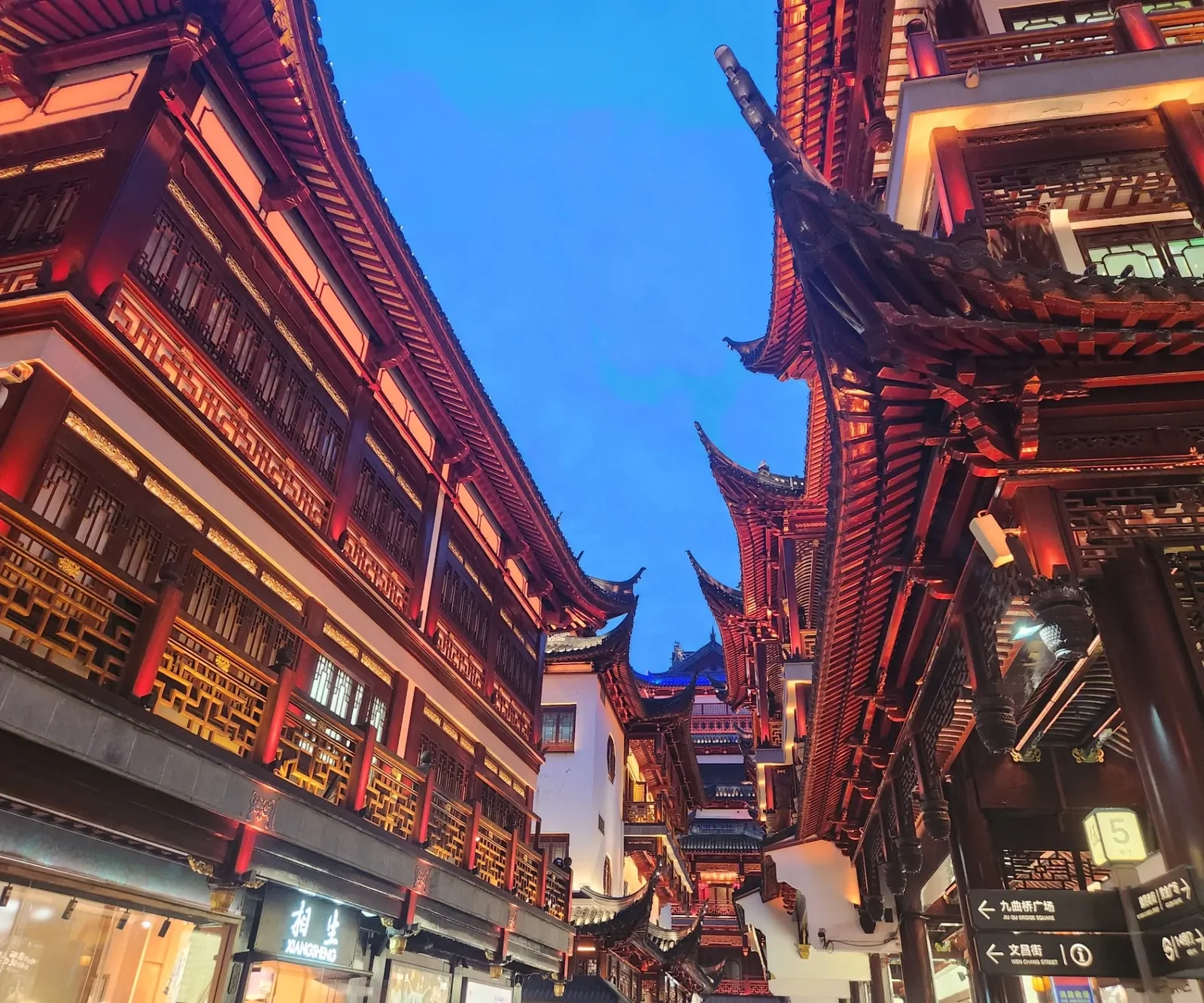
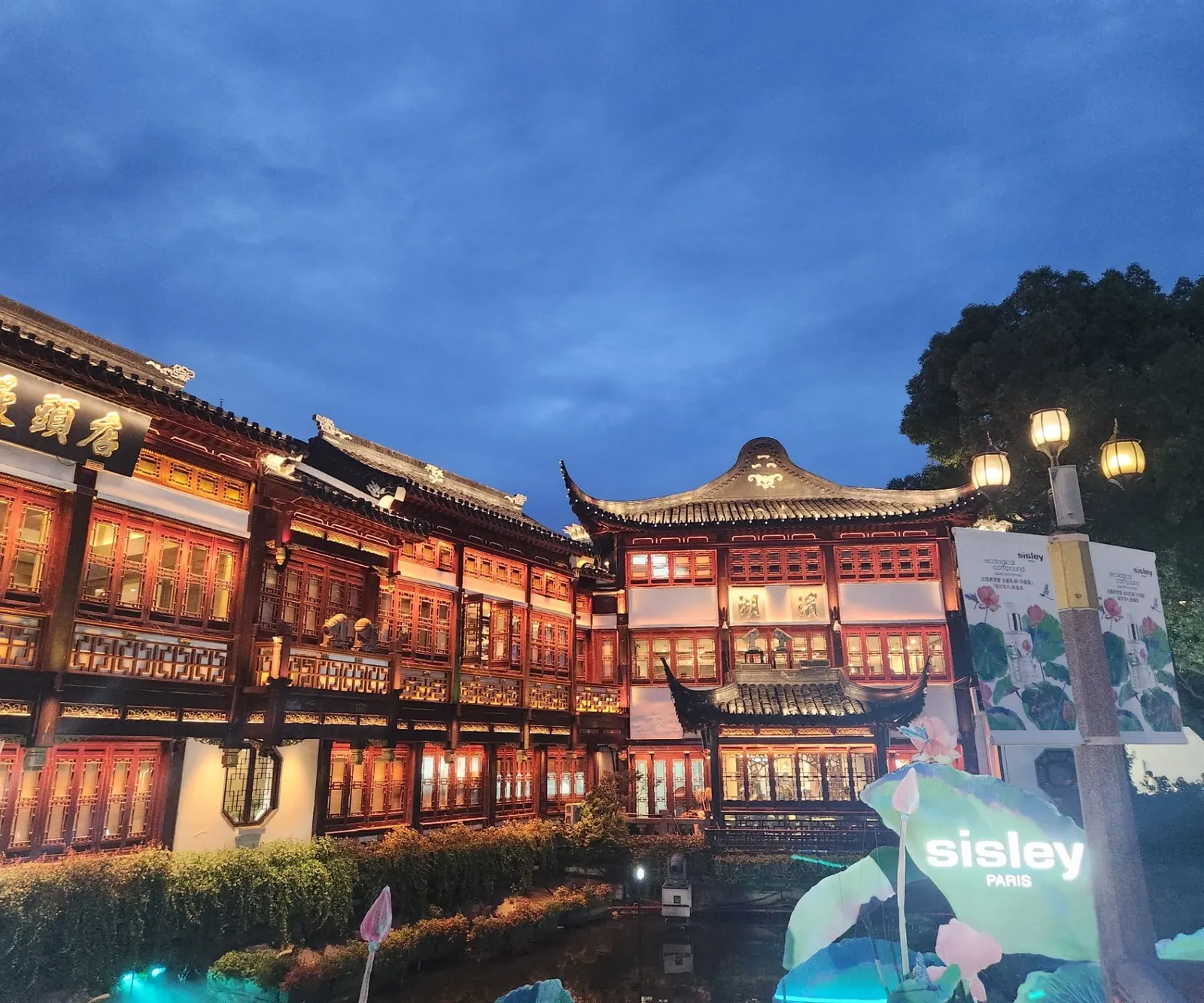
Seeking a contrast to the steel of Pudong, I headed toward the area around Yu Garden as evening approached. The transition was jarring but welcome. Instead of glass, I found myself surrounded by traditional Chinese pavilions and wooden structures. As the sun set, the area began to glow with an intense, warm light. The traditional pavilions were illuminated from below, casting long shadows and highlighting the intricate carvings of the eaves. The atmosphere shifted from the corporate efficiency of the morning to something far more romantic and mysterious.
I spent an hour wandering the narrow streets, looking up at the red-lit eaves that seemed to float against the darkening sky. The red lighting was pervasive, turning the wooden beams and tiled roofs into a vivid, crimson landscape. I noticed how the light played off the textures of the old wood and stone, making the buildings feel alive. It was a sensory overload of a different kind—not the scale of the skyscrapers, but the density of the detail and the richness of the color. The contrast between the red glow of the garden area and the distant blue-white lights of the financial district felt like a conversation between two different eras of the city.
History and Flavors of the City
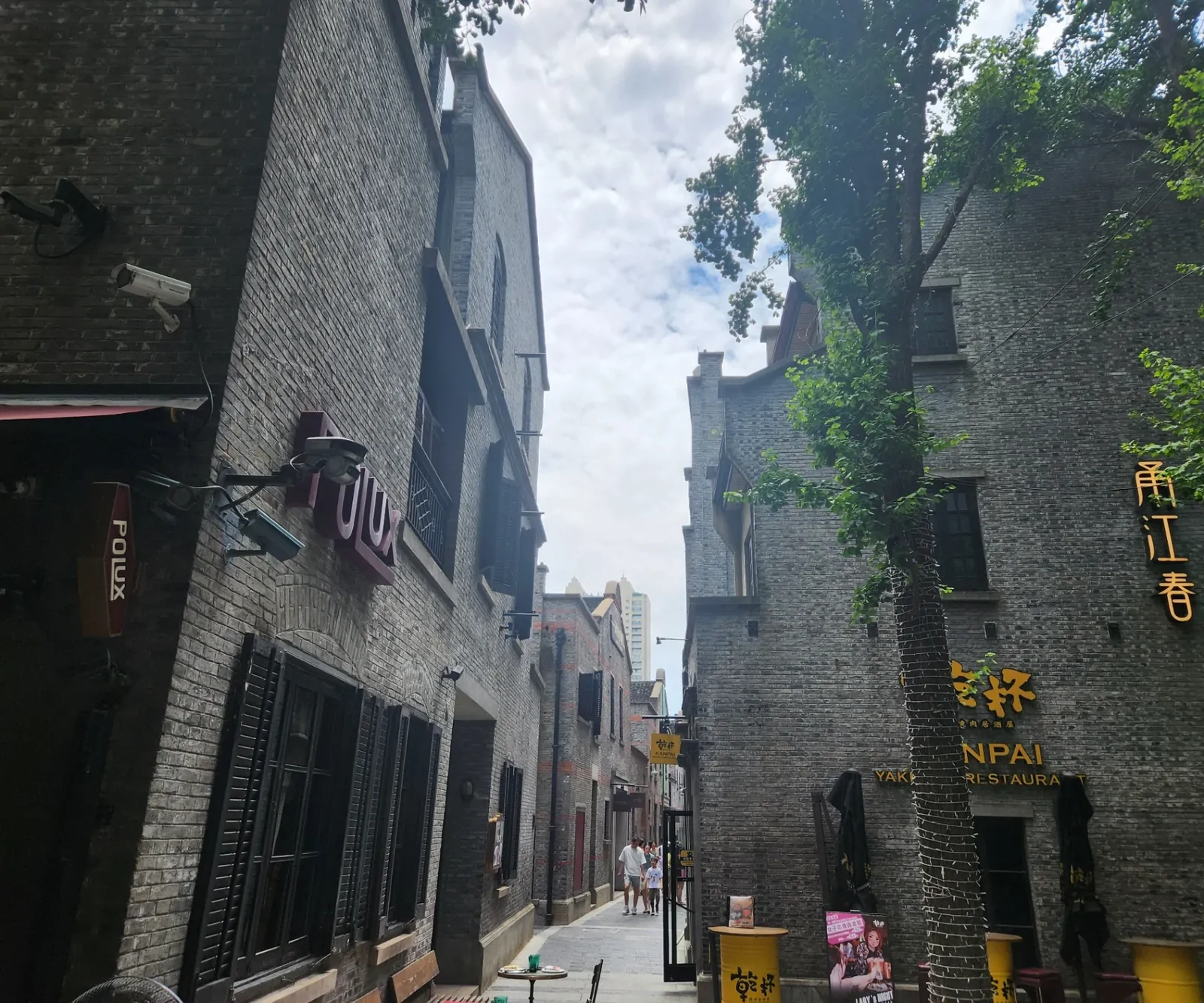
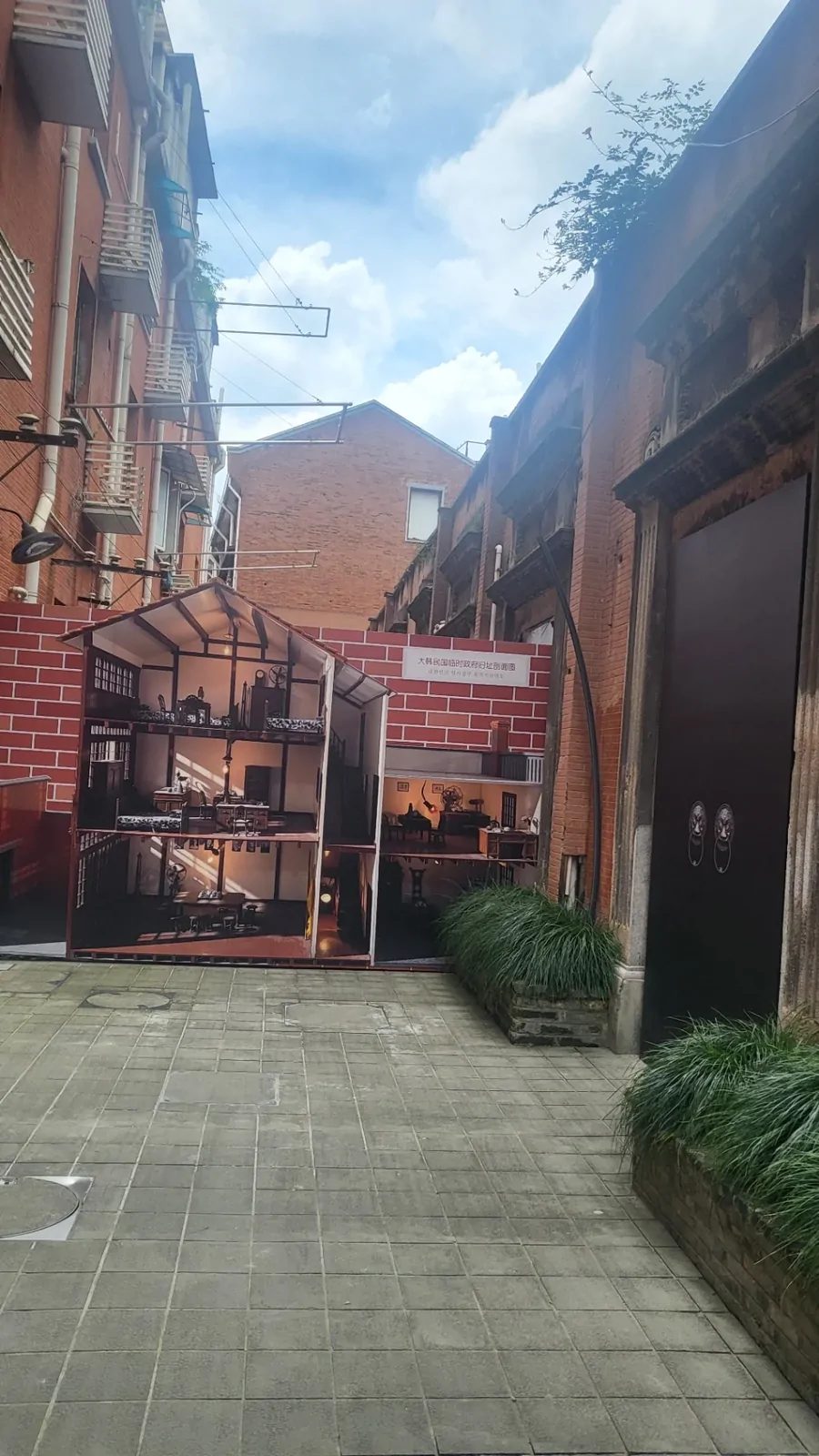
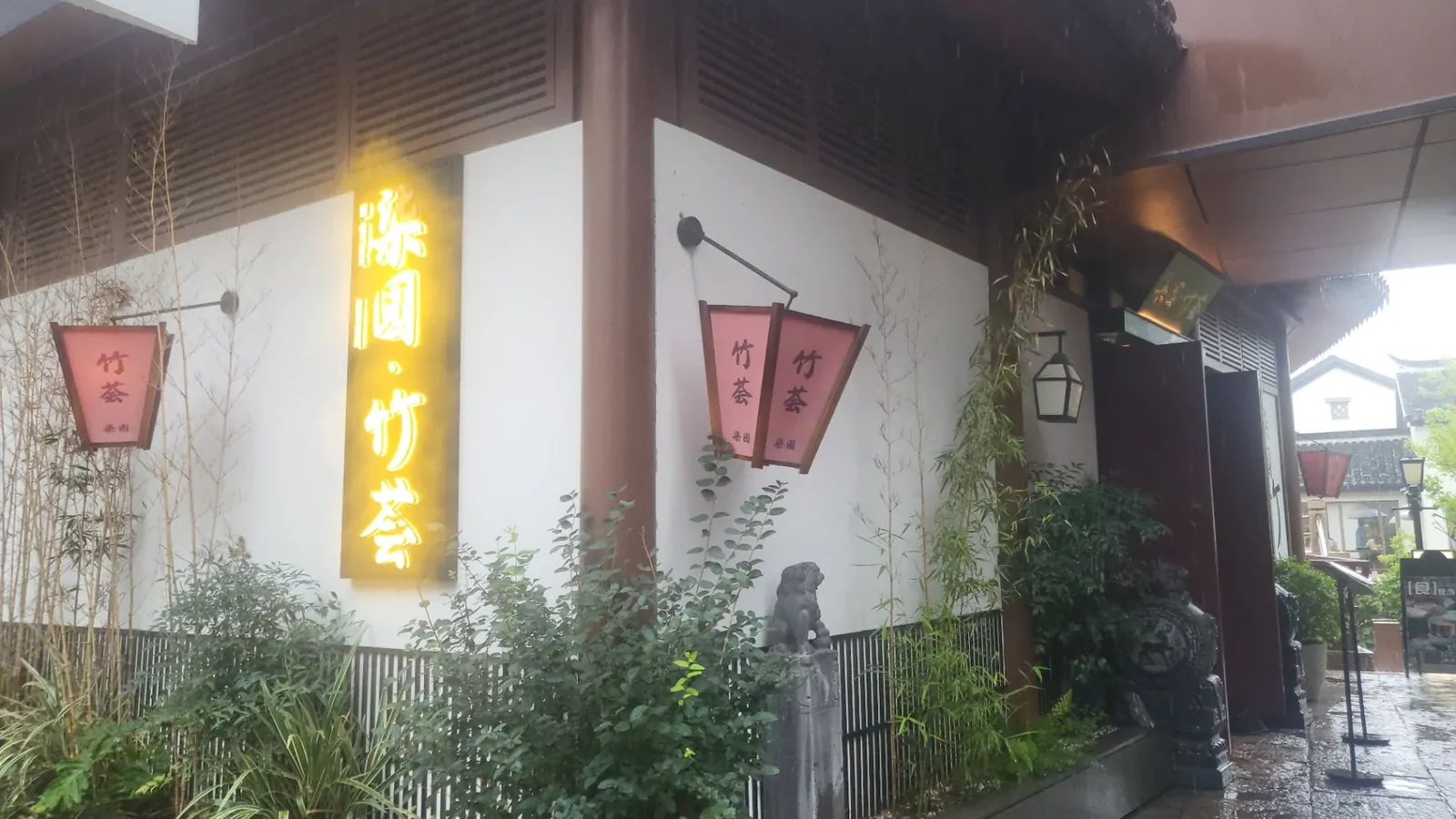
The second day took me into the quieter, more reflective parts of the city. I spent some time exploring a traditional commercial street characterized by grey brick alleys. The narrow paths were lined with small cafes and restaurants, their signs hanging low over the cobblestones. I found a particular spot with red brick walls where a small house-shaped sculpture had been installed, adding a whimsical touch to the urban landscape. Walking through these alleys felt like stepping away from the global city and into a local neighborhood where life moved at a slower, more human pace.
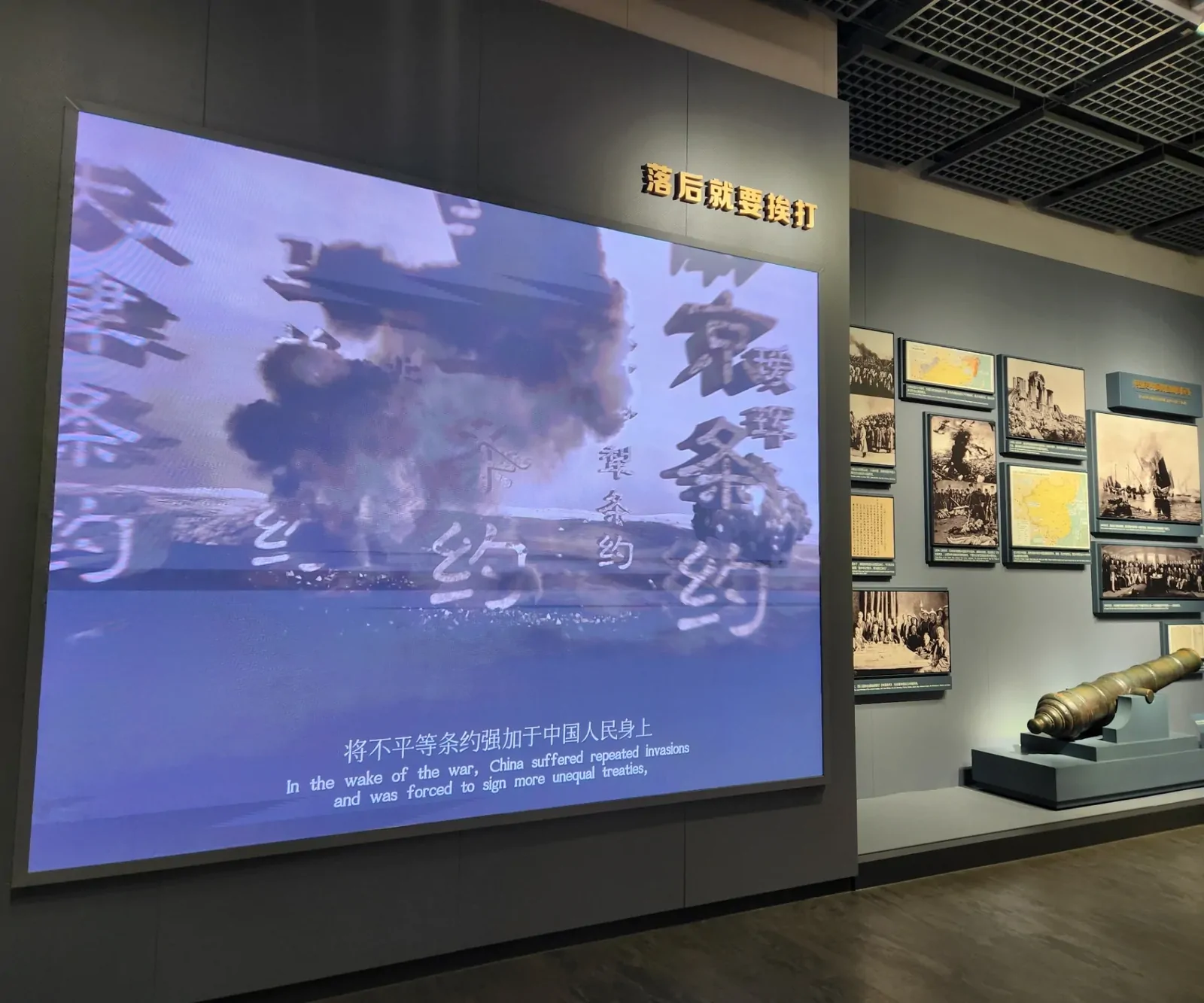
My afternoon was spent in a museum of modern and contemporary history. I stood before a massive screen and a series of photo panels detailing the history of unequal treaties. The scale of the exhibition was imposing, using large-scale visuals to convey the weight of the past. It provided a necessary context to the city I was seeing; the skyscrapers of today were built upon a complex and often painful history. The silence of the museum gallery was a sharp contrast to the noise of the streets outside, allowing me to process the images of a city in transition.
Dinner that night was a highlight: a visit to Haidilao. I spent a good amount of time at the self-service sauce bar, fascinated by the variety of ingredients and the freshness of the vegetables on display. The process of customizing my own dipping sauces became a ritual, a small culinary experiment before the hot pot arrived. It was a chaotic, social environment that felt quintessentially modern Chinese—efficient, generous, and focused on the communal experience of eating.
Rainy Farewells and Blue Lights
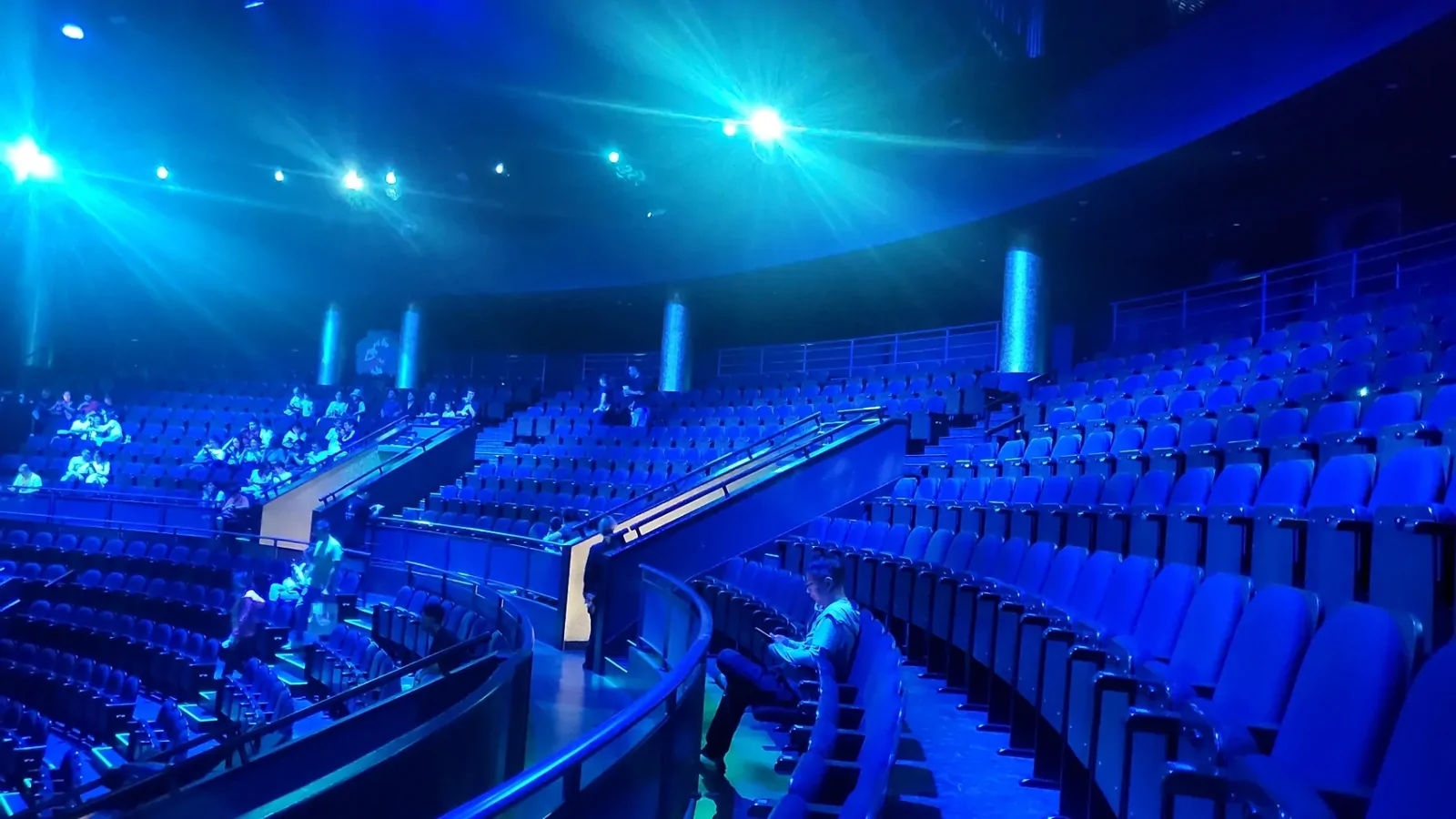
On my final day, the weather shifted, and a steady rain began to fall over Shanghai. I started the day inside a large performance venue. The interior was bathed in a deep blue light, with curved seating that swept around the stage like a wave. The atmosphere was expectant and quiet, the blue illumination creating a cool, serene mood before the performance began. The architectural curves of the hall reminded me of the Shanghai Tower, showing that the city's obsession with fluid lines extended even into its interior spaces.
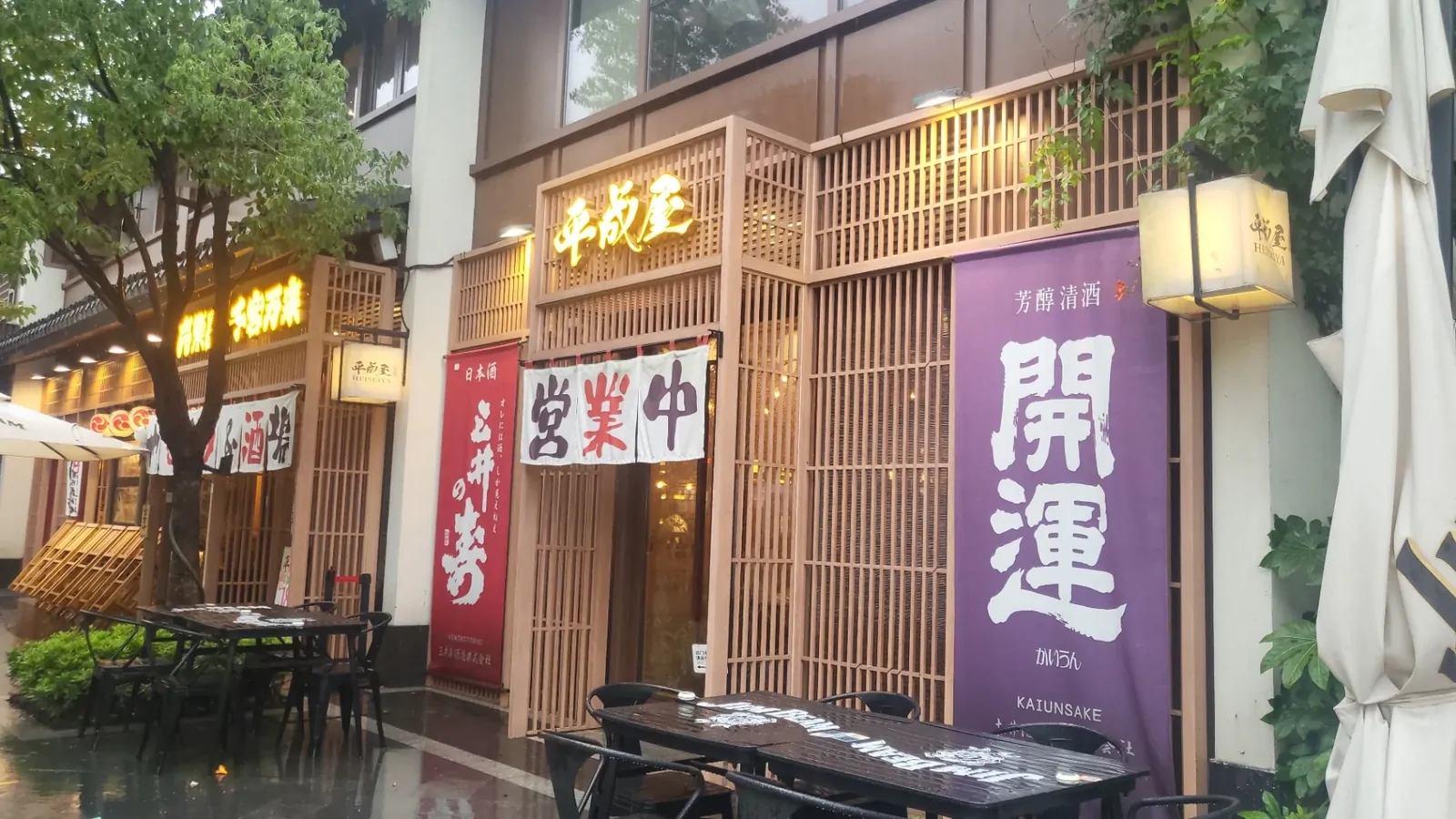
As I left the venue, the rain had intensified, turning the streets into mirrors. I wandered into a district with a strong Japanese influence, where izakayas lined the narrow roads. I watched the rain fall on the 'noren' curtains hanging at the entrances of the shops, some open for business and others closed. The glowing signs of the restaurants reflected in the puddles on the ground, creating a blurred, neon-lit version of the street. The sound of the rain hitting the awnings and the sight of the damp pavement gave the neighborhood a melancholic, cozy feeling.
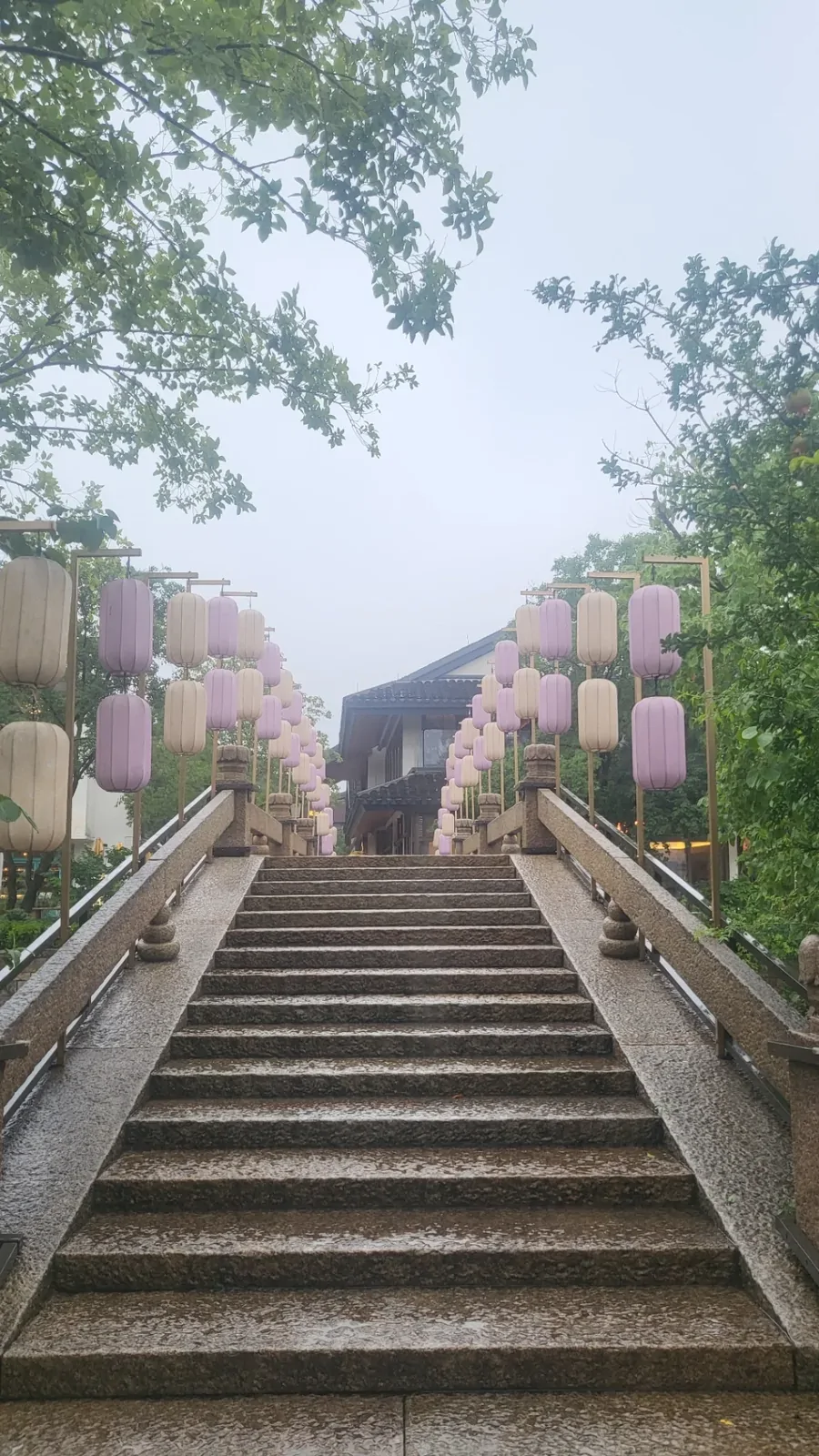
My trip ended at a temple, where the rain had brought a thick mist. I climbed the stone stairs, passing under rows of pastel-colored lanterns that glowed softly through the fog. The combination of the grey sky, the damp stone, and the soft colors of the lanterns created a deeply atmospheric scene. It was a quiet, meditative end to a trip that had begun with the loud, towering ambition of the financial district. Standing there in the rain, I felt the city's duality—the drive for the future and the longing for the spiritual and traditional.
Reflections on the Journey
- The Scale: I underestimated how much walking is involved in Lujiazui; next time, I would plan more breaks to actually sit and observe the architecture rather than just rushing between towers.
- The Weather: The rain on the final day actually improved the experience of the smaller alleys, making them feel more intimate. I'd recommend visiting the traditional districts during a light rain for the best atmosphere.
- The Pace: Balancing the high-energy tourist spots like Yu Garden with the quiet of the history museum was key to not feeling overwhelmed by the city's intensity.
17 photos

Pick your dates — we'll search Shanghai hotels for you
Choose dates and guests, and the buttons below will open search results with your criteria. Prices differ between sites, so compare before you book.
 View on Booking.com
 View on Hotels.com
Things to see in Shanghai
See all →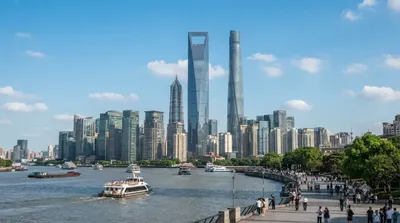
Views & landmarks
Shanghai World Financial Center
A 494-meter skyscraper in Shanghai's Pudong New Area, a landmark that defines the city's skyline. Its observation deck offers a sweeping view of the entire city.
Views & landmarks
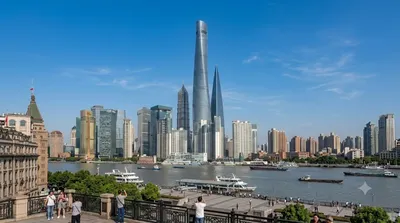
Shanghai Tower
A towering skyscraper in Shanghai's Pudong New Area, standing 632 meters tall with 128 floors. From this world-class high-rise, visitors can look down over Shanghai's skyline.
Views & landmarks
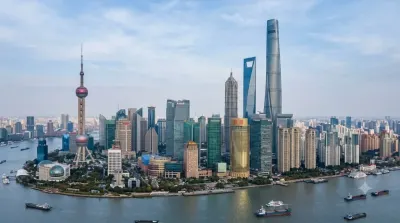
Jin Mao Tower
Jin Mao Tower is a skyscraper in Lujiazui, Pudong, Shanghai, standing 421 meters tall with 88 floors. Completed in 1998, it offers sweeping views over the city center.
Museums & galleries
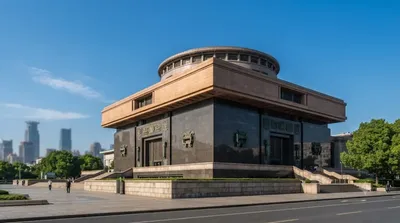
Shanghai Museum
The Shanghai Museum, near People's Square, is the city's leading museum and easy to reach from downtown. It's a great place to see Shanghai's premier collection.
More visit stories
 Real visit
18 photos
Real visit
18 photos
Hong Kong ·March 2024
Foggy Peaks and Quiet Temples: My March Weekend in Hong Kong
From the neon lights of the harbor to the misty heights of Lantau Island, a short journey through the contrasts of Hong Kong.
W World by City Editorial
 Real visit
18 photos
Real visit
18 photos
Sokcho and Gangwon ·December 2025 – July 2026
Between Snow and Summer: My Two Visits to Gangwon
A journey through the contrasting seasons of Sokcho and Gangwon, from winter snows to the emerald waters and high pastures of July.
W World by City Editorial
 Real visit
18 photos
Real visit
18 photos
Cebu ·January 2025
Between Emerald Waters and Ancient Stones: My Days in Cebu and Bohol
A journey from the white sands of Mactan to the rolling hills of Bohol, capturing the quiet moments and grand moments of the Visayas.
W World by City Editorial
 Real visit
18 photos
Real visit
18 photos
Sydney ·May 2026
Autumn Winds and Coastal Cliffs: My Four Days in Sydney
A personal journey through Sydney's shifting weather, from the crashing waves of Bondi Beach to the ancient sandstone of the Blue Mountains.
W World by City Editorial
Have you been to this city?
Share your visit story with photos you took yourself. Once checked, it goes into the Magazine.
Share your visit story