
Dar es Salaam · Getting around
How to navigate public and private transport in Dar es Salaam
August 29, 2026 · last updated · about 4 min read
City Transport Overview
Dar es Salaam is a sprawling coastal hub where transport is defined by high traffic density and a mix of informal and formal systems. The city's layout makes point-to-point transit challenging during peak hours.
Primary Modes of Transport
- Ride-Hailing Apps: The most reliable option for visitors. These apps provide transparent pricing and GPS tracking, winning on safety and convenience for those unfamiliar with local routes.
- Daladalas: These are minibus taxis that follow set routes. They are the most affordable way to move across the city but can be crowded and lack fixed schedules.
- Bajajis: Three-wheeled motorized rickshaws. They win for short distances and navigating narrow streets or heavy congestion where cars cannot move.
- BRT (Bus Rapid Transit): Dedicated lanes for high-capacity buses. This is the fastest way to traverse the main arterial roads, bypassing some of the city's notorious traffic.
Airport to City Center
Arrivals at Julius Nyerere International Airport (DAR) have several options:
- Ride-Hailing: Moderate effort and cost. Offers door-to-door service and is generally preferred for luggage convenience.
- Airport Taxis: High cost, low effort. Available immediately upon exit, though fares are typically higher than app-based services.
- Public Bus: Low cost, high effort. Requires navigating transfers and is not recommended for those with heavy luggage.
Practical Transit Notes
- Rush Hours: Traffic peaks heavily in the mornings and evenings, particularly on roads leading into the Central Business District (CBD). Travel times can double during these windows.
- Luggage: Daladalas and Bajajis have very limited space. For any significant luggage, a dedicated car or ride-hailing vehicle is necessary.
- Accessibility: Most local transport, including Daladalas and older buses, is not wheelchair accessible. The BRT system offers better infrastructure but varies by station.
- Last Services: While Bajajis operate late, formal bus services wind down in the evening. Ride-hailing remains the most viable late-night option.
Pick your dates — we'll search Dar es Salaam hotels for you
Choose dates and guests, and the buttons below will open search results with your criteria. Prices differ between sites, so compare before you book.
 View on Booking.com
 View on Hotels.com
Things to see in Dar es Salaam
See all →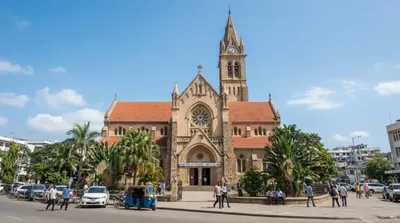
Temples & religious sites
Saint Joseph's Cathedral, Dar es Salaam
This Gothic-style Roman Catholic cathedral overlooks the harbor of Dar es Salaam. Built in the early 20th century during German colonial rule, it still serves as the seat of the archdiocese, and the stained-glass window behind the altar is especially striking.
Museums & galleries
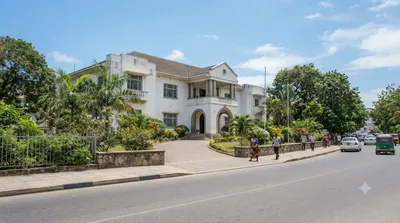
National Museum of Tanzania
The National Museum of Tanzania is a network of museums centered on the National Museum in Dar es Salaam, showcasing the country's history and natural heritage. First opened in 1934, it now shares Tanzania's story nationwide together with museums in Arusha.
Nature
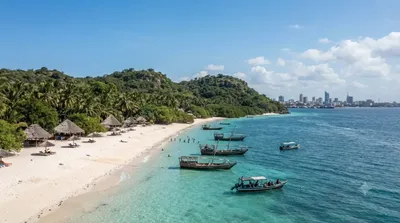
Bongoyo Island
An uninhabited island just a short boat ride from Dar es Salaam, designated as a marine protected area. It's a popular day-trip destination for snorkeling and sunbathing.
Temples & religious sites
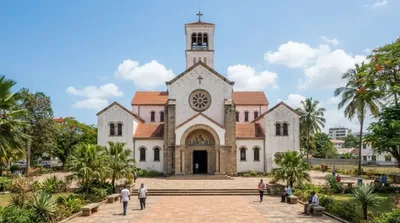
Roman Catholic Diocese of Tanga
A Roman Catholic diocese in Tanga, Tanzania, belonging to the Archdiocese of Dar es Salaam. It's a place to experience the local religious culture up close.
More Dar es Salaam guides
Best value
Where to find the best value accommodation in Dar es Salaam
5-star & luxury
Where to stay for a luxury experience in Dar es Salaam
Pool villas & resorts
Where to find pool villas and resorts in Dar es Salaam
Family travel
Where to stay in Dar es Salaam for family travel
Couples & honeymoon
Where to stay in Dar es Salaam for couples and honeymooning
Central & near stations
Where to stay in Dar es Salaam for central access and transport
Best time to visit
When is the best time to visit Dar es Salaam, Tanzania?
First-time guide
How to navigate Dar es Salaam for the first time
Getting around guides for other destinations
Guantánamo
How to Get Around Guantánamo and Travel from Antonio Maceo Airport
Cetinje
How to Get Around Cetinje and Travel from Podgorica Airport
North Nicosia
How to get around North Nicosia and travel from Larnaca Airport
Cienfuegos
How to get around Cienfuegos: transport options and airport transfers