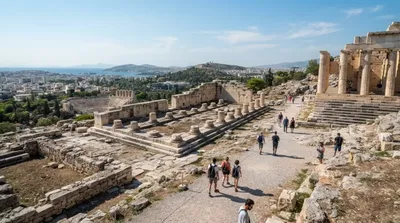
Temples & religious sites
Parthenon
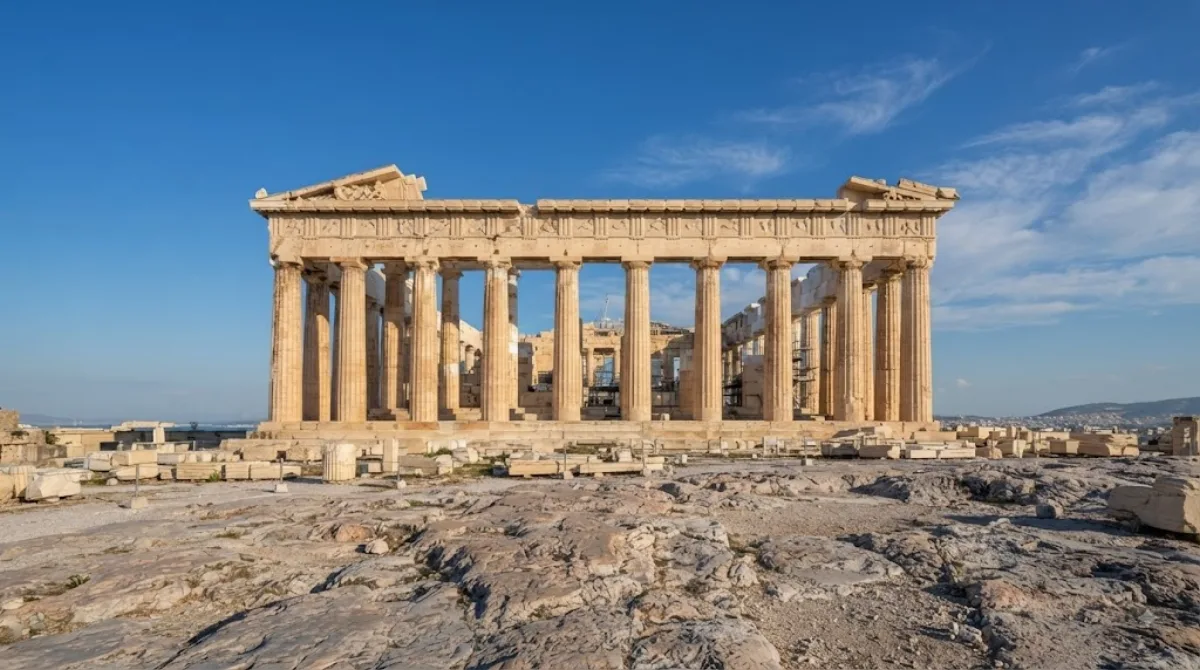
What it is
The Parthenon is the principal temple of the Acropolis of Athens, built of marble and dedicated to Athena. It's a Doric-style structure and the reason most visitors climb the Acropolis hill in the first place — the exterior colonnade and the scale of the ruin are the main draw, rather than an interior to walk through, since the temple has no roof and visitors view it from a perimeter path rather than entering the cella.
Getting there
From Piraeus, the Athens metro Line 1 (green line) runs to Monastiraki station, a walk of roughly 15–20 minutes uphill to the Acropolis entrance from there. The full journey from Piraeus, including the walk up, typically takes 45 minutes to an hour. A taxi covers the distance faster but is still subject to the same uphill walk once you reach the site, as vehicles cannot go up to the Parthenon itself.
How long to allow
Plan for at least 1.5 to 2 hours on the Acropolis hill to see the Parthenon along with the other structures nearby, more if you want to walk the full site slowly or photograph it from multiple angles.
When to go
The site gets crowded, especially around midday and when cruise groups arrive. Early morning, shortly after opening, tends to be quieter and cooler, which matters since there's little shade on the hill. Midsummer heat can make the exposed marble paths uncomfortable in the early afternoon.
What to combine it with
The Parthenon sits directly among several other ruins, so a single visit covers most of them:
- Hekatompedon temple and the wider Acropolis of Athens grounds — immediately adjacent, part of the same walk.
- Erechtheion (0.1km) — the temple with the Caryatid porch, a short walk away.
- Brauroneion (0.1km) — the nearby sanctuary ruins, also within the same site.
Updated September 8, 2026 · Edited by the World by City editors
 GetYourGuide
 Klook
Klook
 Tiqets
 KKday
KKday
 WeGoTrip
 Booking.com
 Hotels.com