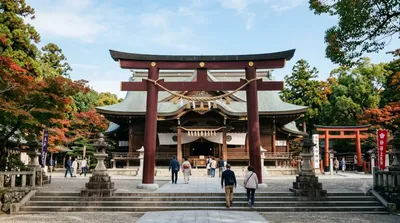
Tempel & Sakralbauten
Kashii-gū
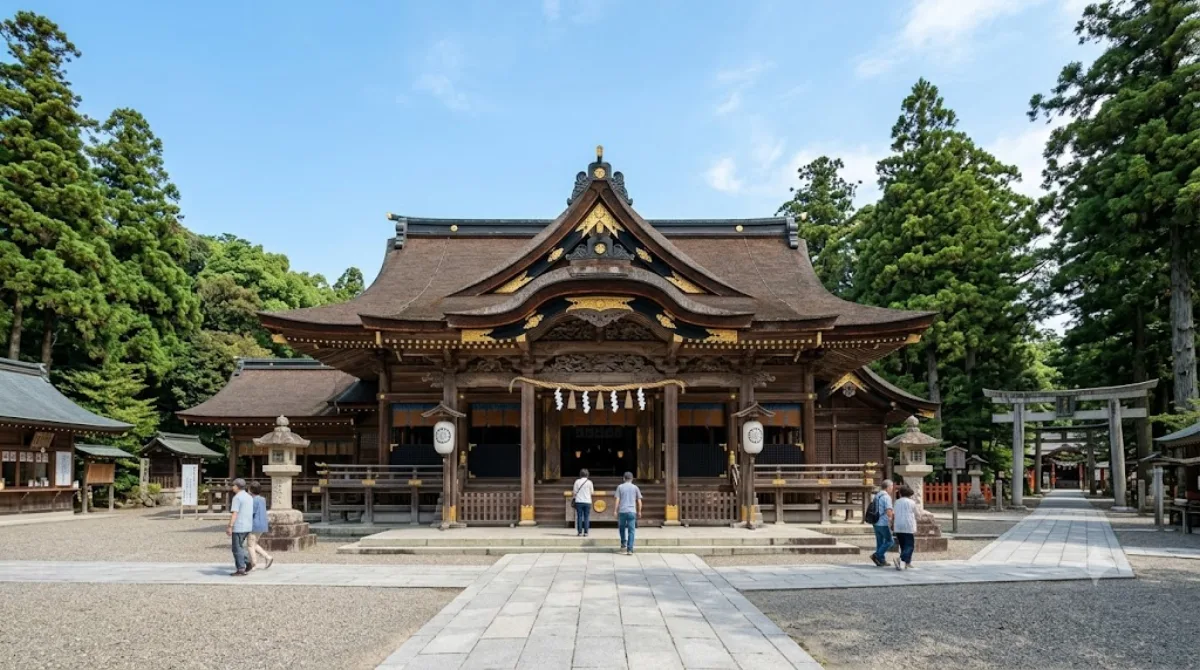
Kashii-gū Shinto-Schrein
Der Kashii-gū ist ein Shinto-Schrein im Bezirk Higashi in Fukuoka, der Kaiser Chūai und Kaiserin Jingū gewidmet ist. Besucher kommen hierher, um die Architektur des Schreins und den Zugangsweg durch einen dichten Zedernwald zu erleben. Im Gegensatz zu den zentralen Touristenattraktionen der Stadt bietet dieser Ort eine ruhige Atmosphäre, die sich für einen kontemplativen Besuch eignet.
Anreise und Zeitplanung
Der Schrein liegt östlich des Stadtzentrums von Fukuoka. Die Anreise erfolgt am besten mit öffentlichen Verkehrsmitteln oder dem Taxi, wobei die Fahrtzeit je nach Startpunkt im Zentrum etwa 30 bis 45 Minuten beträgt. Für den Rundgang durch die Anlage und den Waldweg sollte man etwa 1 bis 2 Stunden einplanen.
Besuchszeitpunkt
Ein Besuch am frühen Morgen ist empfehlenswert, um die Stille des Geländes optimal zu nutzen. Während der meisten Jahreszeiten bleibt es hier ruhiger als an den Hauptsehenswürdigkeiten der Stadt, jedoch kann es an nationalen Feiertagen oder während spezifischer religiöser Festlichkeiten zu einem höheren Besucheraufkommen kommen.
Kombinationsmöglichkeiten
Aufgrund der Lage im östlichen Teil der Stadt lässt sich der Besuch mit anderen Zielen in der Umgebung verbinden:
- Burg Najima: 2,9 km entfernt
- Island Tower Sky Club: 3,1 km entfernt
- Island City: 3,9 km entfernt
- Fukuoka-Moschee: 4,4 km entfernt
Aktualisiert 20. September 2026 · Redaktion die World by City-Redaktion
 GetYourGuide
 Klook
Klook
 Tiqets
 KKday
KKday
 WeGoTrip
 Booking.com
 Hotels.com