World by City

Denkmäler & Ausgrabungen

Sonohyan-Utaki

Sonohyan-utaki
Sonohyan-Utaki

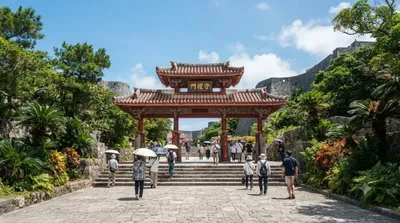
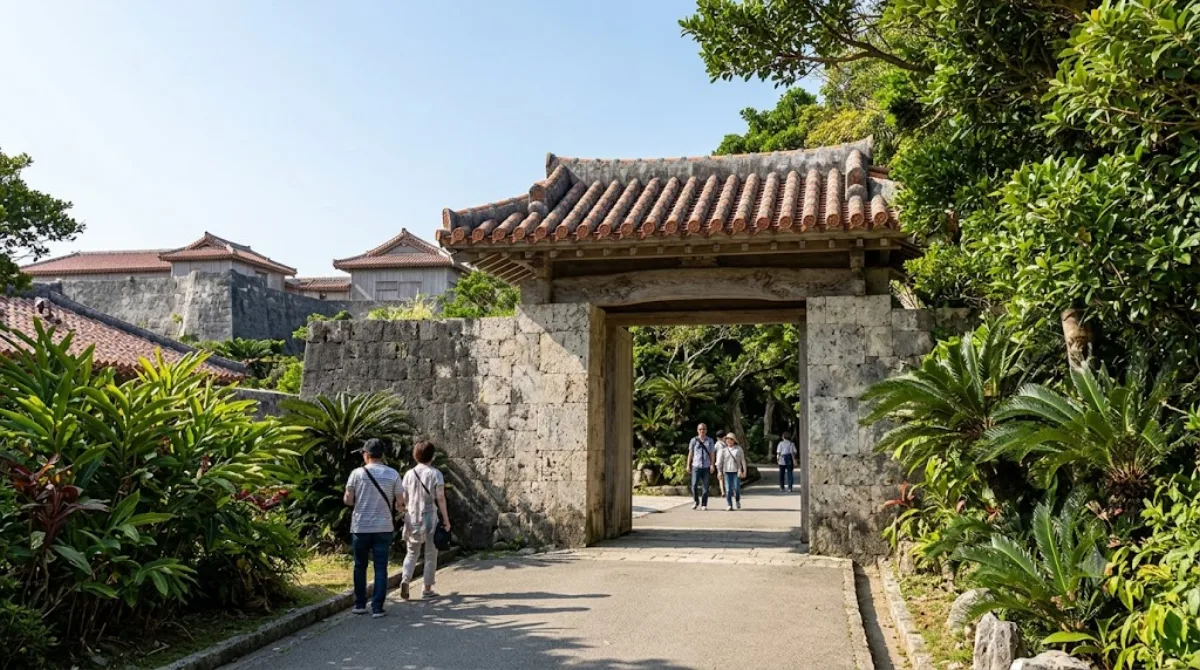
Das Steintor Sonohyan-utaki (jap. 園比屋武御嶽 Sonohyan-utaki, Okinawaisch Sunufan-utaki) wurde 1519 unter der Herrschaft von König Shō Shin durch Nishito von der Insel Taketomi-jima erbaut. Das Tor liegt hinter dem Eingangstor Kankai-mon der Burg Shuri auf der linken Seite. Abgesehen von einer Holztür besteht das Tor hauptsächlich aus Ryūkyū-Kalkstein und aus feinkörnigem Sandstein. Diese Art von Tor wird Hirakaramon genannt. Hinter dem immer geschlossenen Tor liegt ein heiliger Hain, der in früheren Zeiten deutlich größer war und schon vor der Errichtung des Steintores als sakrale Stätte de...

What it is

Sonohyan-utaki is a small sacred grove tucked against the outer wall of Shuri Castle, just steps from the Shureimon gate. It's a site of the indigenous Ryukyuan religion, not a Buddhist or Shinto shrine, and the surviving element most visitors see is a carved stone gate (ishimon) that once marked the entrance to the grove itself, used historically as a place of prayer before royal journeys. It's included, via this gate, in the UNESCO World Heritage listing for Ryukyu Kingdom gusuku sites, and it's also a Japanese Important Cultural Property. Travellers usually visit it as a quiet, low-key stop on the way into or out of Shuri Castle rather than as a standalone destination.

Getting there

It sits within the Shuri Castle grounds in Naha, so if you're already heading to the castle you'll pass it. From central Naha, take the Yui Rail monorail to Shuri Station, then walk uphill toward the castle, roughly 15-20 minutes on foot from the station.

How much time to allow

The site itself is small; five to ten minutes is enough to see the stone gate and grove.

When to go

Because it sits right on the main path into Shuri Castle, it can get busy whenever the castle itself is crowded, particularly midday and around tour group arrivals. Visiting early in the day, alongside an early castle visit, is likely to be quieter.

What to combine it with

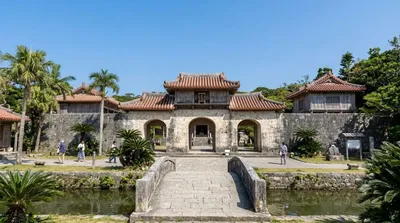
Shureimon gate is essentially adjacent (0km) and most people see both together. Enkaku-ji, a former royal temple, is a short 0.2km walk away, and Tamaudun, the royal mausoleum of the Ryukyu kings, is about 0.3km away. Okinawa Shrine is a bit further at 1.4km but still walkable if you're spending a couple of hours exploring the Shuri area.

Quellen: offene Daten von Wikipedia und OpenStreetMap · Aktualisiert 5. August 2026 · Redaktion die World by City-Redaktion

Tickets & Touren

Eintrittspreise und Öffnungszeiten ändern sich häufig und stehen daher nicht hier. Unten sehen Sie, was gerade angeboten wird – vorab buchen spart mancherorts Wartezeit.

Dieser Ort erscheint womöglich nicht in den Ergebnissen – manche Ziele sind kostenlos oder verkaufen nur vor Ort.

Unterkünfte nahe Sonohyan-Utaki

Nach Entfernung sortiert, fußläufige zuerst. Angaben als Luftlinie.

Karte © OpenStreetMap-Mitwirkende. Linien sind Luftlinien, keine echten Routen.

Sonohyan-Utaki Unterkünfte in der Nähe

Lage und Namen stammen aus OpenStreetMap. Preise und Verfügbarkeit bitte auf den Buchungsseiten prüfen.

Routen mit diesem Ort

Passt gut dazu

Shurei-mon

Denkmäler & Ausgrabungen

Shurei-mon

Shurei-mon ist das Eingangstor chinesischen Stils (Pailou) zur Burg Shuri in Shuri, Naha auf Okinawa. Es wurde während der Herrschaft von König Shō Sei um 1526 errichtet.

0.0 km entfernt

Enkaku-ji

Tempel & Sakralbauten

Enkaku-ji

Enkaku-ji was a Buddhist temple located in the Shuritonokuracho neighborhood of the city of Naha, Okinawa Prefecture, Japan. It belonged to the Rinzai school sect of Japanese Zen and its honzon is a Shaka Sanzon trinity of Shaka Nyorai, Monju Bosatsu and Fugen Bosaatsu. The temple's full name is Tentoku-san Enkaku-ji. It was the bodaiji of the kings of Second Shō dynasty of the Ryūkyū Kingdom. The site of the temple was designated a National Historic Site of Japan in 1972.

0.2 km entfernt

다마우둔

Denkmäler & Ausgrabungen

다마우둔

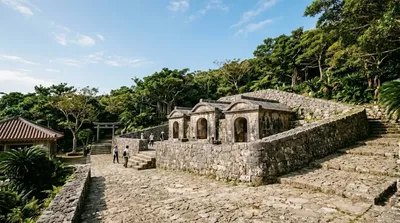
다마우둔(일본어: 玉陵)은 류큐왕국 제2쇼씨 왕조의 역대 국왕들이 모셔진 능묘이다. 소재지는 일본 오키나와현 나하시 슈리킨조정(首里金城町)이다. 본래는 제3대 쇼신왕이 아버지 쇼엔왕을 장사지내기 위해 건축한 것이다. 세계유산의 하나로 오키나와현 최대의 파풍묘(破風墓)이다.

0.3 km entfernt

Okinawa Shrine

Tempel & Sakralbauten

Okinawa Shrine

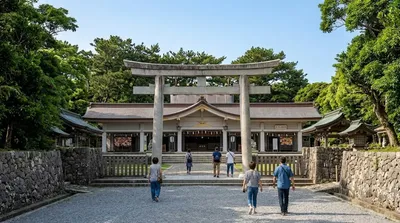
Okinawa Shrine is a Shinto shrine in Naha, Okinawa Prefecture, Japan. Established at the end of the Taishō period on the site of Shuri Castle, the main hall of which was reused as the haiden, the shrine buildings were destroyed in May 1945 during the Battle of Okinawa. Both castle and shrine have since been rebuilt while this phase has been written out of the "official history" currently told at Shurijō Castle Park.

1.4 km entfernt

Sueyoshi-gū

Tempel & Sakralbauten

Sueyoshi-gū

Sueyoshi Shrine is a Shinto shrine in the Shuri-Sueyoshi neighborhood of the city of Naha in Okinawa Prefecture, Japan. Its grounds were designated a National Historic Site in 1972. The main festival of the shrine is held annually on November 23. It is one of the Eight Shrines of Ryūkyū, a group of eight shrines that were officially supported by the Ryukyu Kingdom. These official shrines received salaries and maintenance expenses for their priests from the royal court,

1.4 km entfernt

Shikinaen

Parks & Gärten

Shikinaen

Shikinaen ist ein historischer Landschaftsgarten und UNESCO-Weltkulturerbe in Naha, Okinawa, Japan.

1.6 km entfernt