
Tempel & Sakralbauten
Okinawa-Schrein
Okinawa Shrine
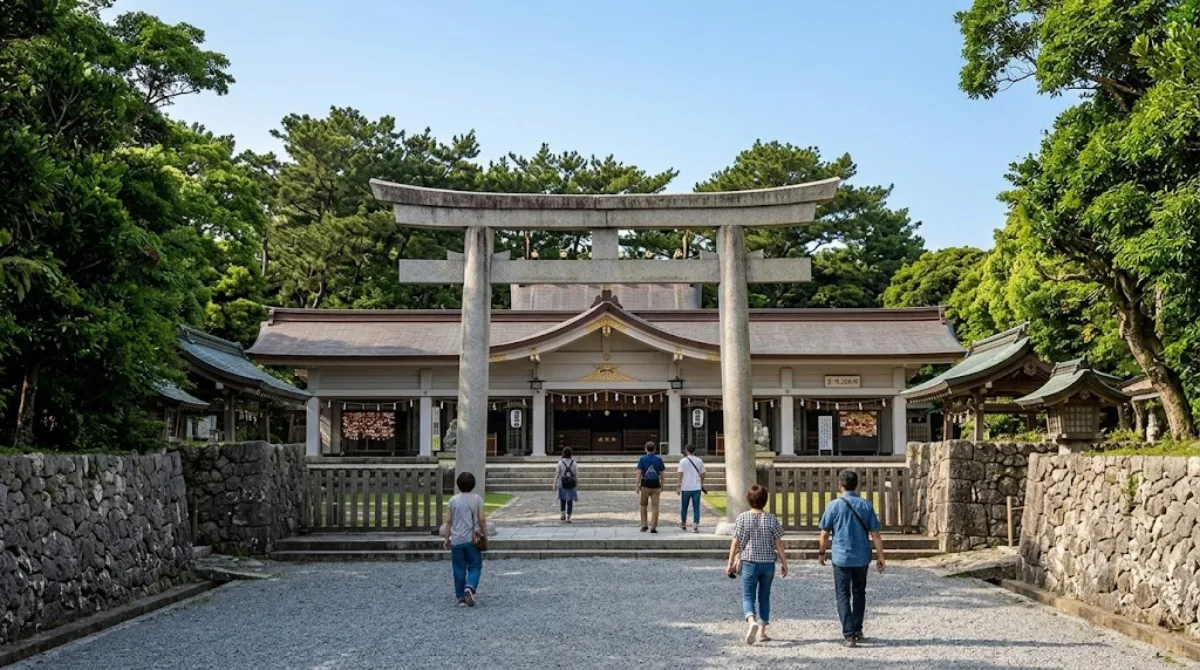
Okinawa-Schrein
Der Okinawa-Schrein ist eine kleine religiöse Stätte, die sich auf dem Gelände der Burg Shuri in Naha befindet. Er wurde in der späten Taisho-Ära errichtet und integrierte ursprünglich Teile der Burggebäude in seine Haupthalle. Während der Schlacht um Okinawa im Jahr 1945 wurde die Anlage vollständig zerstört und später zusammen mit der Burg wiederaufgebaut. Besucher kommen hierher, um die historischen Schichten des Standorts zu sehen, da der Schrein die wechselvolle Geschichte des Areals widerspiegelt.
Anreise und Zeitaufwand
Die Anlage ist vom Stadtzentrum von Naha aus am besten mit dem Monorail oder dem Bus zu erreichen. Die Fahrtzeit beträgt je nach Startpunkt etwa 20 bis 30 Minuten. Da es sich um eine eher bescheidene Anlage handelt, ist ein kurzer Aufenthalt von etwa 30 bis 60 Minuten ausreichend, um den Ort zu besichtigen.
Besuchszeit und Hinweise
Ein Besuch am frühen Vormittag ist empfehlenswert, um die Ruhe der Anlage zu erleben. Da sich der Schrein auf dem weitläufigen Gelände der Burg Shuri befindet, kann es besonders in der Hauptreisezeit und an Wochenenden zu einem hohen Besucheraufkommen kommen.
Kombinationsmöglichkeiten
Aufgrund der Lage lässt sich der Besuch mit anderen Sehenswürdigkeiten in der Umgebung verbinden:
- Enkaku-ji (1,2 km)
- Sonohyan-utaki (1,4 km)
- Shureimon (1,4 km)
- Tamaudun (1,6 km)
Aktualisiert 20. September 2026 · Redaktion die World by City-Redaktion
 GetYourGuide
 Klook
Klook
 Tiqets
 KKday
KKday
 WeGoTrip
 Booking.com
 Hotels.com