
Tempel & Sakralbauten
Abdul-Gaffoor-Moschee
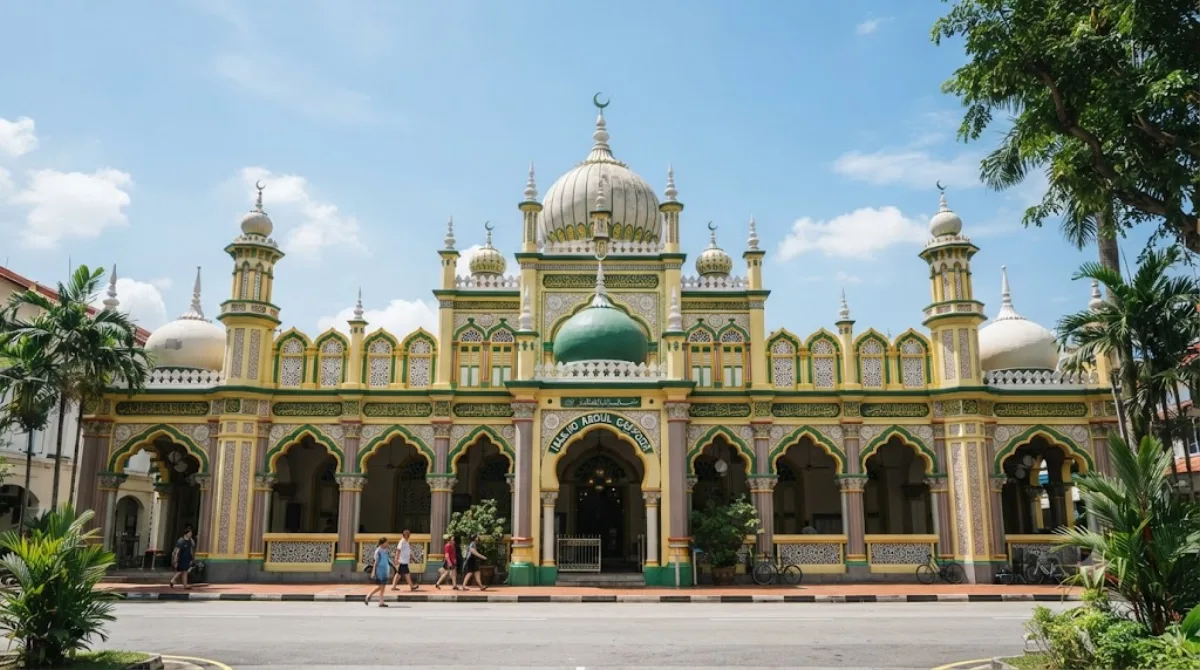
Masjid Abdul Gaffoor
Überblick
Die Masjid Abdul Gaffoor ist eine Moschee in Little India, benannt nach ihrem Gründer Sheikh Abdul Gaffoor. Sie wurde 1910 als Ersatz für einen früheren Bau an der Dunlop Street errichtet und 1979 zum Nationaldenkmal Singapurs erklärt. Reisende besuchen den Ort wegen der markanten Architektur dieses historischen Monuments und seiner Sonnenuhr über dem Eingang.
Anreise
Aus dem Stadtzentrum dauert die Fahrt mit der MRT rund 15 bis 20 Minuten (Haltestellen Rochor oder Jalan Besar), gefolgt von einem kurzen Fußweg.
Aufenthaltsdauer
Für die Besichtigung genügen 30 bis 45 Minuten.
Besuchszeit
Vormittage eignen sich gut, um hohe Temperaturen zu vermeiden. Freitags ist es durch das Freitagsgebet sehr voll; während der Gebete ist der Zutritt für Besucher eingeschränkt. Schultern und Beine müssen bedeckt sein.
Kombinationen
In der Nähe liegen folgende Ziele:
- Little India (0,4 km): Das umliegende Viertel.
- Masjid Sultan (0,6 km): Moschee in Kampong Glam.
- Masjid Malabar (0,6 km): Weitere nahe Moschee.
- Singapore Art Museum (0,9 km): Kunstmuseum der Stadt.
Aktualisiert 20. September 2026 · Redaktion die World by City-Redaktion
 GetYourGuide
 Klook
Klook
 Tiqets
 KKday
KKday
 WeGoTrip
 Booking.com
 Hotels.com