
· Visited July 2026
A Summer Weekend in Sokcho: From Neon Lights to Granite Peaks
100% real visits · photos we took ourselves
The photos in this story were taken by the World by City team on this trip. No AI images, no stock photos. Taken July 3, 2026 – July 4, 2026 (18 photos, 18 with location data).
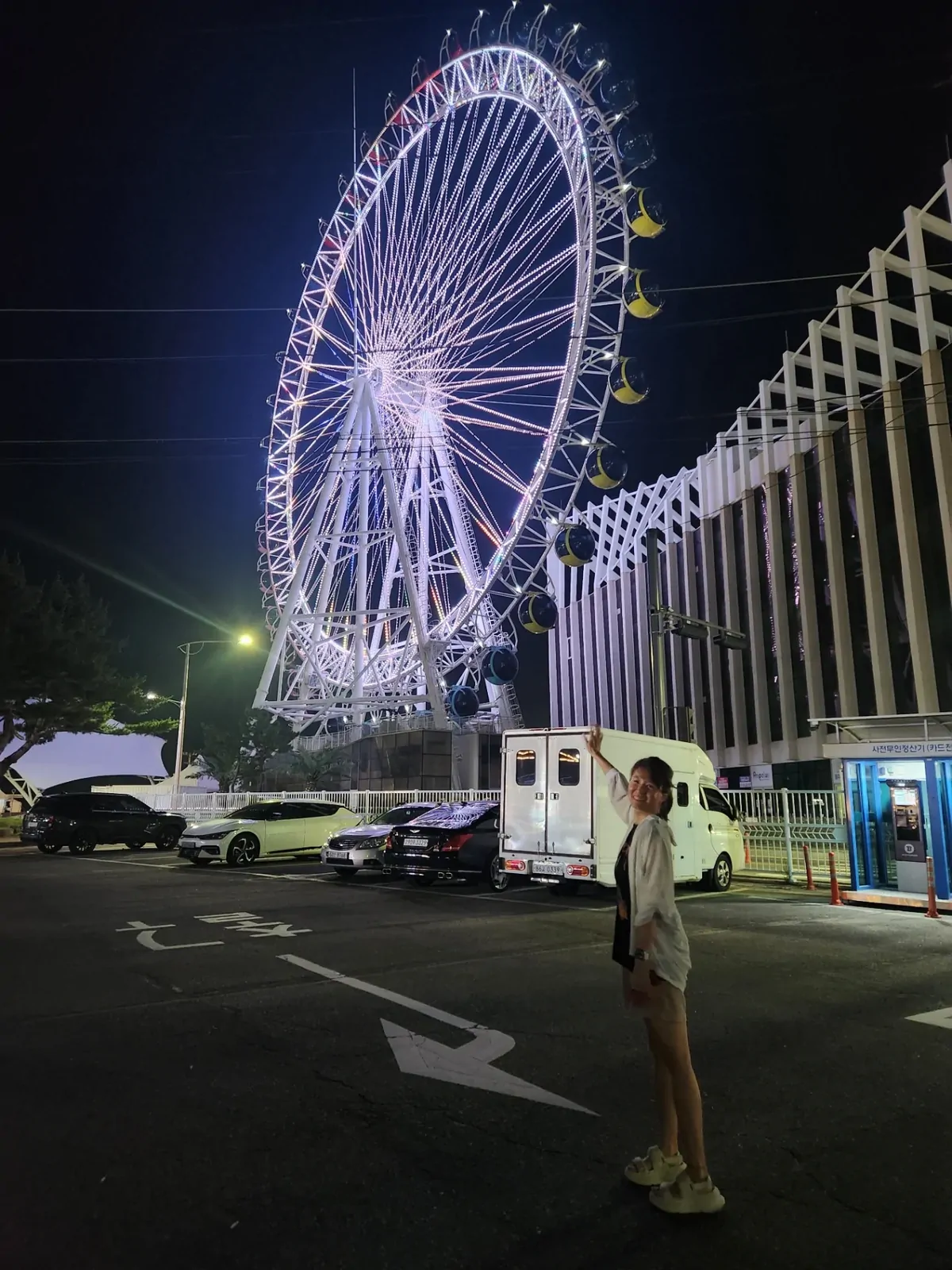
My trip to Sokcho was a whirlwind of contrasting landscapes, compressed into a single overnight stay. I arrived late on a Friday evening, the city already humming with a nocturnal energy that felt different from the quiet nature I knew I would find the next day. The air was warm, typical of early July, and the transition from the urban glow of the city center to the rugged edges of the East Coast happened faster than I expected. I spent my time moving between the heights of the mountains and the edge of the sea, documenting the specific colors of a Korean summer.
The Glow of the City Night
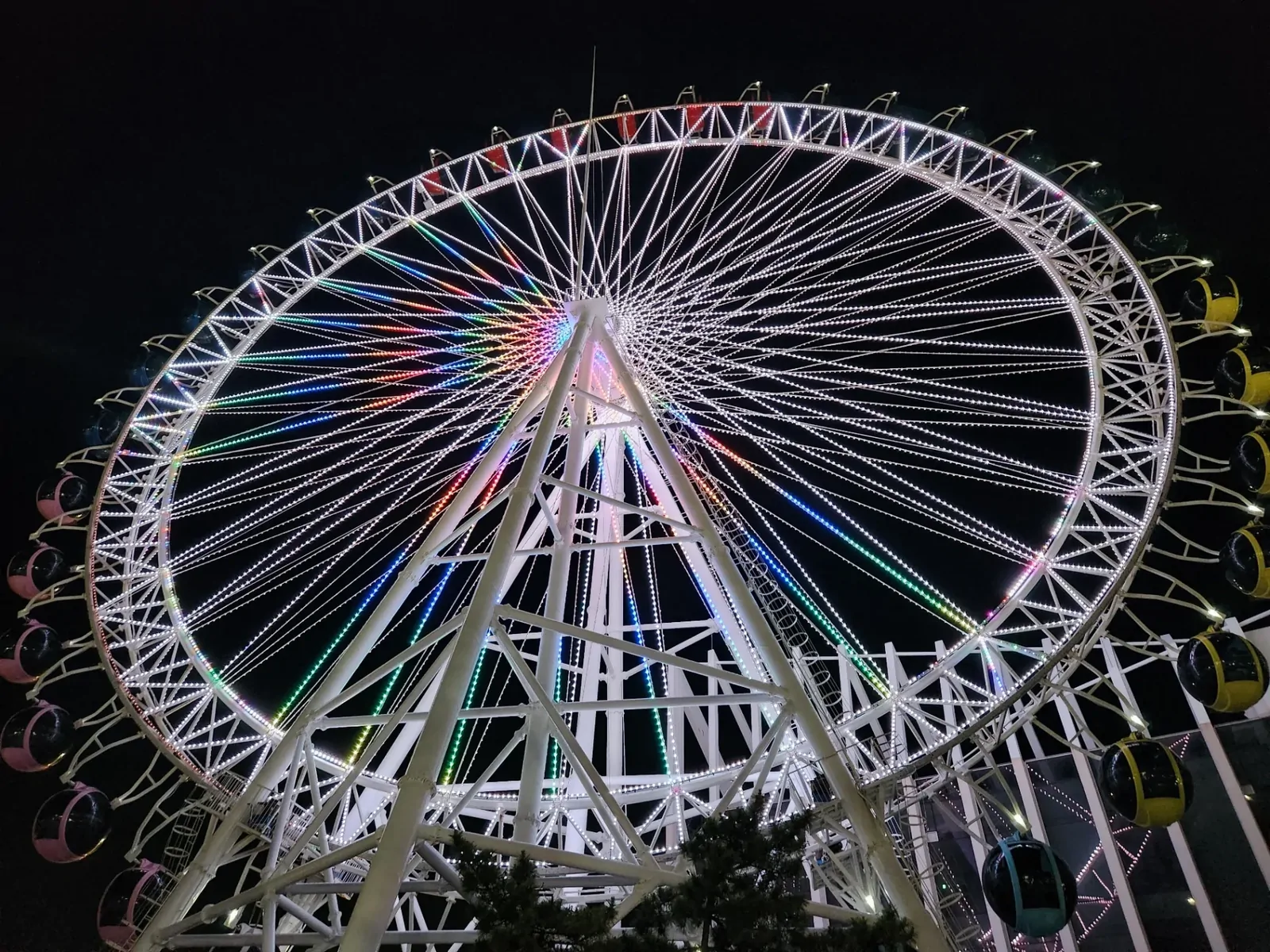
I started my visit under the cover of darkness, where the city's skyline was dominated by a massive Ferris wheel. The structure was a beacon of LED lights, casting brilliant colors against the pitch-black summer sky. I remember standing there, feeling the humid night air, and reaching my hand out toward the wheel to capture the scale of the illumination. The lights were sharp and vivid, turning the urban space into something that felt almost like a carnival, providing a stark contrast to the natural silence I would encounter the following morning.
The Ferris wheel stood as a monumental piece of architecture against the dark void of the night. I spent some time just watching the patterns of the lights shift, reflecting off the surrounding surfaces. There was a specific kind of urban loneliness and excitement mixed together in that moment, a feeling of being small beneath a giant, glowing circle. It was the perfect introduction to Sokcho, showing me that the city has a modern, playful side before I headed toward the ancient stones and deep greens of the countryside.
Morning Flavors and Coastal Breezes
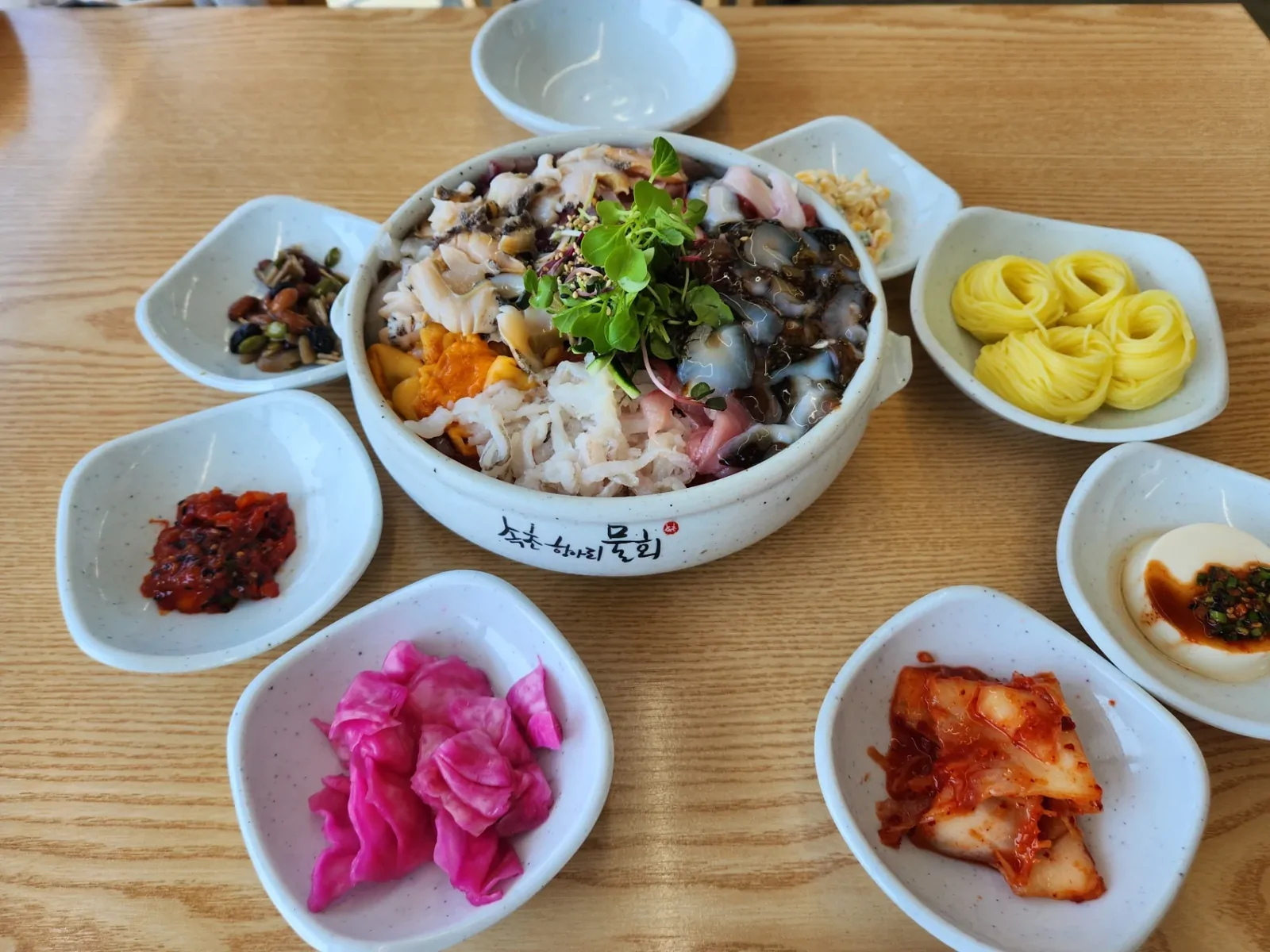
I woke up on July 4th and headed straight for a local meal to fuel my day. I found a restaurant serving a traditional seafood bowl, where a generous portion of octopus sat atop a bed of rice. The table was crowded with a circular arrangement of various side dishes, each offering a different salty or fermented flavor that complemented the fresh seafood. Eating this hearty meal felt like a necessary ritual, grounding me in the local culture before I began my ascent into the mountains. The colors of the meal—the deep reds of the octopus and the varied hues of the banchan—were a feast for the eyes before they were a feast for the palate.
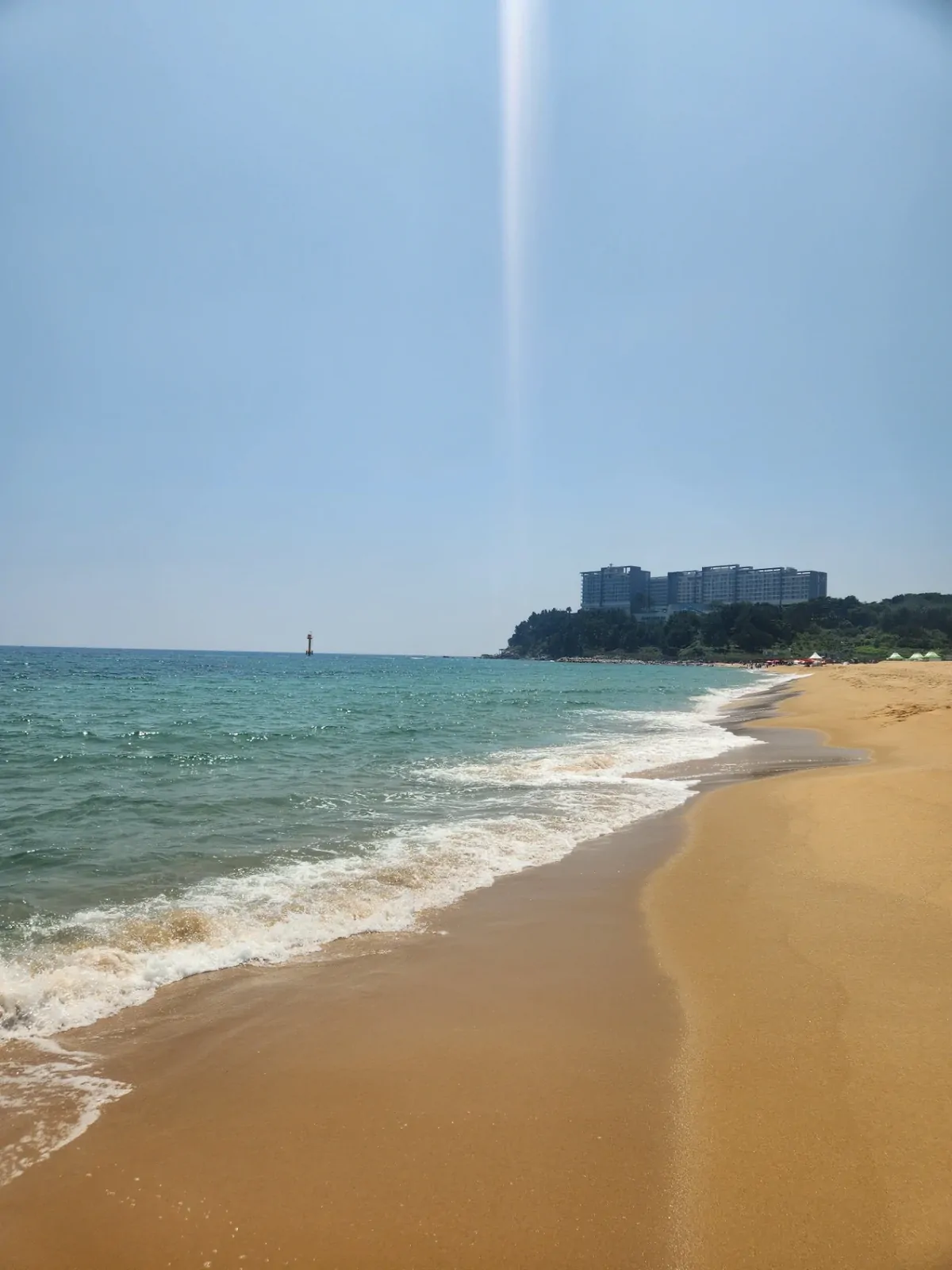
After breakfast, I made my way to the beach to feel the East Sea breeze. The summer sun was already high, making the sand pale and the water a brilliant, clear blue. I watched the waves roll in and out, the white foam contrasting with the deep turquoise of the water. In the distance, I could see a large resort building perched atop the coastal cliffs, a reminder of how the luxury of the city meets the wildness of the shore. The atmosphere was open and airy, providing a sense of mental clarity before I transitioned from the horizontal plane of the beach to the vertical challenge of the peaks.
The Granite Heights of Seoraksan
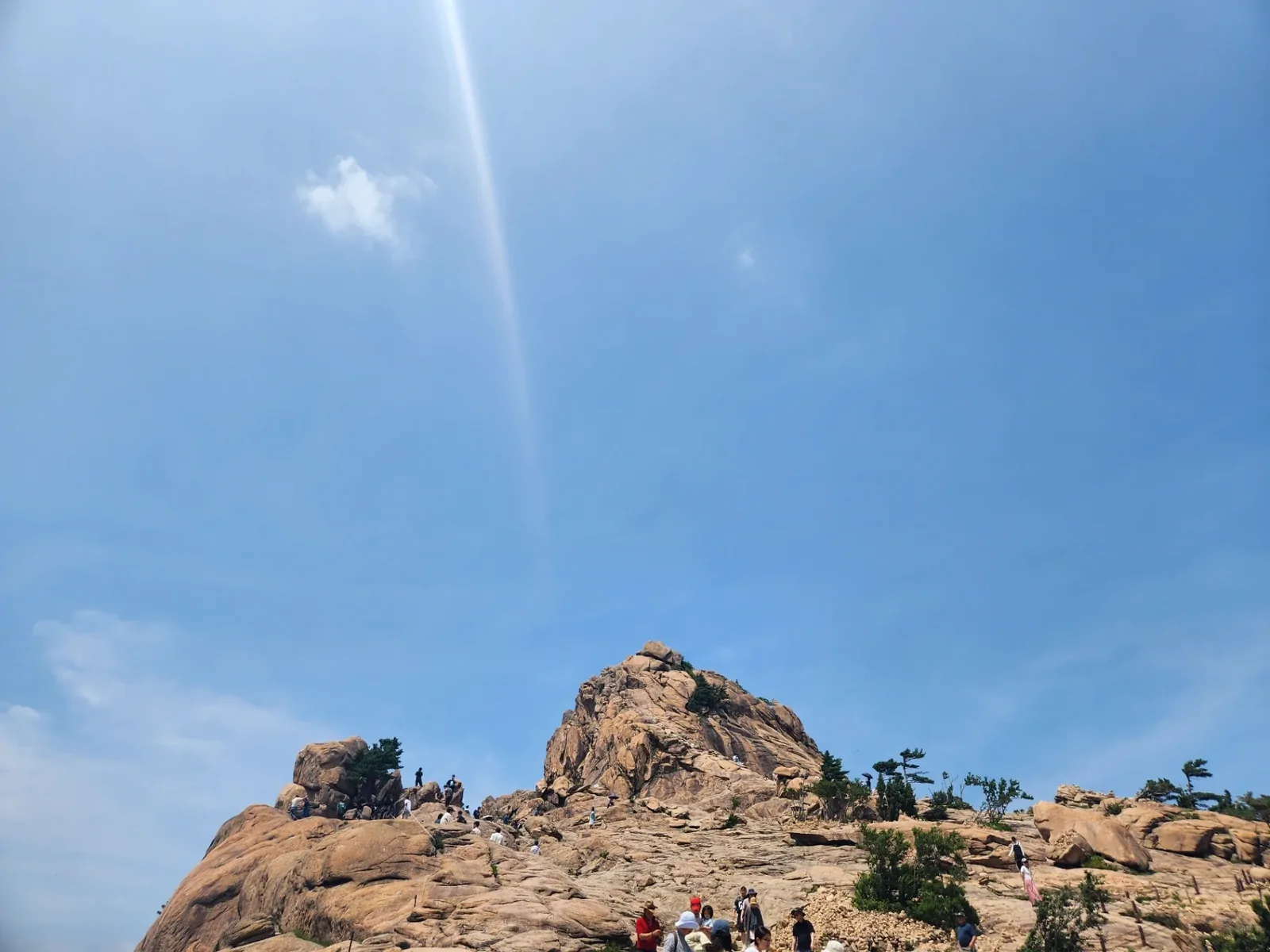
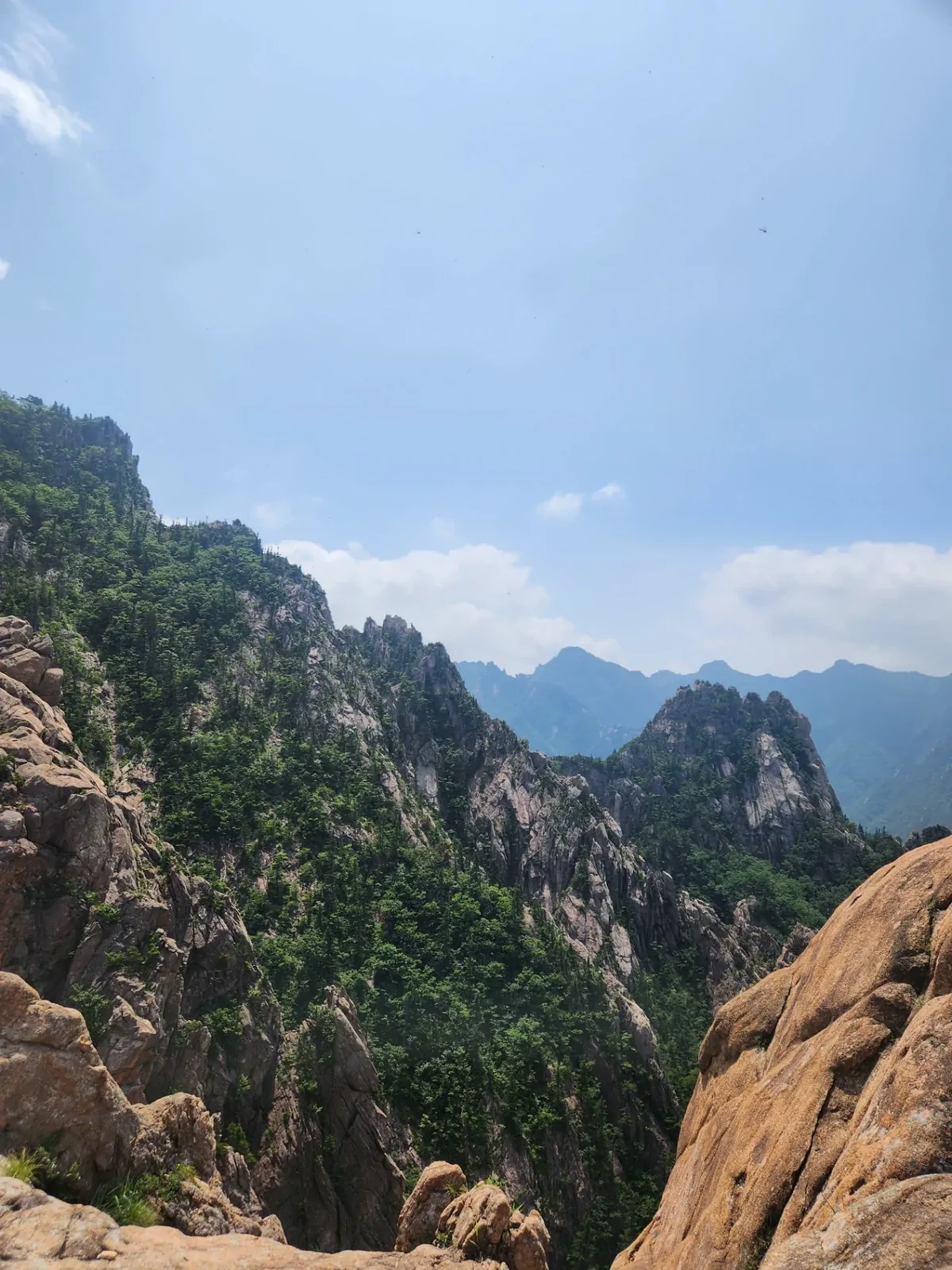
By midday, I had moved from the coast to the mountains. I spent a significant amount of time exploring the rugged terrain of Seoraksan. The landscape here is defined by massive granite peaks that pierce the bright blue summer sky. I encountered other hikers who had made it to the high ridges, their small figures emphasizing the sheer scale of the gray rock formations. The air was thinner and cooler here, and the scent of pine and sun-warmed stone filled the air. It was a demanding climb, but the reward was a panoramic view of the jagged ridges and the deep, lush greenery of the valleys below.
The specific geometry of Seoraksan is what struck me most. The granite peaks are sharp and weathered, creating a dramatic silhouette against the horizon. I spent time observing the way the deep green forests clung to the steep slopes, creating a tapestry of emerald and gray. There is a stillness at the top that you can't find anywhere else, interrupted only by the wind and the occasional sound of other climbers. Looking out over the ridges, I felt a profound sense of isolation from the city I had visited just a few hours prior, replaced by a raw connection to the geological history of the region.
Traditional Architecture and the Blue Horizon
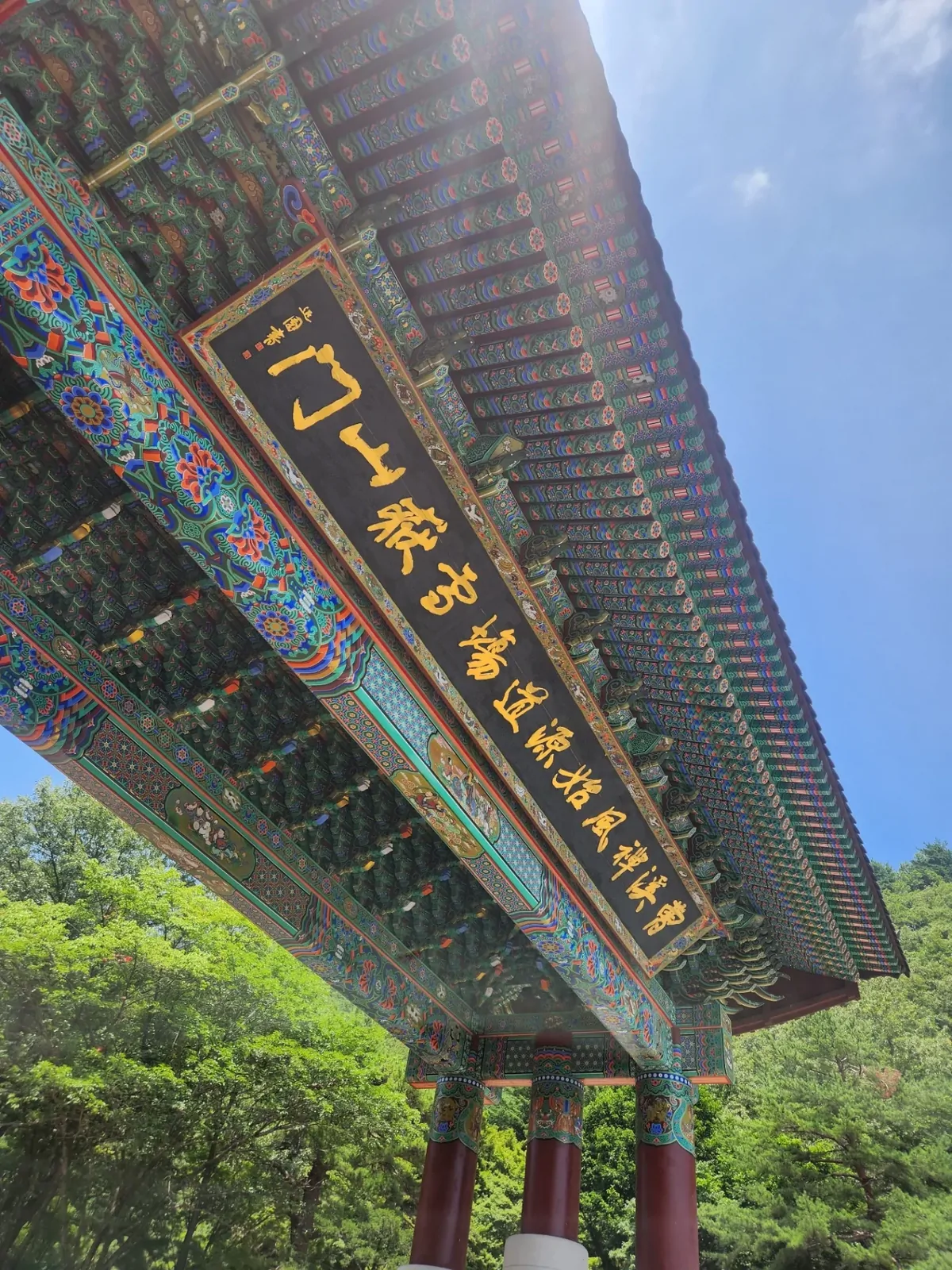
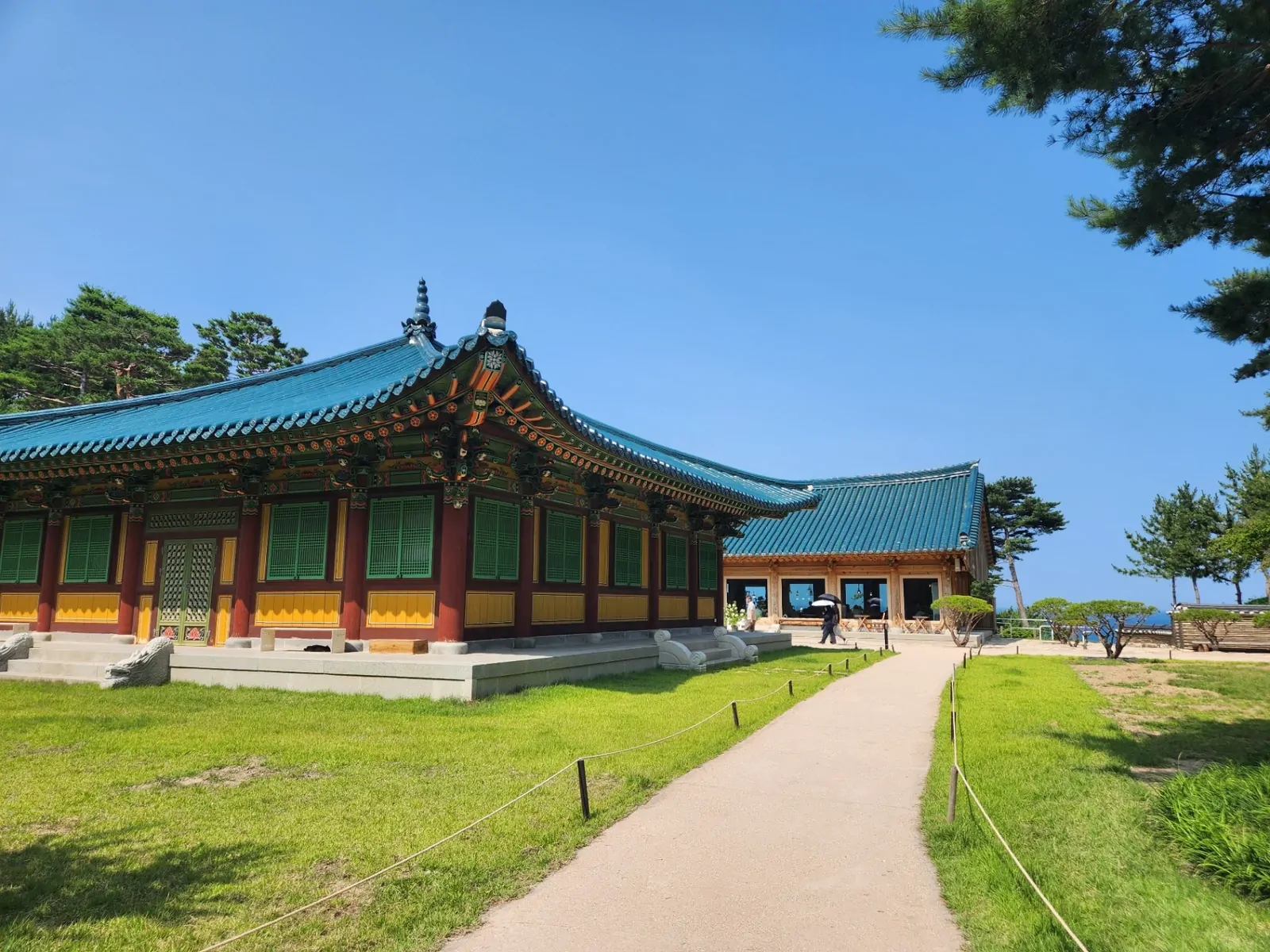
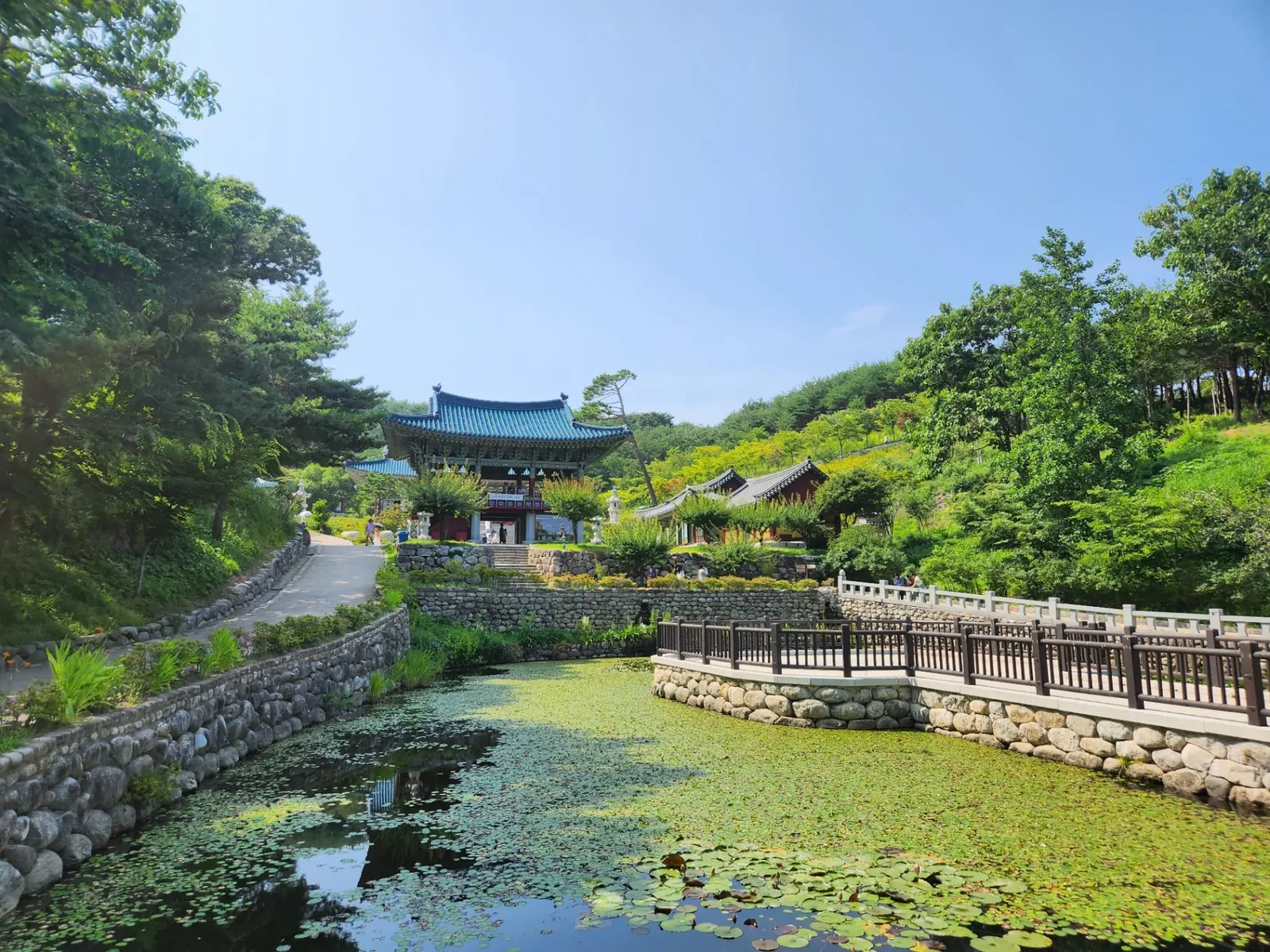
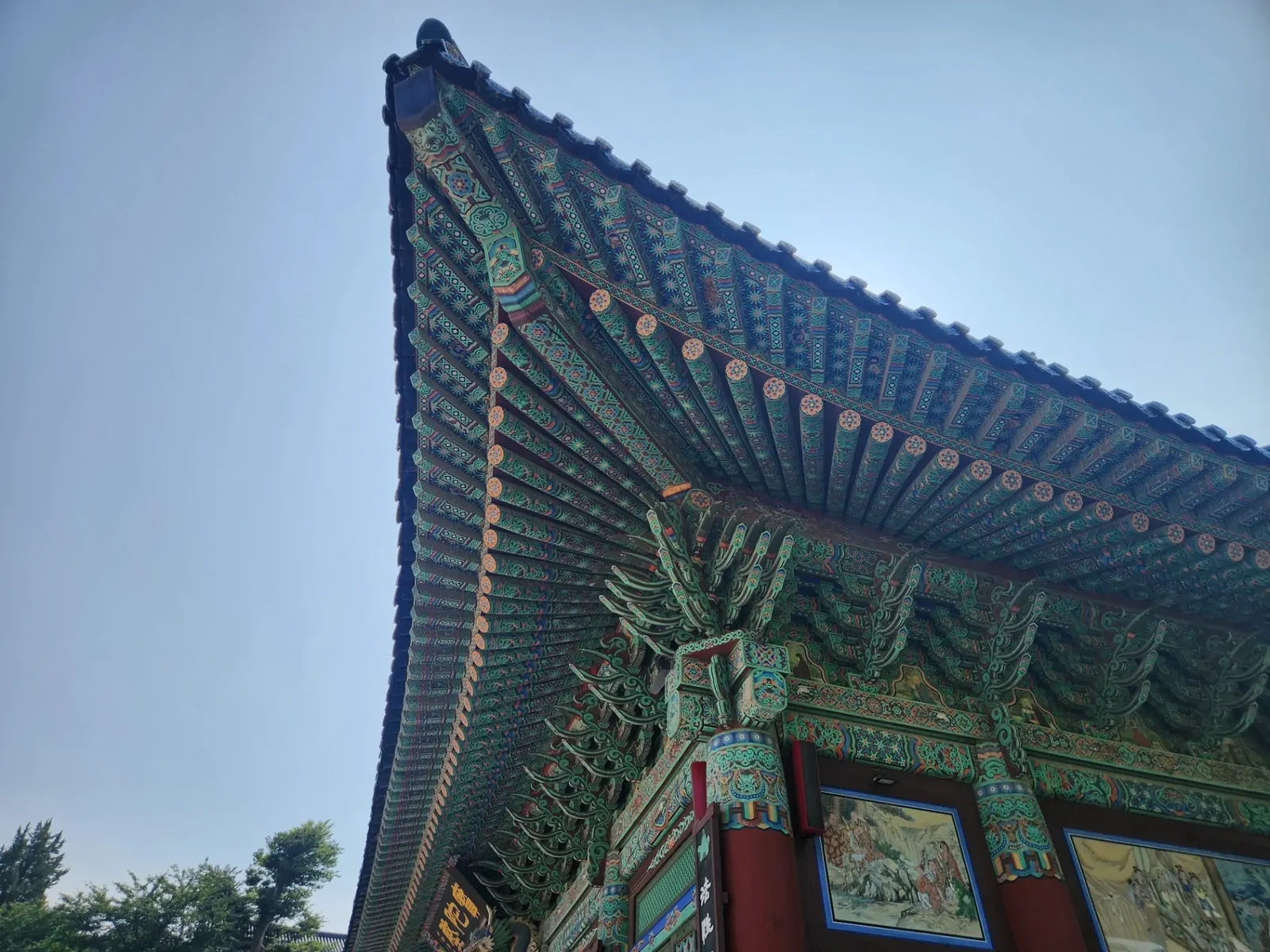
Descending from the mountains, I spent my afternoon visiting traditional sites where architecture and nature blend seamlessly. I came across a temple complex featuring a stunning pavilion with intricate dancheong patterns—the traditional multicolored paintings that decorate the eaves. Looking up from a low angle, the vivid reds, greens, and blues of the woodwork seemed to vibrate against the clear sky. I also found a quiet courtyard with a pond filled with water lilies, where a blue-tiled roof and a stone bridge created a scene of absolute serenity. The contrast between the ornate, colorful carvings of the dragon decorations on the eaves and the simple, still water of the pond was striking.
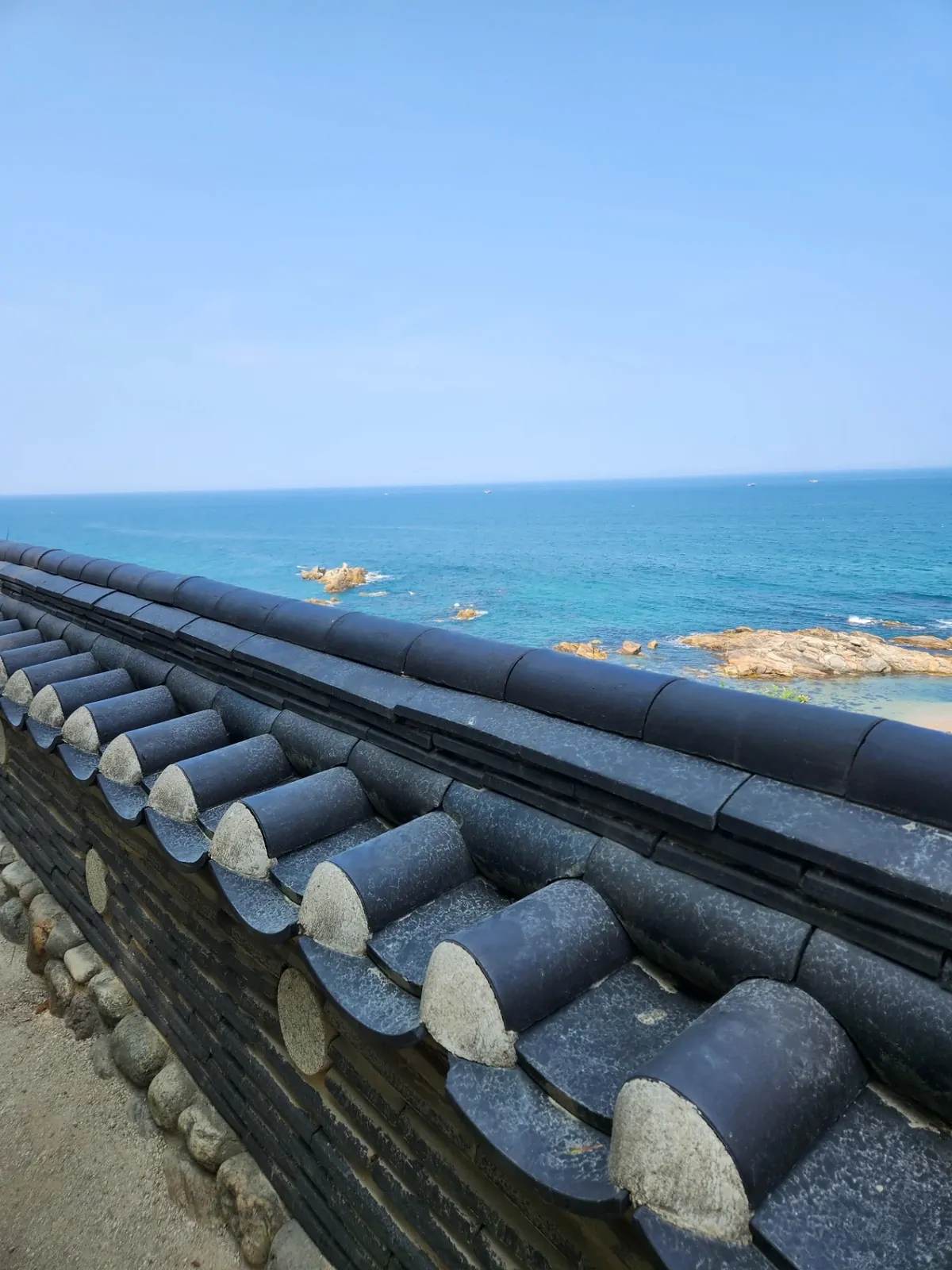
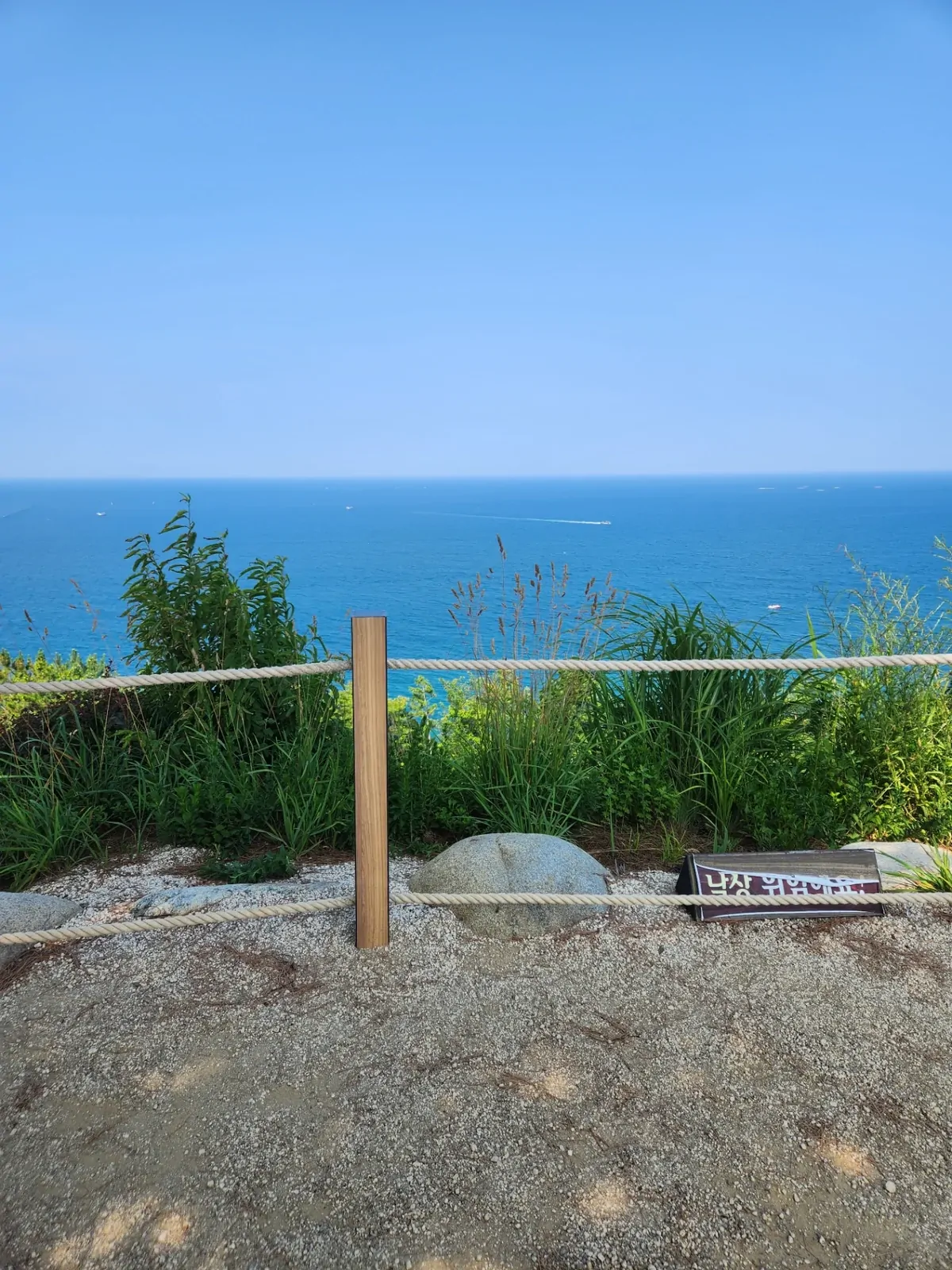
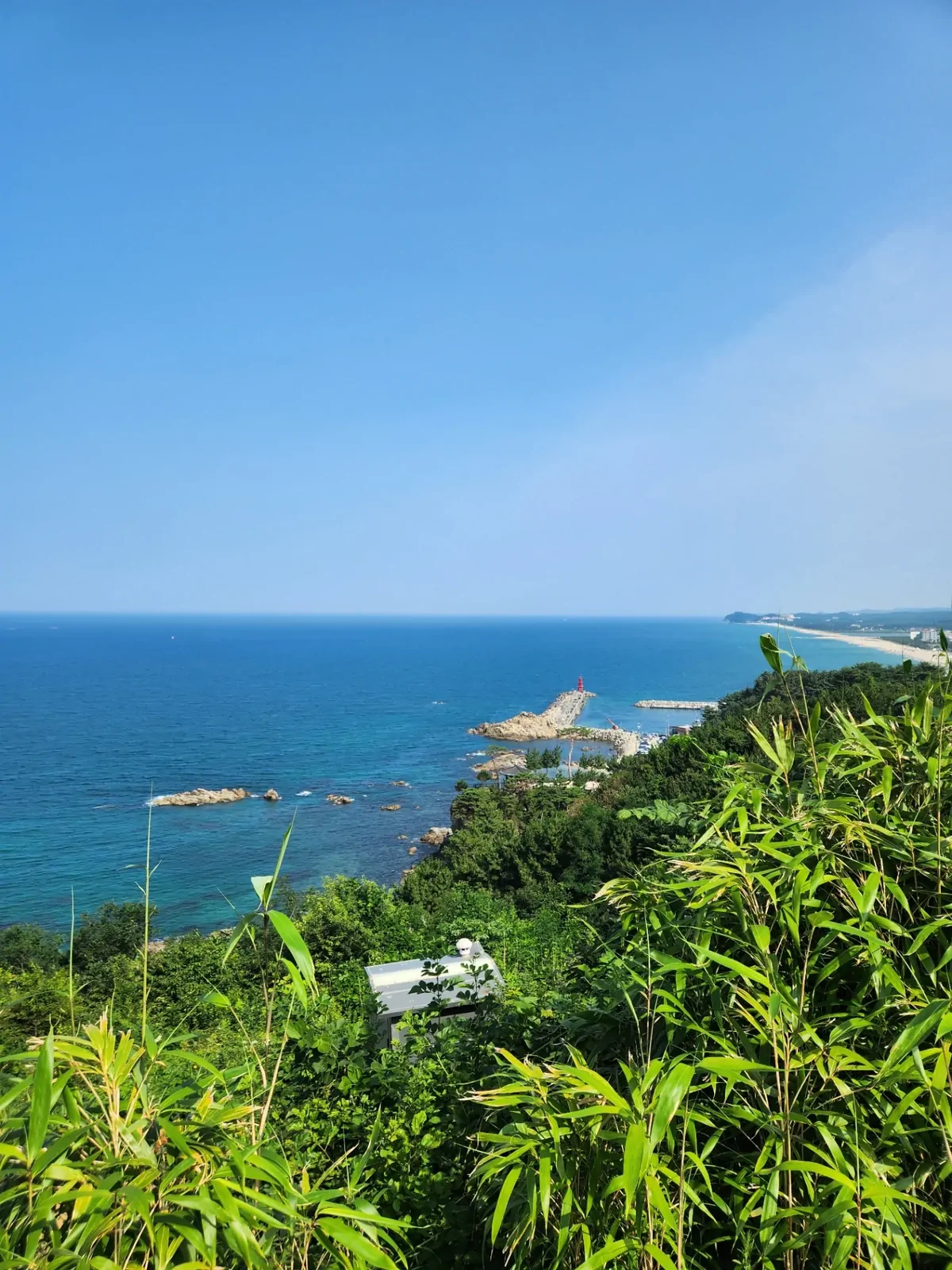
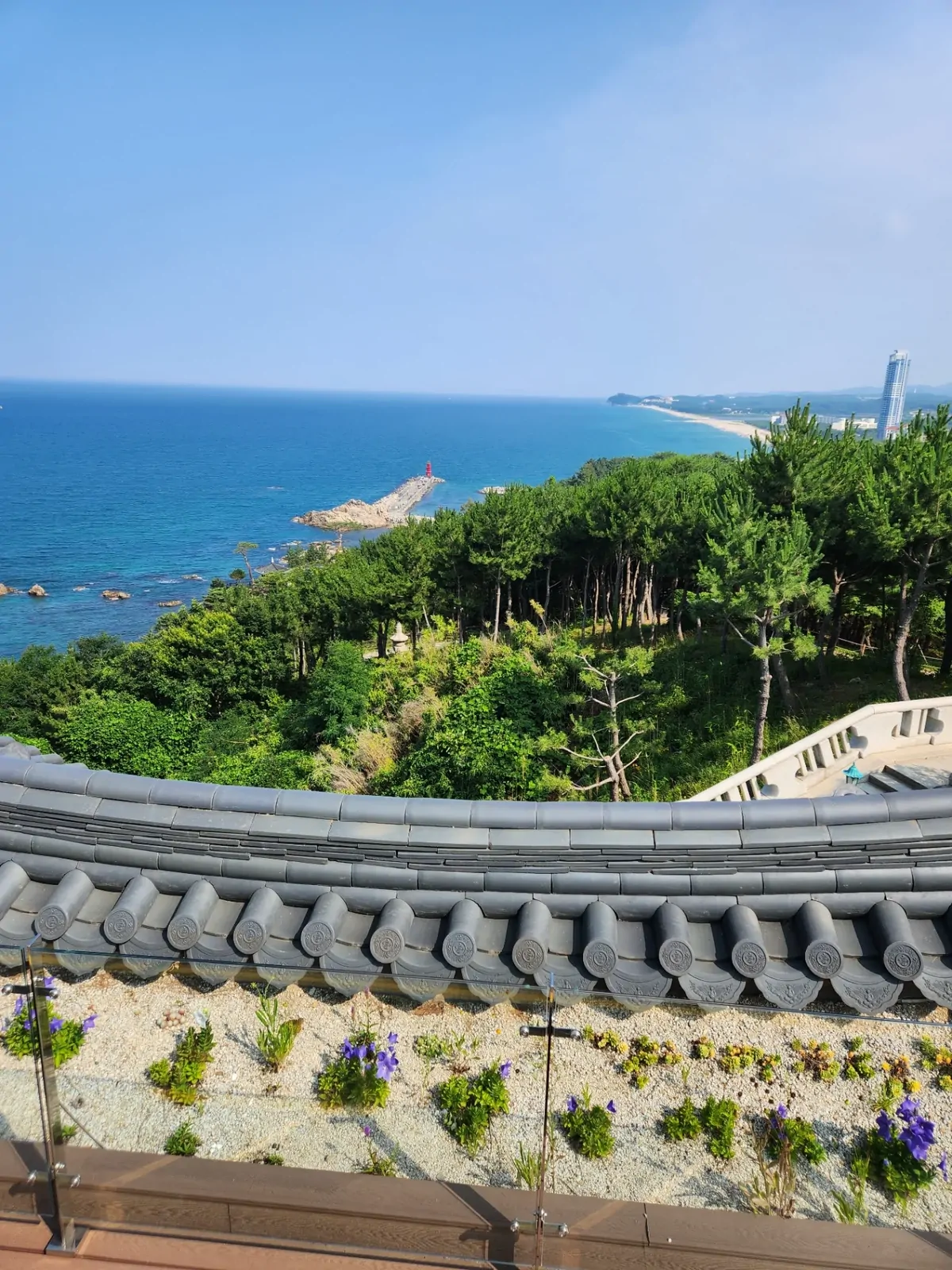
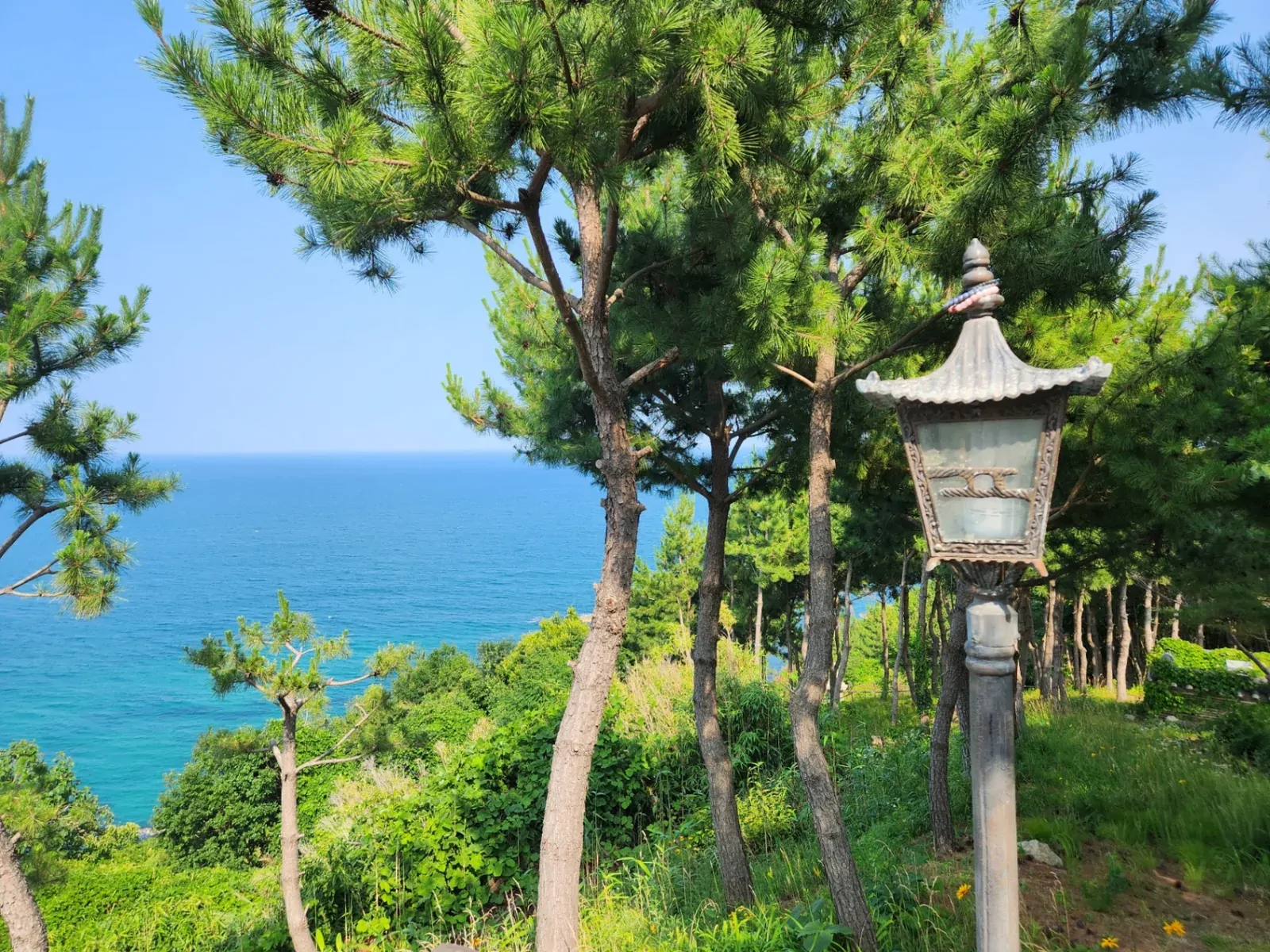
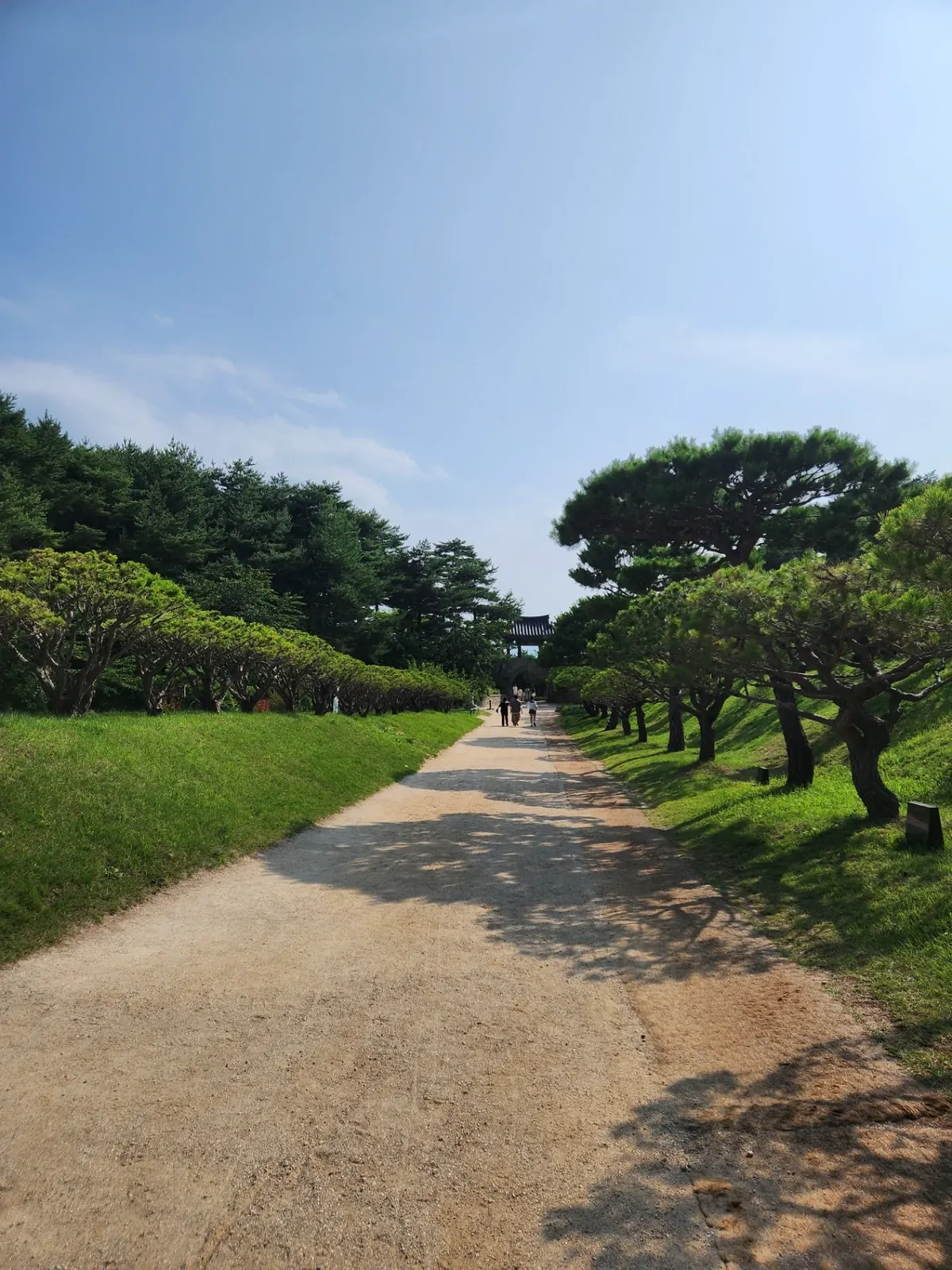
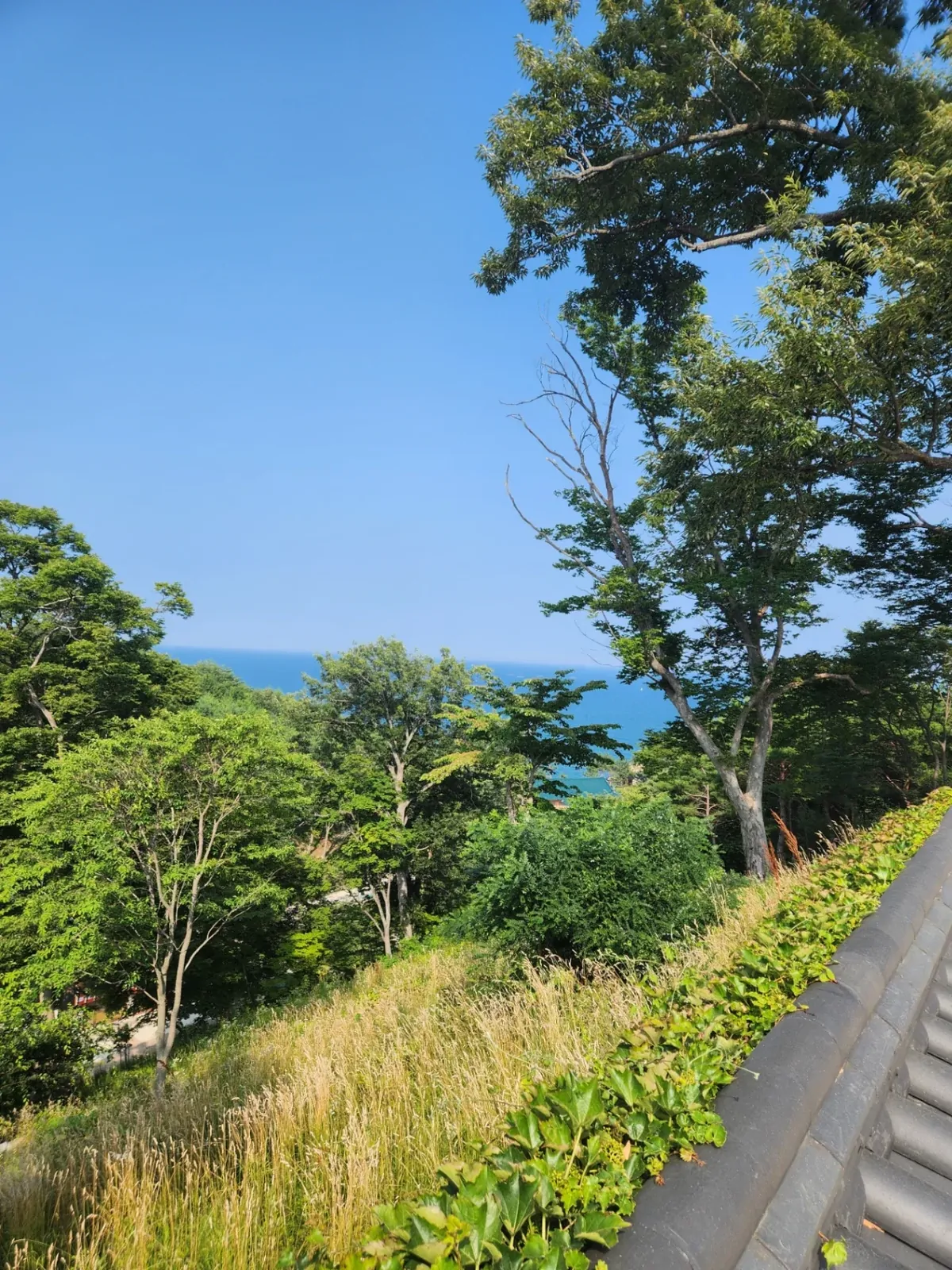
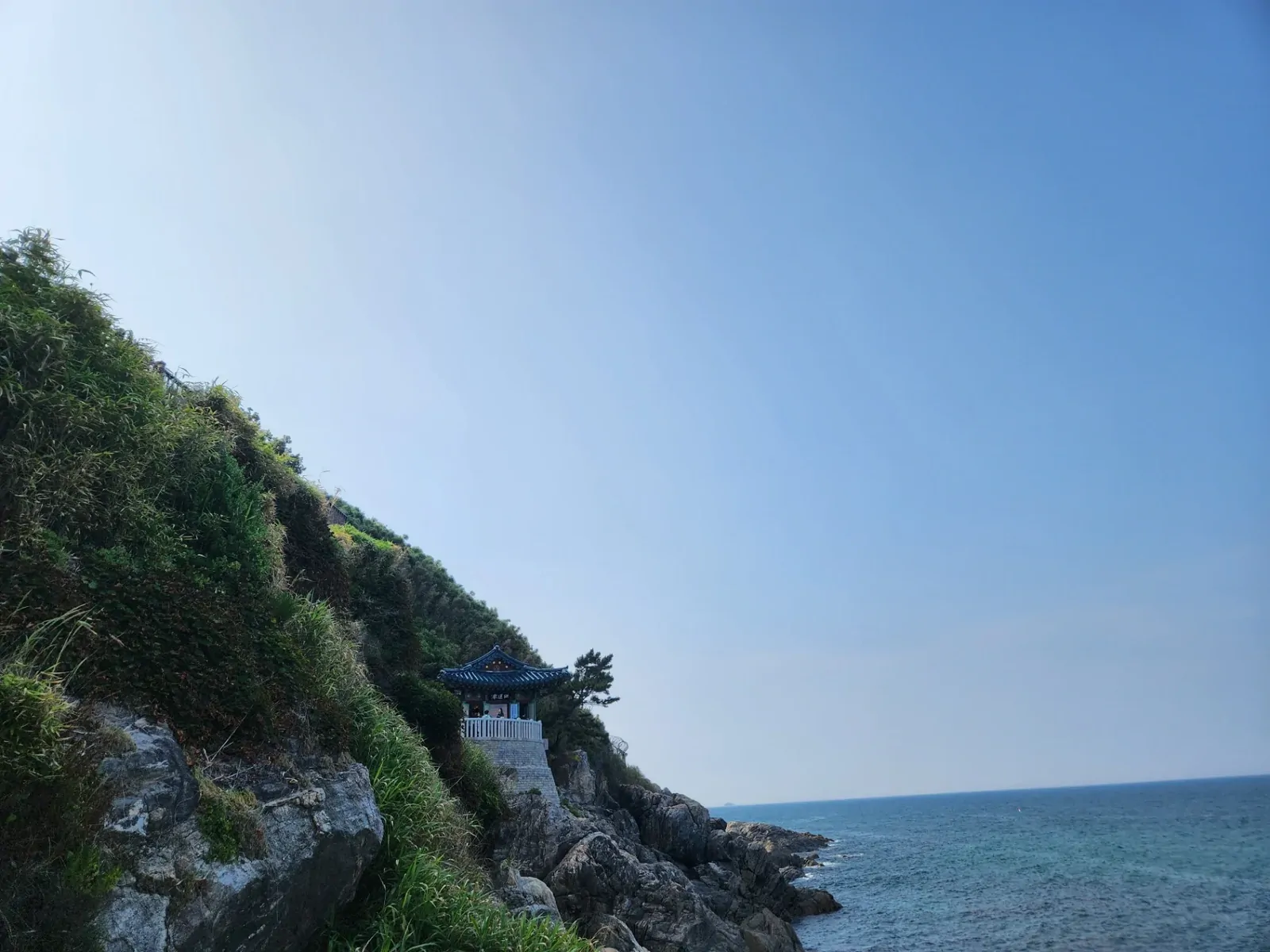
As I walked further along the coast, I discovered more traditional structures that framed the sea. I walked along stone walls topped with traditional tiles, where the gray stone and dark clay provided a frame for the brilliant blue of the East Sea. I passed through pine forests where stone lanterns stood as silent sentinels among the trees. The path led me to a traditional pavilion perched precariously on a coastal cliff, overlooking the crashing waves below. The sight of the blue-green water meeting the jagged rocks, all viewed from the shelter of a wooden gazebo, was the most peaceful moment of the trip. I ended my journey walking through a manicured traditional garden, watching other visitors enjoy the shade of the pines under the bright July sun.
Reflections on a Short Stay
Looking back at my photos, I realize that I tried to pack an entire region's identity into less than twenty-four hours. The transition from the neon lights of the Ferris wheel to the granite peaks of Seoraksan and finally to the quiet tile walls of the coast was exhilarating but exhausting. If I were to do this again, I would allocate at least two full days just for the mountain hiking to avoid the rush. I also realized that the coastal walks are best enjoyed slowly; I felt I was moving too quickly through the gardens and temples toward the end of the day.
- Tip: Start your mountain hike as early as possible to avoid the midday heat and the crowds on the granite ridges.
- Observation: The seafood bowls in the area are incredibly filling; one is more than enough for a full day of hiking.
- Note: Wear sturdy shoes that can handle both the rocky terrain of the peaks and the sandy paths of the coast.
17 photos
More visit stories
 Real visit
18 photos
Kota Kinabalu ·March 2025 – May 2025
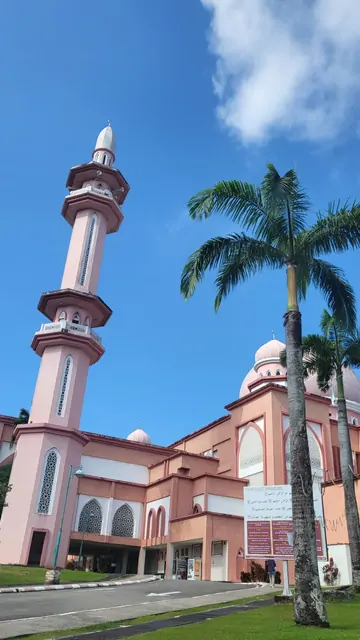
Between Azure Waters and Crimson Skies: My Time in Kota Kinabalu
A personal journey through the mosques, island resorts, and dramatic sunsets of Sabah, Malaysia, captured over two visits.
W World by City Editorial
 Real visit
18 photos
Shanghai ·June 2025
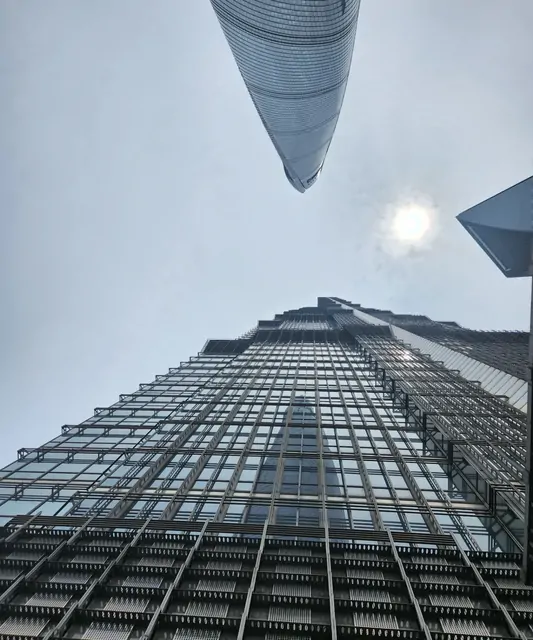
Steel Spires and Red Lanterns: My June Weekend in Shanghai
A three-day journey through the contrasting landscapes of Shanghai, from the futuristic heights of Lujiazui to the rainy steps of a quiet temple.
W World by City Editorial
 Real visit
18 photos
Amsterdam ·January 2026
Winter Light and Brick Alleys: My Four Days in Amsterdam
A personal journey through the quiet canals, golden-framed galleries, and windy windmills of Amsterdam in early January.
W World by City Editorial
 Real visit
18 photos
Busan ·October 2023 – March 2025
Between the Cliffs and the Skyline: My Busan Returns
A journey through Busan's rugged coastlines, from autumn seafood feasts to the grey, moody shores of a winter return.
W World by City Editorial
Have you been to this city?
Share your visit story with photos you took yourself. Once checked, it goes into the Magazine.
Share your visit story