
Barcelona · Spain · Visited December 2024
A Winter Afternoon in Barcelona and Montserrat
100% real visits · photos we took ourselves
The photos in this story were taken by the World by City team on this trip. No AI images, no stock photos. Taken December 28, 2024 (18 photos, 18 with location data).
My visit to Catalonia on December 28th was a whirlwind of stone, light, and geometry. I spent the day moving between the rugged heights of the mountains and the intricate urban designs of Barcelona, capturing the transition from the quietude of a monastery to the overwhelming scale of Gaudí's masterpieces. The winter air was sharp, but the sky remained a clear, brilliant blue, providing a perfect backdrop for the golden hues of the city's architecture.
The Journey to the Peaks
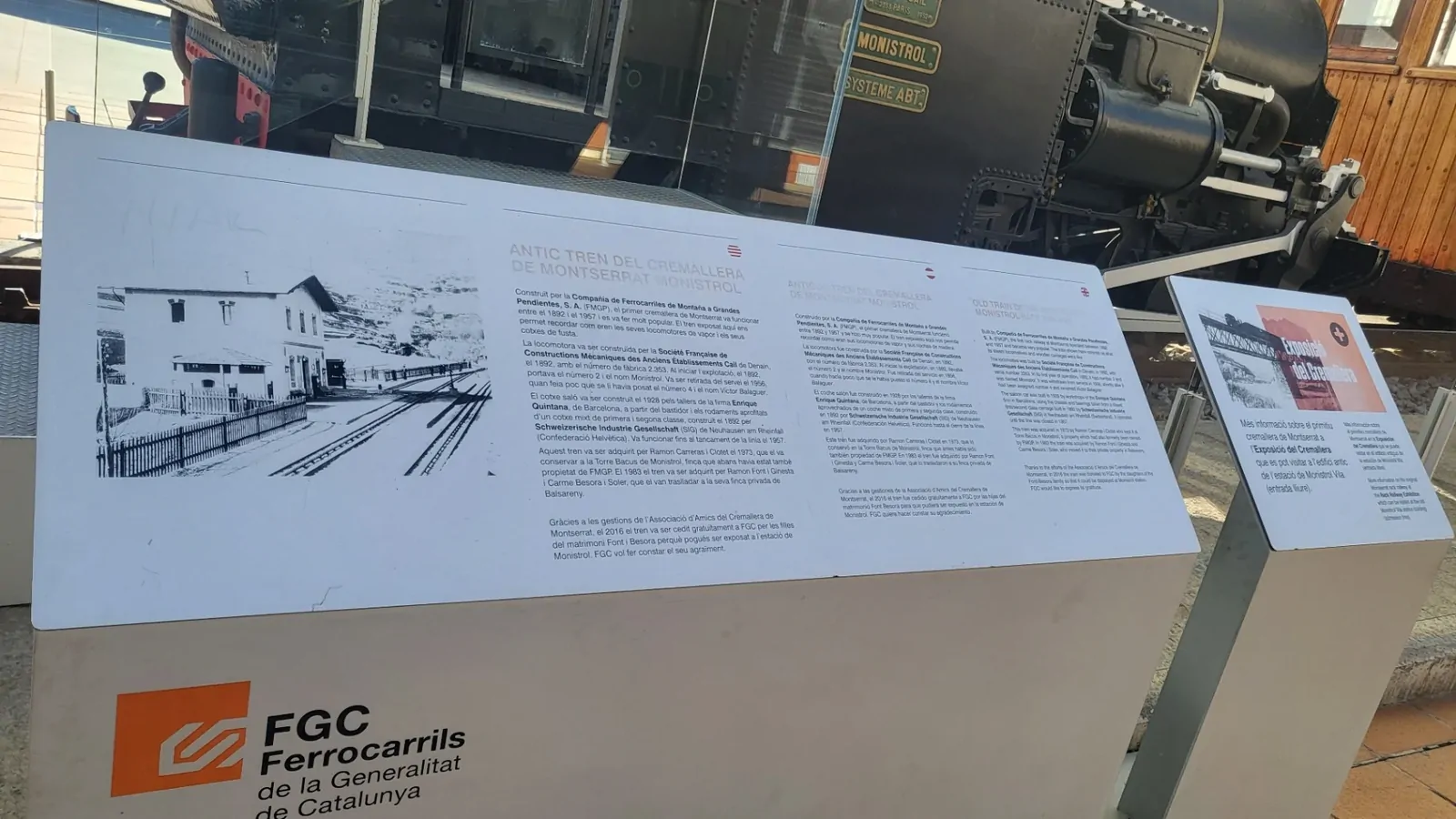
My day began with a fascination for the machinery that connects this region. I started at an outdoor railway exhibition space, where I found the signage of the Ferrocarrils de Catalunya (FGC). Standing beside a retro locomotive, I felt a sense of nostalgia for the era of steam and iron. The exhibition provided a quiet introduction to the journey, grounding the trip in the industrial history of the Catalan railways before I headed further into the wilderness.
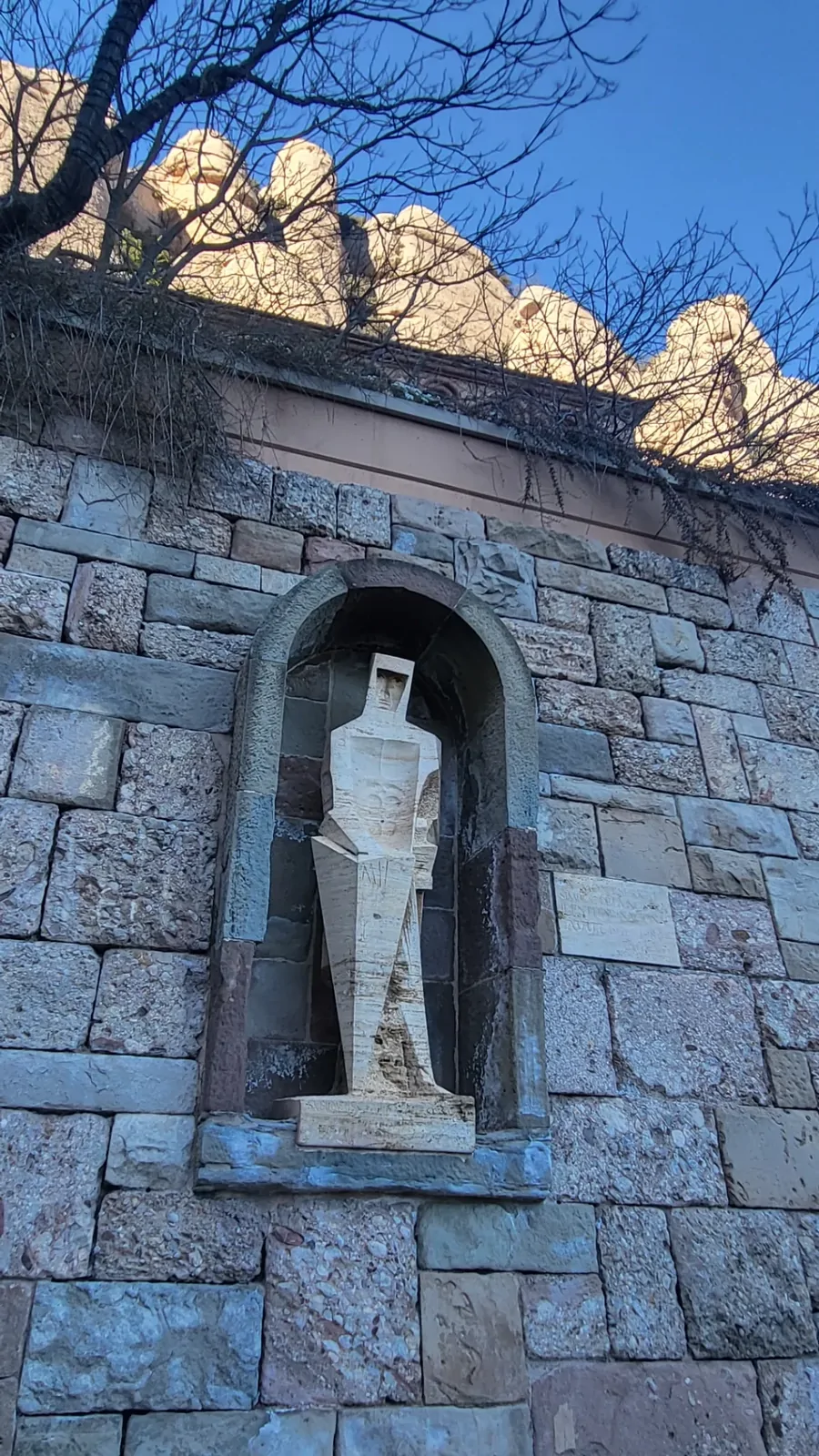
From there, I ascended to the Montserrat monastery. The atmosphere changed instantly as I stepped into the mountain air. I remember looking up at a stone niche where a sculpture of a saint stood guard against a stark, cloudless winter sky. The contrast between the grey, weathered stone and the deep blue of the atmosphere was striking, reflecting the solemnity and peace that the monastery is known for. It felt as though the world had slowed down, leaving only the wind and the silence of the peaks.
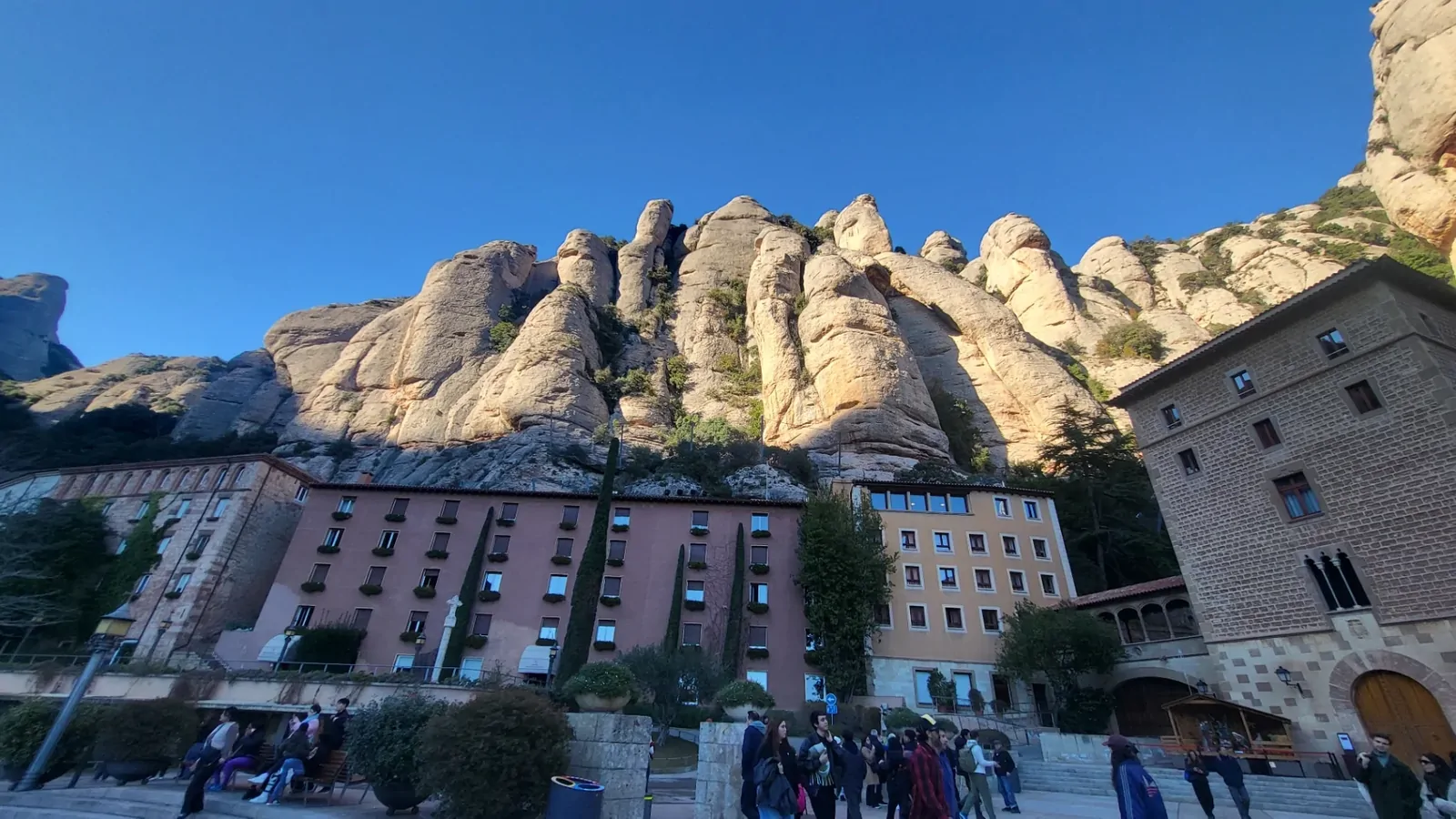
Walking through the monastery grounds, I stood in the main plaza and looked out at the surrounding landscape. The jagged, singular rock formations that give Montserrat its name loomed over the red-walled buildings of the monastery. The architecture seemed to cling to the mountainside, a testament to human faith carved into the raw earth. I spent some time simply observing how the red hues of the buildings complemented the grey, weathered cliffs under the bright December sun.
Wandering Through Stone and Light
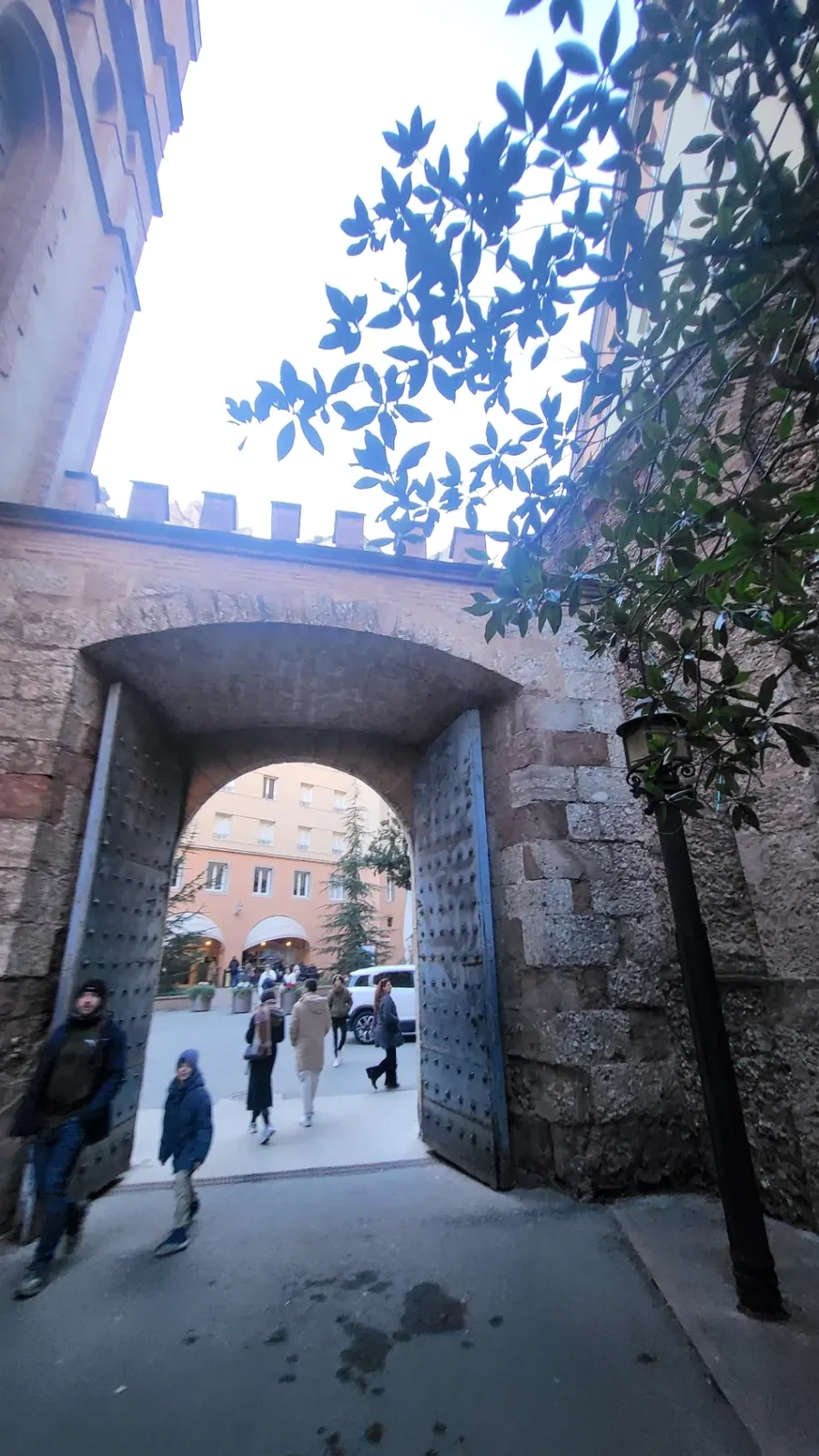
As I transitioned back toward the urban environment, I found myself walking through a street defined by a grand, European-style stone arch. I watched as pedestrians passed beneath the heavy masonry, their breath visible in the cool air. There is something about these narrow alleyways and arched gateways that makes the city feel like a living museum. The textures of the old stone walls felt cold to the touch, and the rhythm of the street was steady and unhurried.
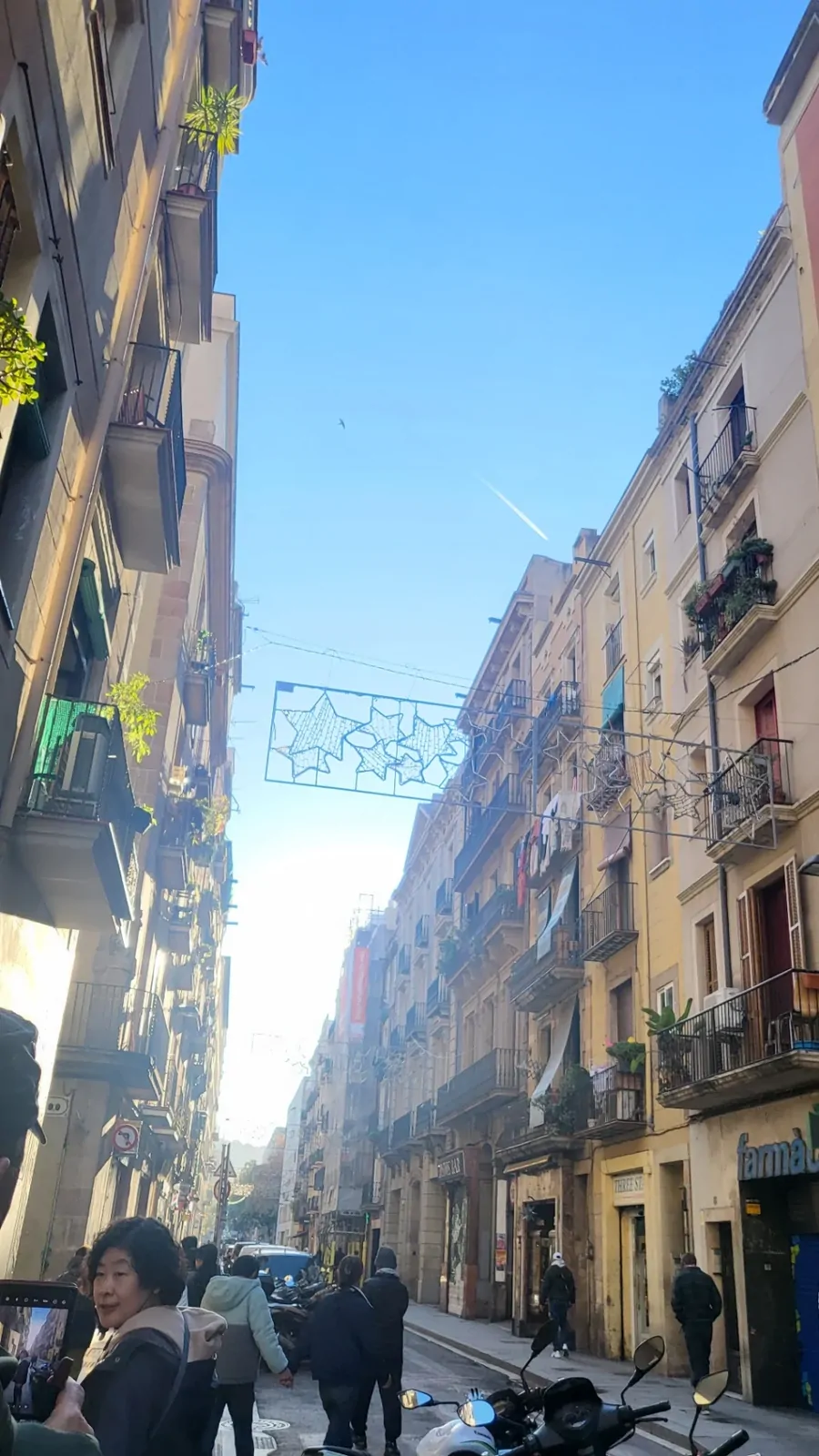
Later in the afternoon, I wandered into the old town, where the remnants of the holiday season were still visible. I came across a narrow alleyway decorated with a Christmas star, which gave the street a festive, intimate feeling. The architecture here reminded me of the old quarters of Southern Europe, where every turn reveals a new detail of weathered plaster or a wrought-iron balcony. It was a quiet moment of reflection amidst the larger scale of the city's famous landmarks.
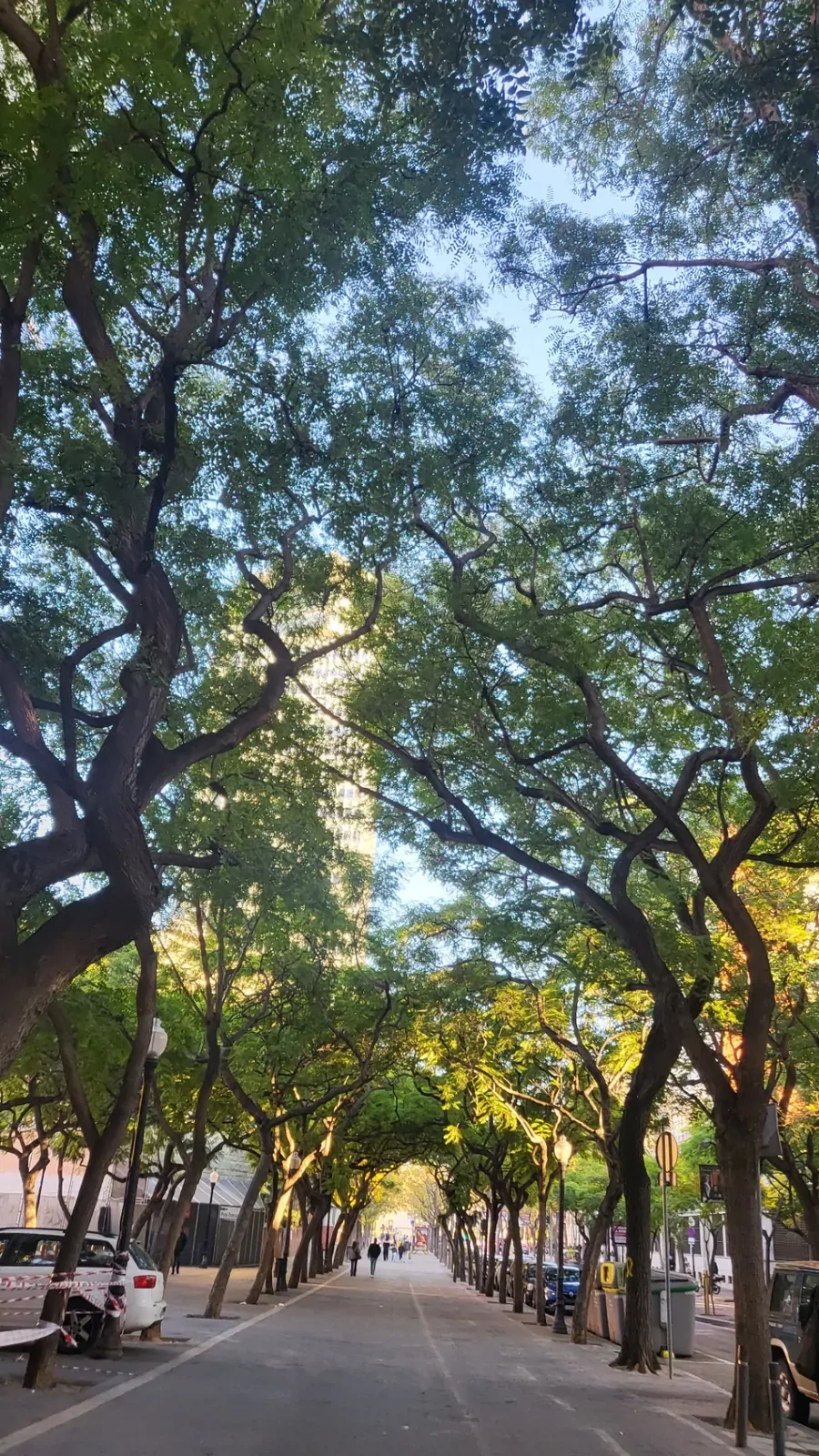
I eventually found a stretch of road where the trees formed a natural tunnel over the pavement. The sunlight filtered through the leaves in soft, dappled patches, creating a warm glow on the ground. Walking through this green corridor felt like a brief escape from the stone and concrete of the city center. The way the light played between the branches made the walk feel effortless, leading me toward the grander sights that awaited me in the late afternoon.
The Intricacies of Palau Güell and Casa Batlló
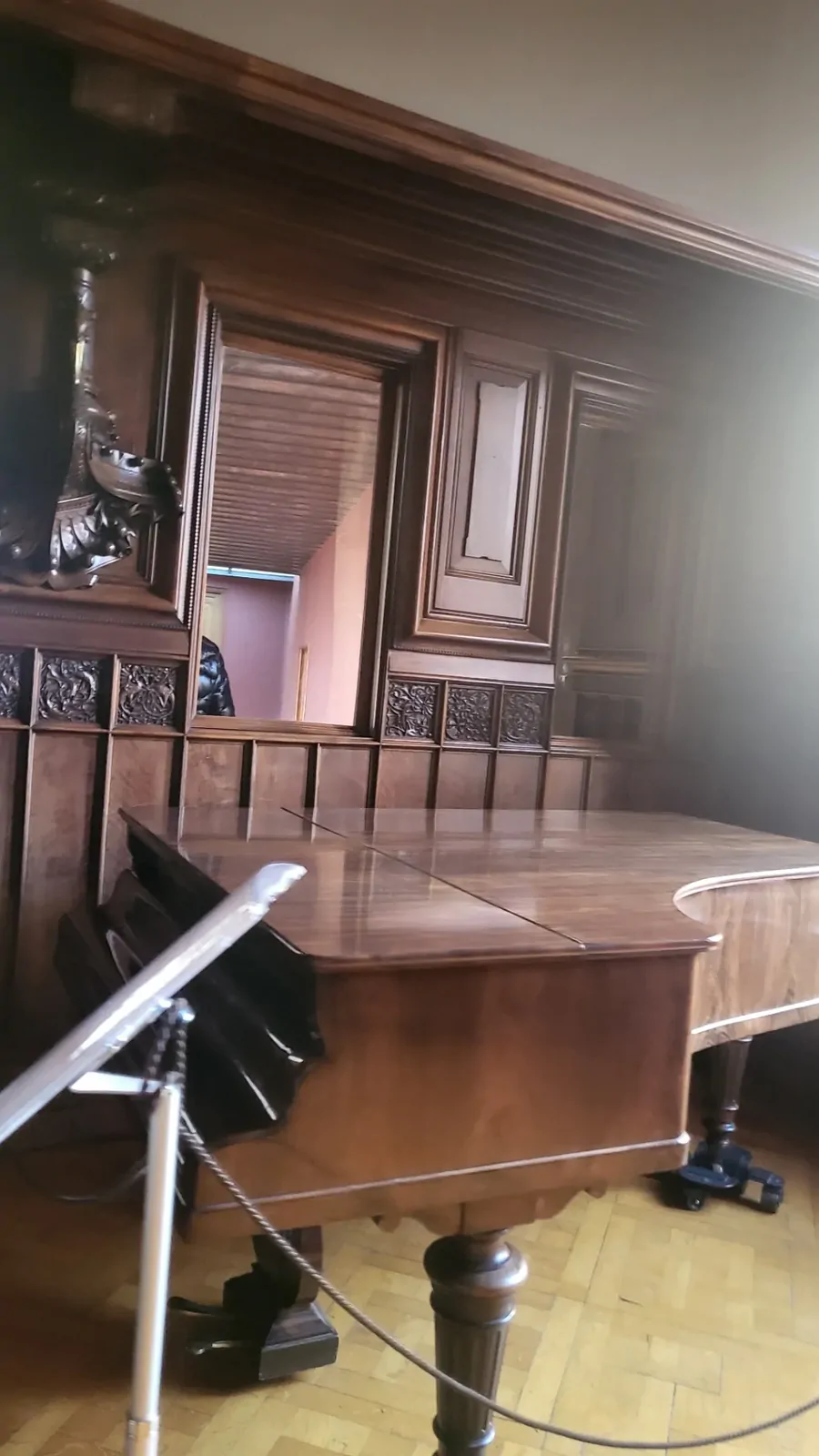
My exploration of Gaudí's residential work began at Palau Güell. Inside, I was immediately struck by the opulence of the interior. I found a room featuring an antique grand piano set against walls adorned with intricate wood carvings. The space felt heavy with history and classical music, the dark wood absorbing the light and creating a moody, sophisticated atmosphere. It was a stark contrast to the airy openness of the outdoors.
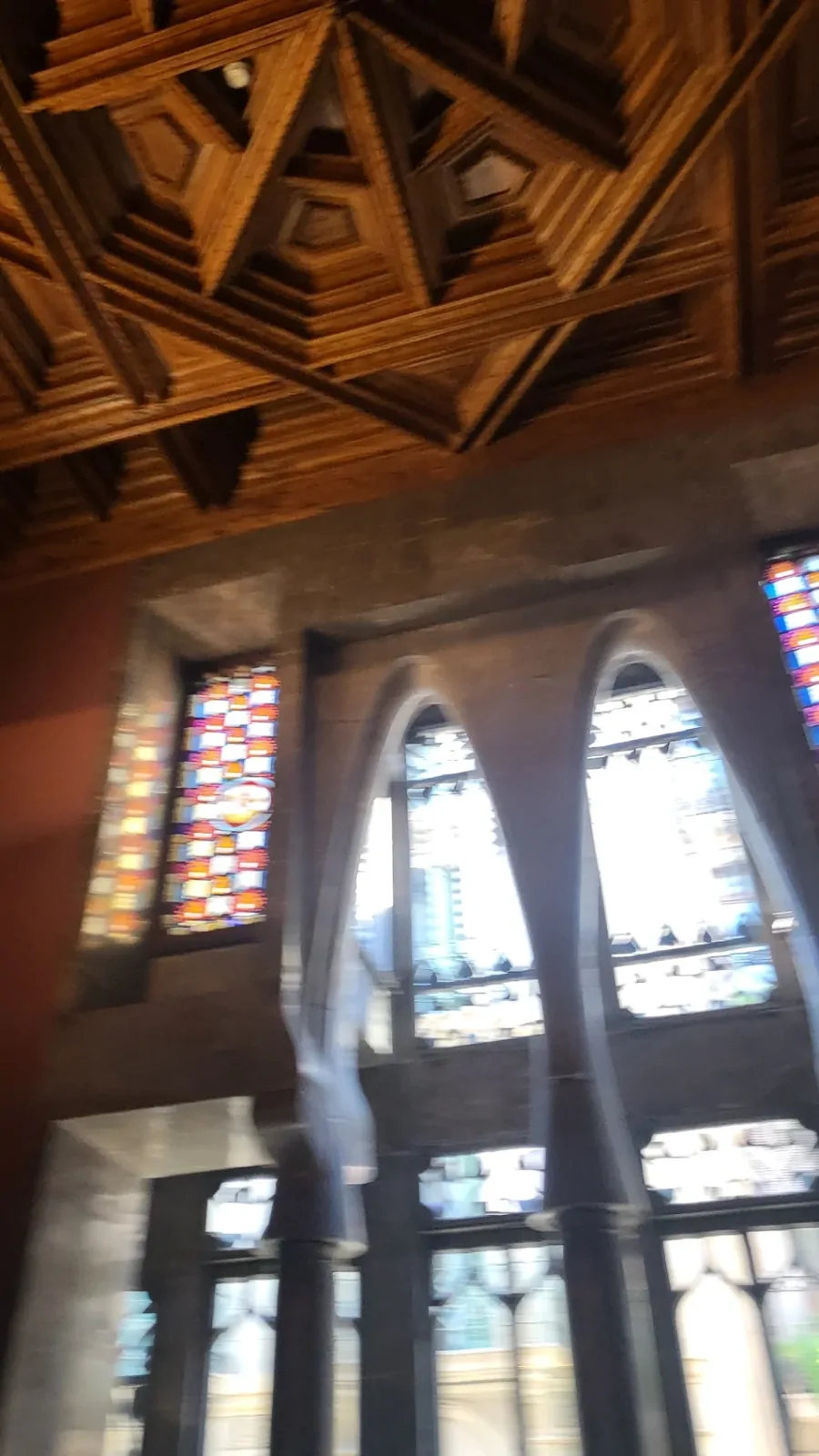
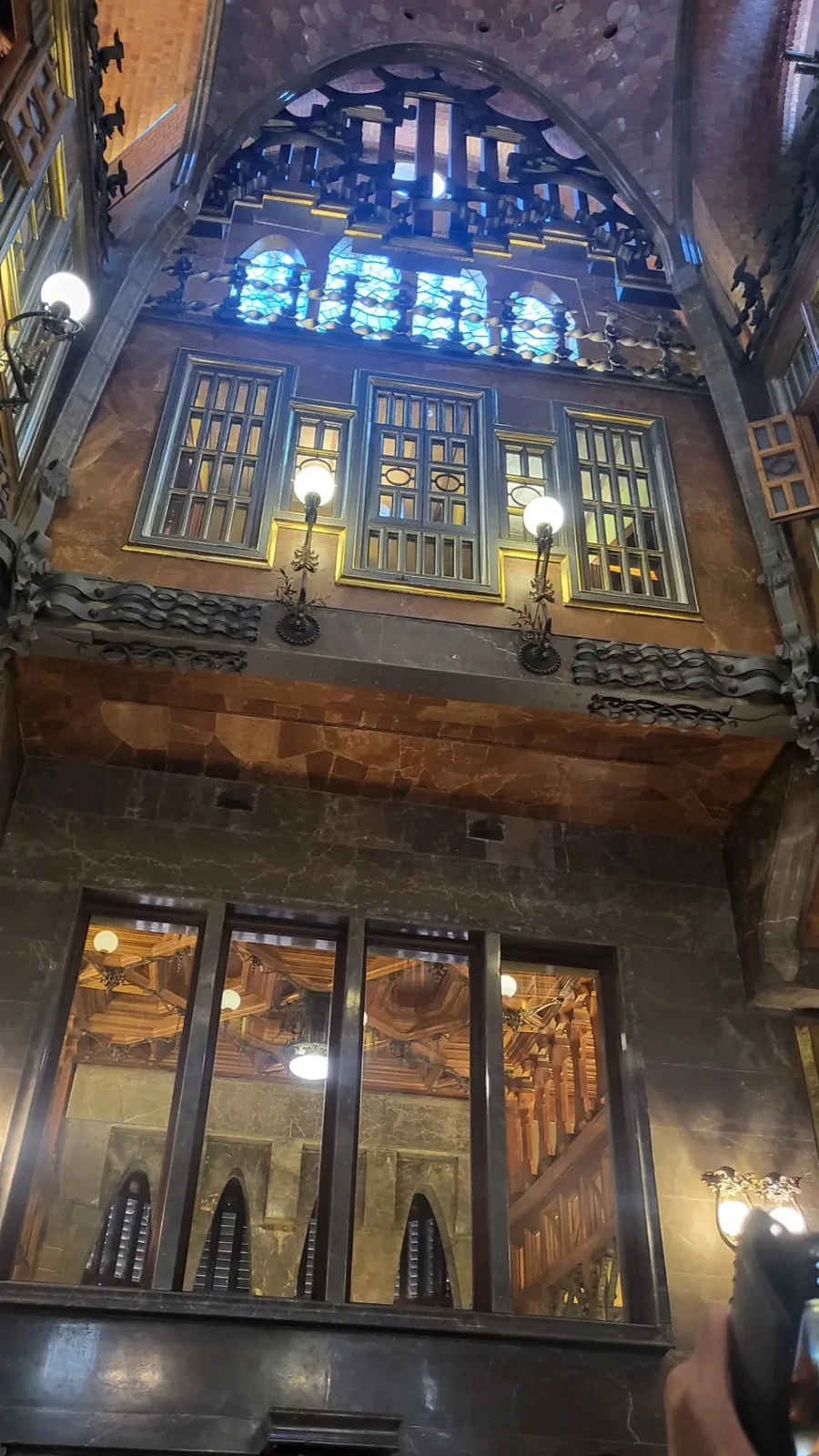
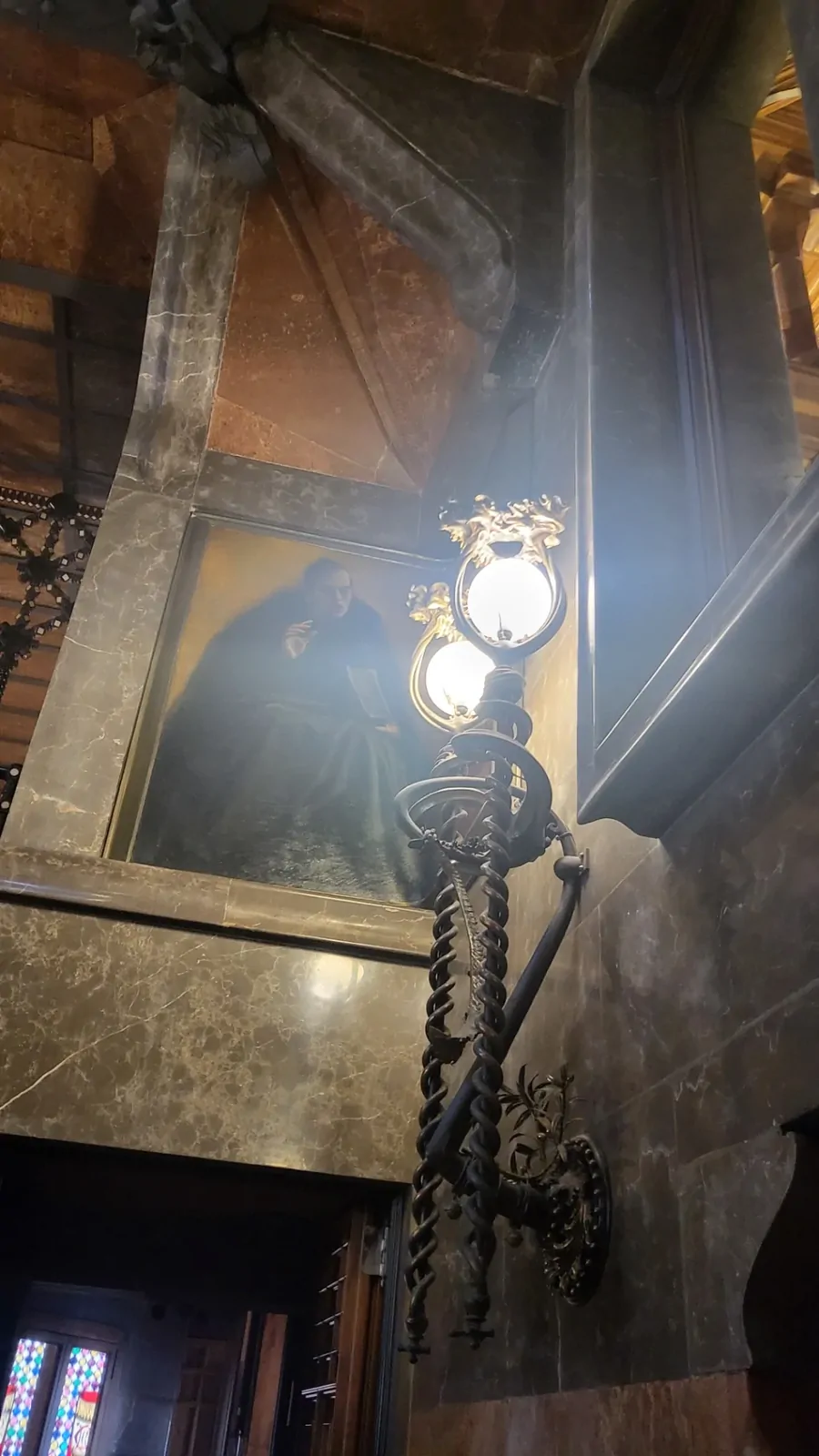
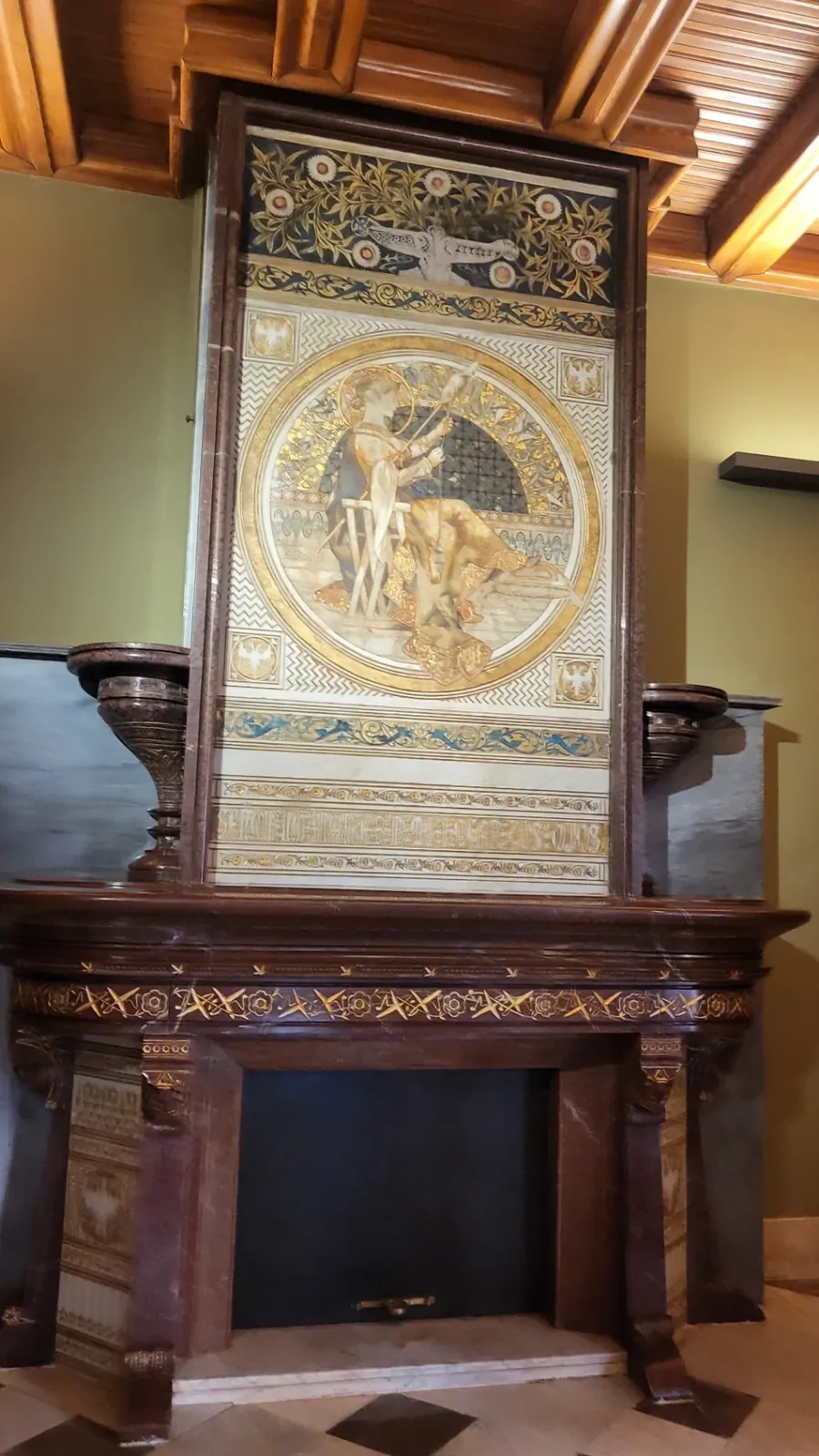
Moving deeper into the palace, I encountered a room filled with golden sculptural decorations and stained glass windows that cast colorful patterns across the floor. I noticed a particular area where iron spiral wall lamps were paired with religious paintings, blending industrial craftsmanship with spiritual art. The attention to detail was staggering, from the golden mosaic murals to the massive, ornate fireplace that dominated one of the rooms. I spent several minutes admiring the way the gold leaf shimmered in the dim interior light.
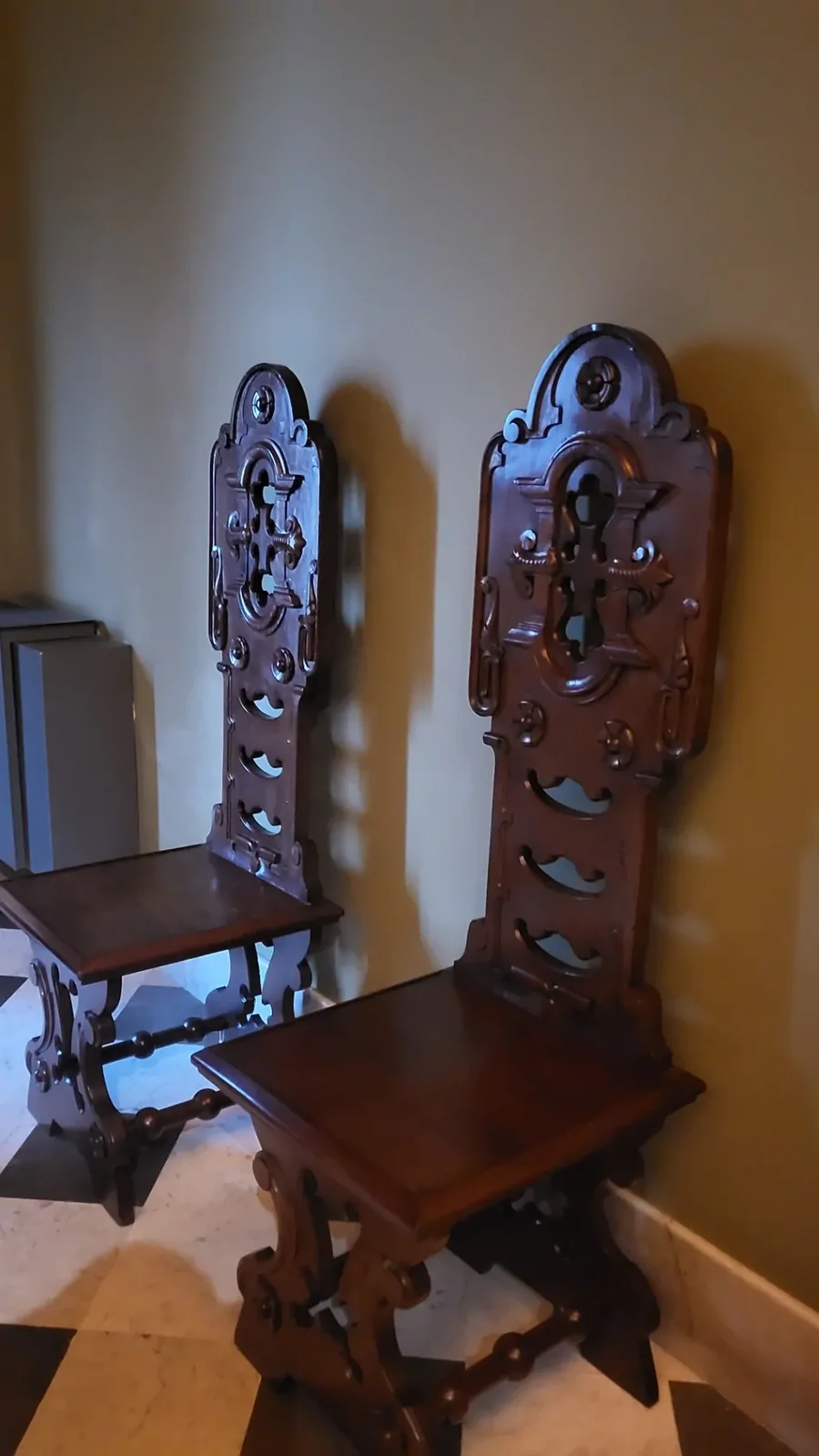
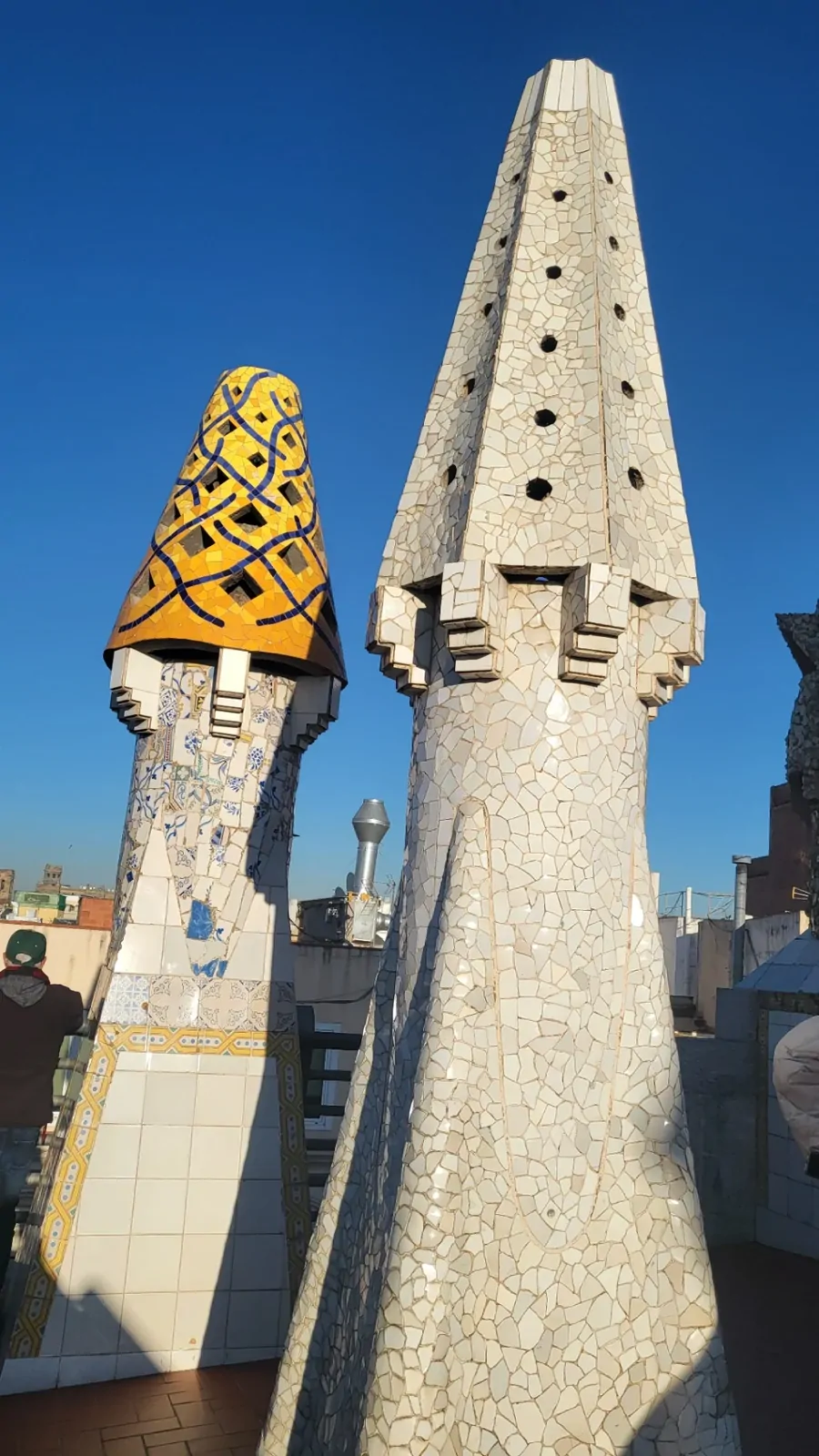
I also noticed the furniture, specifically two antique wooden chairs with elaborate carvings that sat against the wall. These pieces felt less like furniture and more like sculptures, echoing the organic forms Gaudí loved. After leaving the palace, I visited the rooftop of Casa Batlló. Looking up against the clear blue sky, I saw the famous, surreal chimneys. Their twisted, colorful shapes looked like something from a dream, standing as silent sentinels over the rooftops of Barcelona.
The Grandeur of the Sagrada Família
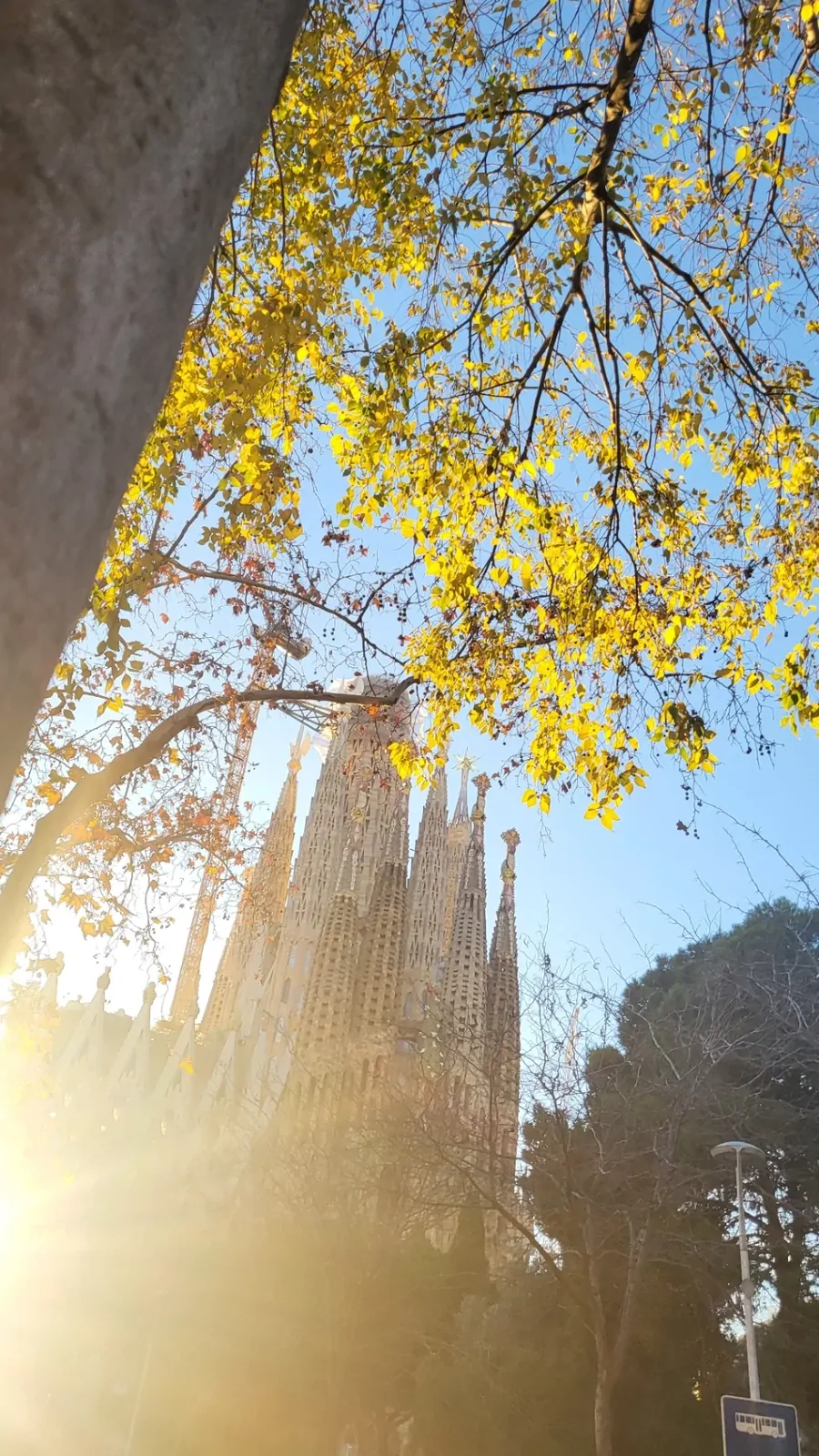
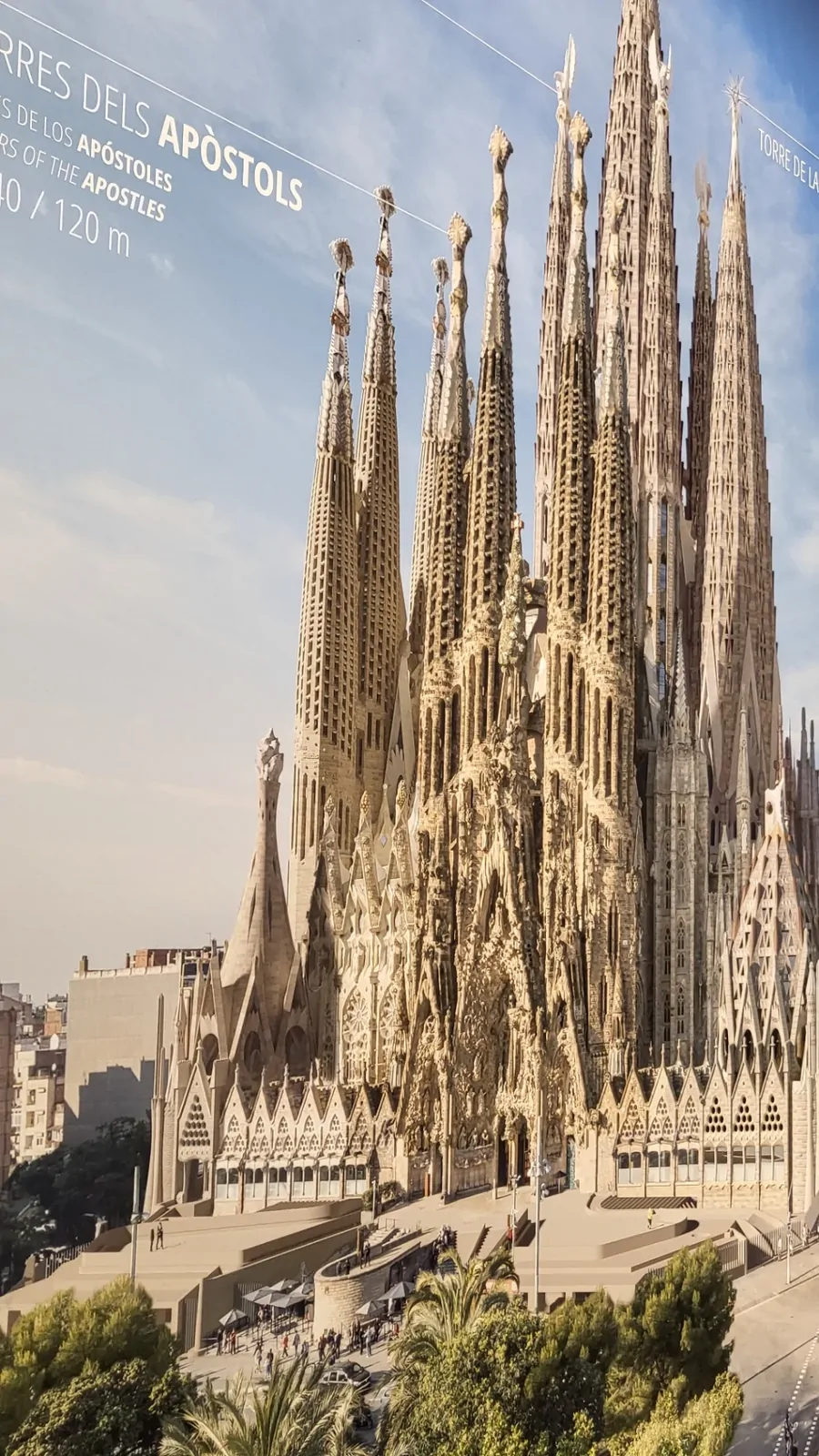
The climax of my day was the Basilica and Expiatory Church of the Holy Family. I first approached it from the outside, looking up through a canopy of yellow autumn leaves. The golden sunlight filtered through the branches, illuminating the facade in a way that made the stone seem to glow. The sheer scale of the building is impossible to capture in a single glance; it feels as though the structure is still growing, reaching upward toward the sky.
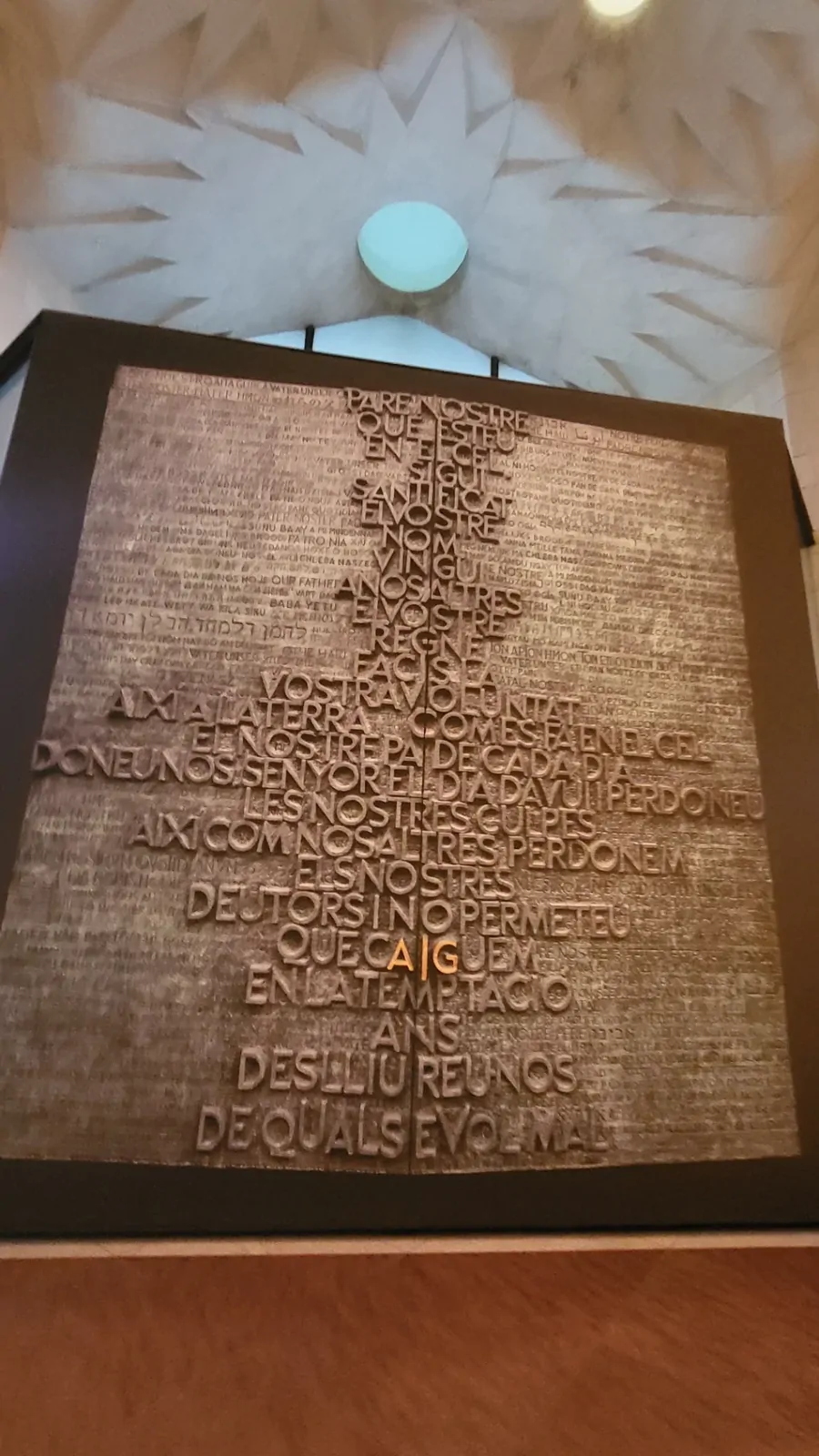
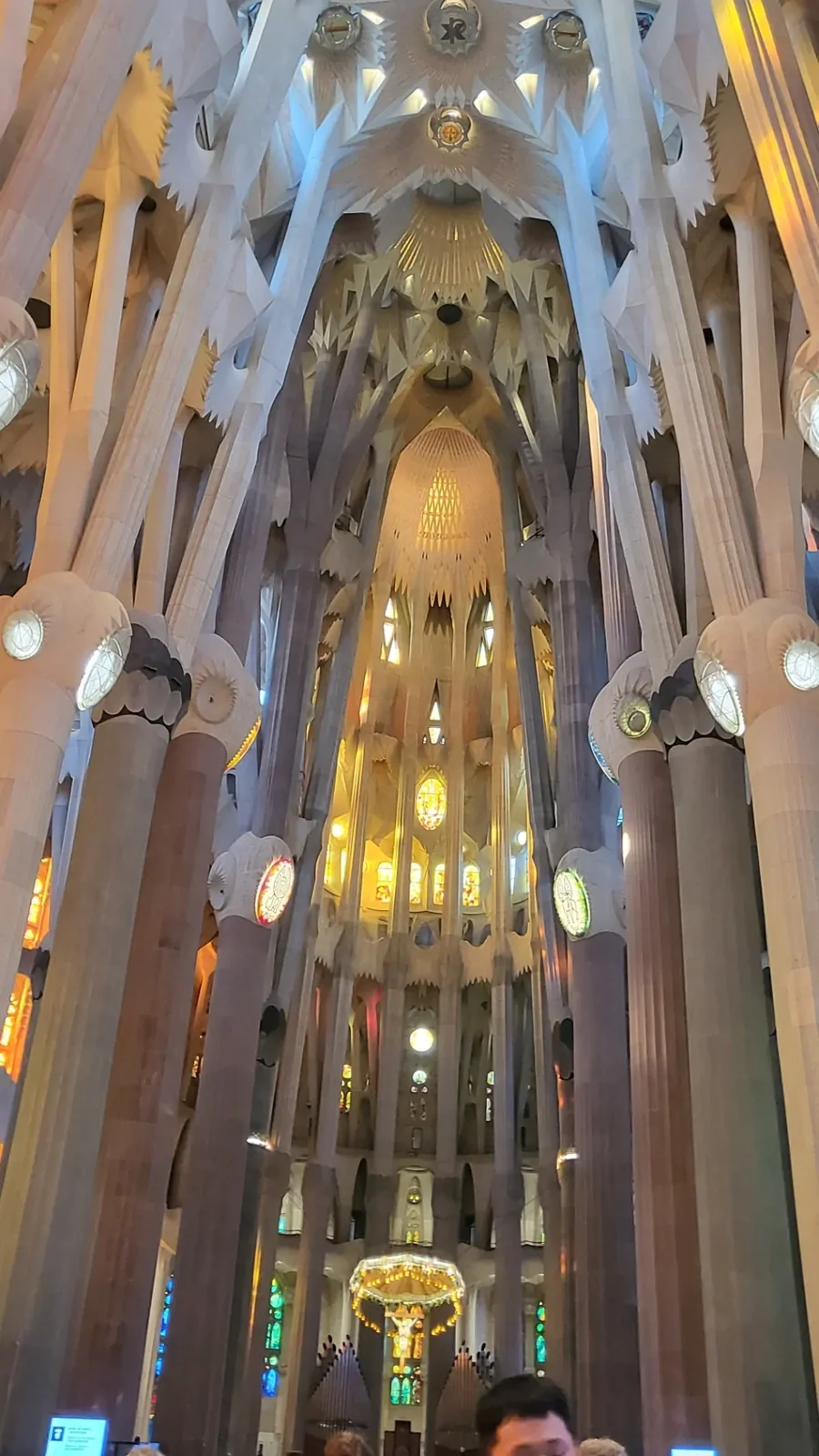
Once inside, the experience became immersive. I looked up at the geometric wooden ceiling, which branched out like a forest canopy, and the massive stained glass windows that flooded the nave with vivid reds, blues, and oranges. I found a carved panel featuring the Lord's Prayer written in Catalan, a detail that connected the global fame of the building to its local roots. The light shifted as the sun moved, changing the colors of the interior every few minutes.
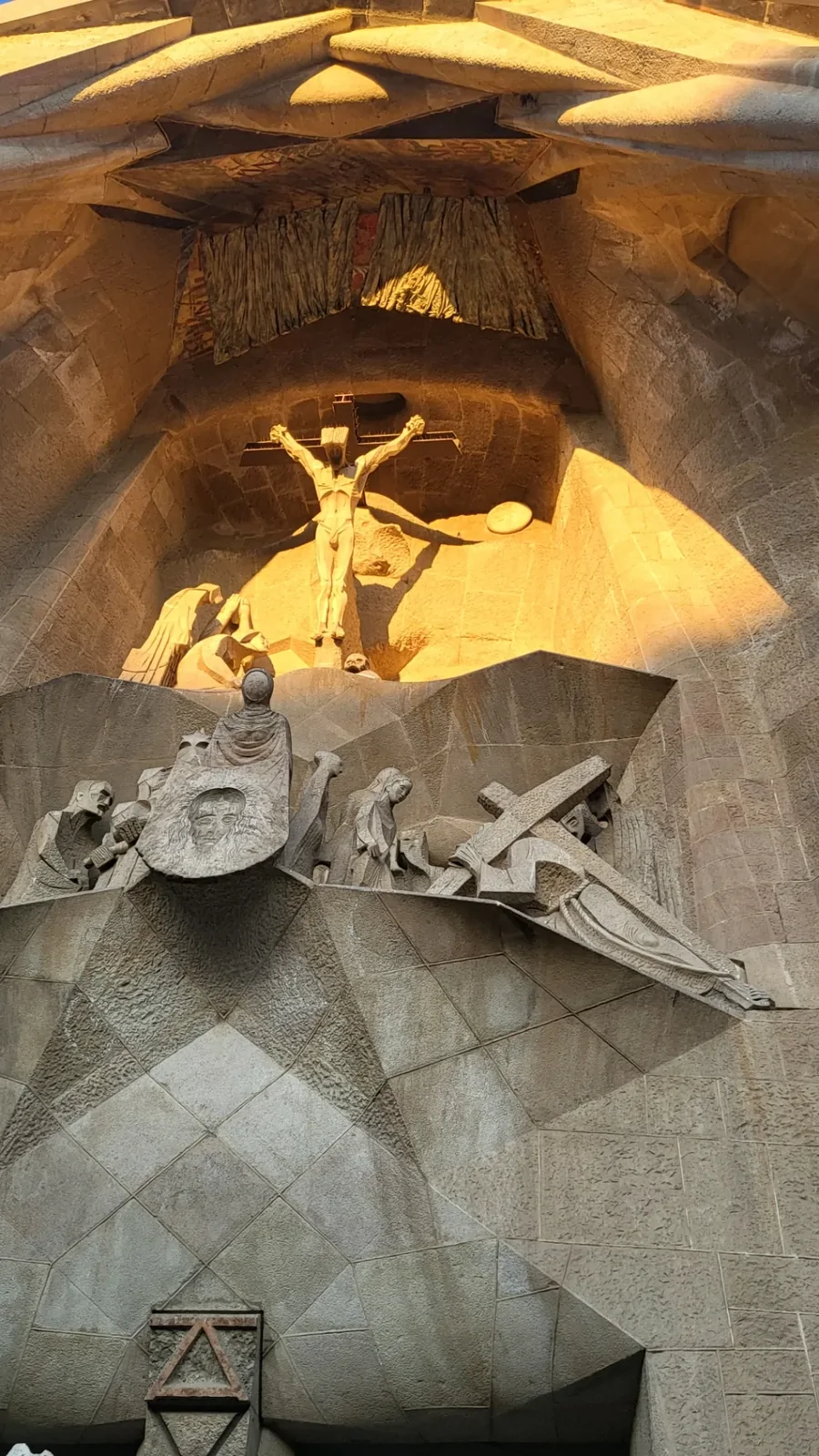
I walked toward the Passion Facade, where the angular, stark sculptures of the crucifixion and the figure of Jesus created a feeling of profound sorrow and strength. The stone here felt harsher and more modern than the Nativity side, emphasizing the pain of the narrative. Finally, I stepped back to take in the full view of the spires. The intricate exterior walls, reaching high into the winter air, stood as a final, breathtaking image of the day's journey.
Reflections on a December Day
Looking back at my photos, I realize that the timing of my visit was ideal. The winter light in Barcelona is softer and more golden than the harsh glare of summer, which allowed the details of the stone and the colors of the stained glass to truly pop. However, trying to fit both the remote heights of Montserrat and the dense architectural sites of the city into a single afternoon was an ambitious pace. I felt the rush of the clock as I moved from the palace to the basilica.
- Light: The late afternoon sun (around 4:00 PM) is the best time to photograph the Sagrada Família's exterior.
- Pacing: If I were to do this again, I would dedicate a full day to Montserrat alone to avoid the rush back to the city.
- Observation: The interior of Palau Güell is often overshadowed by the larger churches, but its intimate, golden details are just as captivating.
17 photos
Pick your dates — we'll search Barcelona hotels for you
Choose dates and guests, and the buttons below will open search results with your criteria. Prices differ between sites, so compare before you book.
 View on Booking.com
 View on Hotels.com
Things to see in Barcelona
See all →
Temples & religious sites
Basilica and Expiatory Church of the Holy Family
The Sagrada Familia is Barcelona's iconic basilica, designed by architect Antoni Gaudí and still under construction to this day. Its striking facade and grand scale draw travelers from around the world.
Parks & gardens
Park Güell
A park on El Carmel hill in Barcelona, known for Gaudí's striking architecture and tile mosaics. Designated a UNESCO World Heritage Site, it's a great place for a leisurely stroll.
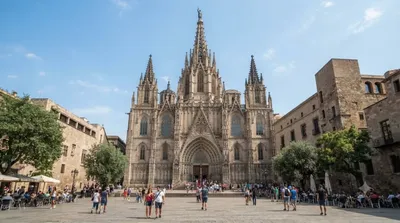
Temples & religious sites
Cathedral of the Holy Cross and Saint Eulalia
This cathedral, seat of the Archbishop of Barcelona, was built between the 13th and 15th centuries. Highlights include its neo-Gothic façade added in the late 19th century and the cloister with its famous goose well.
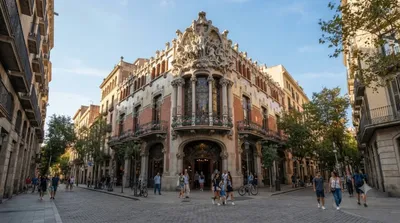
Culture & venues
Palau de la Música Catalana
This concert hall in Barcelona is considered a masterpiece of Catalan Modernisme. Designed by Lluís Domènech i Montaner, it opened in 1908 and is known for its lavish interior decoration.
More visit stories
 Real visit
18 photos
Real visit
18 photos
Monaco ·December 2024
A Winter Transition from Provence to Monaco
A journey through the stone alleys of Saint-Paul-de-Vence, the grandeur of Monaco's cathedral, and the coastal breeze of Nice.
W World by City Editorial
 Real visit
18 photos
Real visit
18 photos
Hong Kong ·March 2024
Foggy Peaks and Quiet Temples: My March Weekend in Hong Kong
From the neon lights of the harbor to the misty heights of Lantau Island, a short journey through the contrasts of Hong Kong.
W World by City Editorial
 Real visit
18 photos
Real visit
18 photos
Sokcho ·December 2025 – July 2026
Between Snow and Summer: My Two Visits to Gangwon
A journey through the contrasting seasons of Sokcho and Gangwon, from winter snows to the emerald waters and high pastures of July.
W World by City Editorial
 Real visit
18 photos
Real visit
18 photos
Cebu ·January 2025
Between Emerald Waters and Ancient Stones: My Days in Cebu and Bohol
A journey from the white sands of Mactan to the rolling hills of Bohol, capturing the quiet moments and grand moments of the Visayas.
W World by City Editorial
Have you been to this city?
Share your visit story with photos you took yourself. Once checked, it goes into the Magazine.
Share your visit story