World by City

Heritage & monuments

Phnom Bakheng
Open in Maps
Phnom Bakheng

Phnom Bakheng

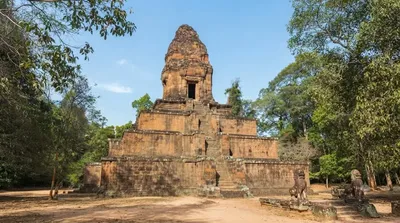
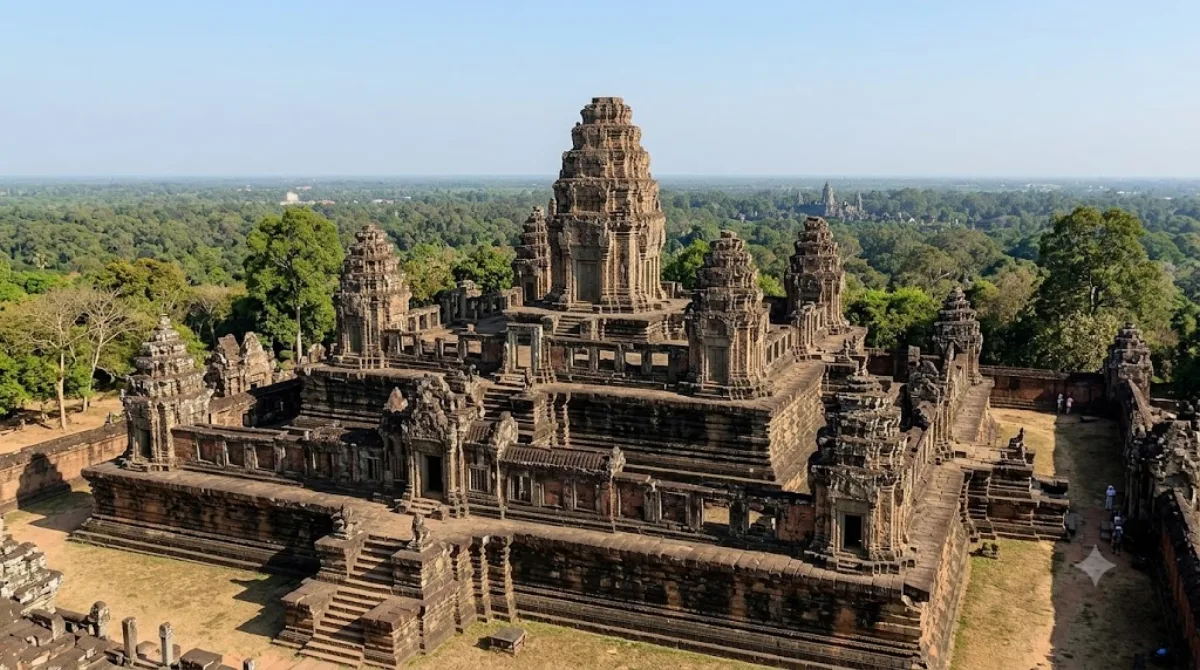
This Hindu temple, dedicated to the god Shiva, is built atop a natural hill within the Angkor archaeological site. Constructed in the late 9th century during the reign of King Yasovarman, the structure is designed as a mountain-shaped temple. Travelers visit this site primarily for its elevated position, which provides a wide view of the surrounding Angkor landscape and the distant forests.

Getting There

The site is located outside the main city center of Siem Reap. Most visitors reach the temple via tuk-tuk or private vehicle from the city. The journey typically takes 20 to 30 minutes depending on traffic and the specific starting point within the city.

Duration of Visit

Allow approximately 2 to 3 hours for a visit. This includes the time required to walk up the steep path to the summit and explore the temple structures at the top.

Timing and Crowds

The late afternoon is the most popular time to visit to observe the sunset. Because of this, the site becomes very crowded during these hours, and access to the summit may be limited by staff to manage the number of people on the temple. To avoid large crowds, consider visiting in the early morning.

Nearby Attractions

Due to its location, this site can be combined with other nearby ruins:

  • Baksei Chamkrong (0.3km)
  • Prasat Bei (0.3km)
  • Ta Prohm Kel (0.9km)
  • Yasodharapura (1.7km)

Updated September 8, 2026 · Edited by the World by City editors

Tickets & tours

Admission prices and opening hours change often, so we don't list them here. Check what's on sale and at what price below — booking ahead can cut the queue at some places.

This place may not appear in the results — some sites are free to enter or sell tickets only at the gate.

Stays near Phnom Bakheng

Sorted by distance, walkable ones first. Distances are straight-line.

Map and place data © OpenStreetMap contributors

Phnom Bakheng Nearby stays

Check prices and availability on the booking sites.

Pick your dates — we'll search Angkor hotels for you

Choose dates and guests, and the buttons below will open search results with your criteria. Prices differ between sites, so compare before you book.

Hotel membership

Staying at Accor hotels often? ALL Accor+ Explorer

A paid annual membership. It includes two free nights a year across Asia-Pacific, 30% off dining and 15% off drinks, and 15% off stays at more than 4,500 hotels worldwide.

Explore the membership

Itineraries including this place

Good to visit alongside

Baksei Chamkrong

Temples & religious sites

Baksei Chamkrong

A Hindu temple on the left side of the road leading to the south gate of Angkor Thom. It was dedicated to the god Shiva and once housed a statue of Shiva made of gold.

0.3 km away

Prasat Bei

Heritage & monuments

Prasat Bei

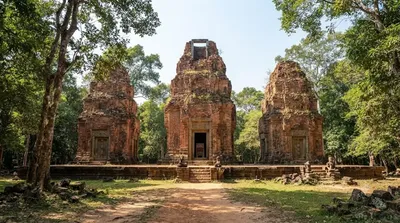
Prasat Bei is a temple within Angkor featuring three brick towers lined up north to south on a laterite platform. Look out for the carvings on the central and southern towers' lintels depicting the god Indra riding an elephant.

0.3 km away

Ta Prohm Kel

Heritage & monuments

Ta Prohm Kel

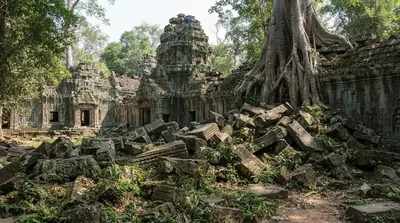
A small sandstone site within the Angkor complex, left in ruins after centuries of weathering. Though modest in size, it's a nice stop along the way when exploring Angkor.

0.9 km away

Angkor Wat

Temples & religious sites

Angkor Wat

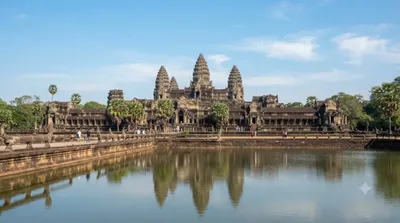
Angkor Wat is the best-preserved temple among the Angkor ruins in Siem Reap, Cambodia, built in the 12th century during the Khmer Empire. Its intricate architecture blending Hindu and Buddhist culture has made it a world-famous destination.

1.7 km away

Yasodharapura

Heritage & monuments

Yasodharapura

Also known as Angkor, Yasodharapura was the capital of the Khmer Empire, founded by Yasovarman I in the late 9th century. Visitors can explore the remnants of this ancient capital centered around Phnom Bakheng temple.

1.7 km away

Bayon

Temples & religious sites

Bayon

The Bayon is a Khmer Empire temple at the center of Angkor Thom, built on the order of Jayavarman VII and once regarded as the empire's foremost temple. Its form, altered under successive kings, lets visitors sense the layered history of the Angkor ruins.

2.0 km away