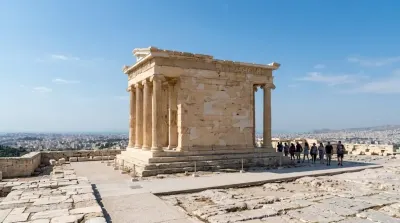
Temples & religious sites
Parthenon
What it is
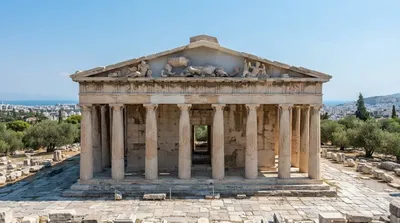
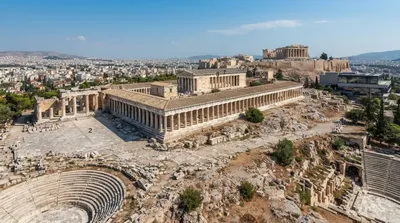
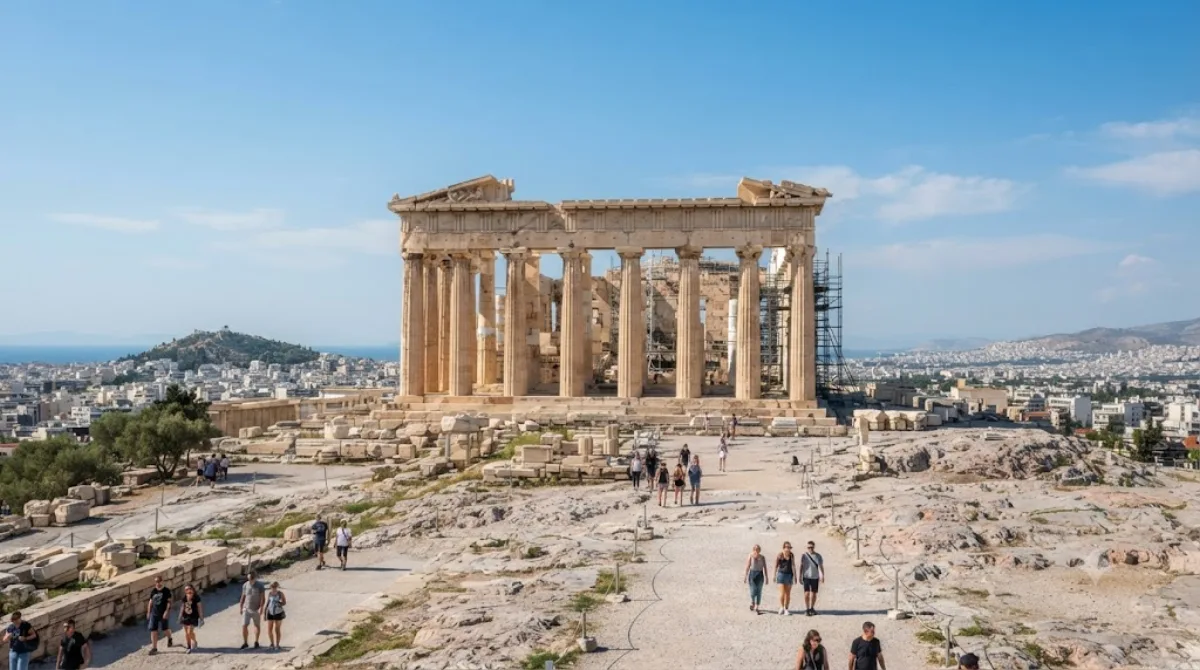
The Parthenon is the marble temple that crowns the Acropolis, built in the 5th century BC and dedicated to Athena. Most of what you see today is the outer colonnade and structure; the interior and much of the sculptural decoration are gone or held elsewhere, including a large portion of the frieze now in the British Museum. It's the main reason people climb the Acropolis, and the views over Athens from the same plateau are part of the visit.
Getting there
From central Athens (Syntagma or Monastiraki), it's roughly a 15-20 minute walk to the Acropolis entrance, followed by a climb up the hill itself. The paths are stone and can be uneven or slippery, so wear proper shoes.
How much time to allow
Plan for at least 1.5 to 2 hours to see the Parthenon along with the other structures on the Acropolis site, more if you want to read the information panels or linger for photos.
When to go
Early morning, right when the site opens, is the coolest and least crowded time, especially in summer when the marble surfaces get very hot and shade is limited. Midday in peak season (June-August) draws heavy crowds and strong sun with little cover. Late afternoon can also be quieter, but check how much time you'll have before the site closes for the day.
What to combine it with
Everything nearby sits on the same hill, so it's easy to see in one visit:
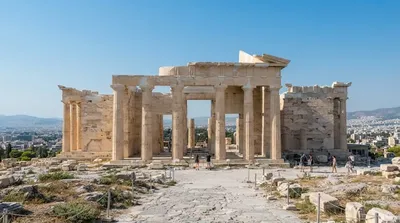
- Hekatompedon temple and the Acropolis of Athens itself (0km) — the broader archaeological site surrounding the Parthenon.
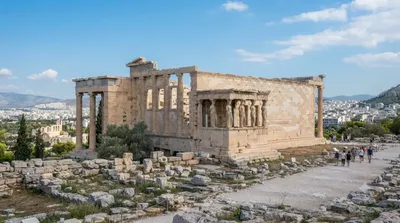
- Erechtheion (0.1km) — the temple known for the Caryatid columns.
- Brauroneion (0.1km) — a smaller sanctuary just steps away.
If arriving from Athens International Airport (ATH), allow extra time for the transfer into the city before heading up to the site.
Updated September 8, 2026 · Edited by the World by City editors
 GetYourGuide
 Klook
Klook
 Tiqets
 KKday
KKday
 WeGoTrip
 Booking.com
 Hotels.com