
Daejeon · Getting around
How to use public transport in Daejeon
August 29, 2026 · last updated · about 4 min read
Primary Modes of Transport
Daejeon is a planned city with a grid-like layout, making navigation straightforward. Two main modes dominate transit:
- Daejeon Metro (Line 1): Best for crossing the city from east to west. It is the fastest option for reaching major hubs like Daejeon Station and the government complex, avoiding surface traffic.
- City Buses: Essential for reaching areas not served by the metro, such as Yuseong-gu or the outskirts of the city. They offer comprehensive coverage but are subject to road congestion.
- Taxis: Most efficient for short distances or late-night travel when public transit frequency drops.
Payment and Passes
The T-money card is the standard rechargeable smart card used for all buses and the metro. It is highly recommended for those making multiple trips to benefit from transfer discounts between bus and rail.
Single-journey tickets are available at metro stations but are less convenient and do not support transfer discounts. For travelers visiting only once or twice, the T-money card is a better investment; however, those with a very limited itinerary may find cash or single tickets sufficient.
From Cheongju International Airport (CJJ) to City Center
Since the airport is located outside the city, travelers have three main options:
- Airport Limousine Bus: Balanced option. It offers direct routes to major points in Daejeon with dedicated luggage space. Moderate cost and effort.
- Intercity Bus: Requires a transfer from the airport to the terminal. Lowest cost, but higher effort due to the change in vehicles.
- Taxi: Fastest and most direct. Highest cost band, but lowest effort, especially for those with heavy luggage.
Practical Transit Notes
- Rush Hours: Expect heavy congestion on buses and crowded metro cars during morning and evening commutes.
- Last Services: Metro and bus frequencies decrease significantly after midnight. Taxis are the primary reliable option for late-night movement.
- Accessibility: Metro stations are equipped with elevators and tactile paving. Most city buses are low-floor models to accommodate wheelchairs and strollers.
- Luggage: The metro is spacious, but buses can be cramped during peak hours; avoid large suitcases on buses during rush hour.
Pick your dates — we'll search Daejeon hotels for you
Choose dates and guests, and the buttons below will open search results with your criteria. Prices differ between sites, so compare before you book.
 View on Booking.com
 View on Hotels.com
Things to see in Daejeon
See all →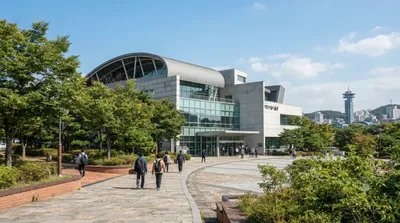
Museums & galleries
Daejeon Museum of Art
This municipal art museum is run by the city of Daejeon to enrich residents' art and culture. It's a pleasant place to spend a relaxing time viewing a wide range of artworks.
Museums & galleries
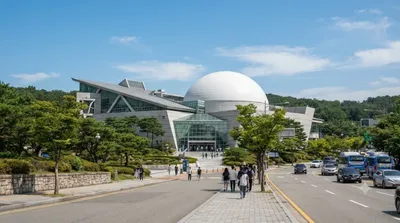
National Science Museum, South Korea
The National Science Museum is located in Yuseong-gu, Daejeon, and opened in 1990. It houses a wide range of exhibits on science, technology, and natural history, making it a great place to explore hands-on with children.
Nature
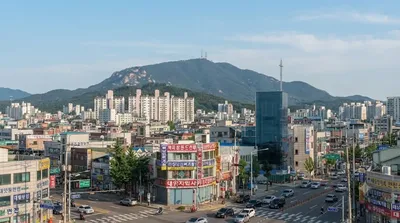
Sikjangsan
Sikjangsan is a mountain straddling Okcheon County in North Chungcheong Province and Dong-gu, Daejeon. It's a great spot for ridge walks amid scenic natural views.
Temples & religious sites
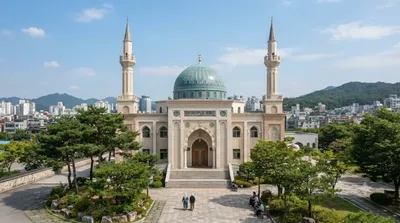
Islamic Center of Daejeon
The Daejeon Islamic Center is a mosque built in 2006. It offers a close-up look at Islamic culture and religious life in the region.
More Daejeon guides
Best value
Where to stay in Daejeon for the best value
5-star & luxury
Where to stay in Daejeon for a luxury experience
Pool villas & resorts
How to choose a pool villa or resort in Daejeon
Family travel
Where to stay in Daejeon for a family trip
Couples & honeymoon
Where to stay in Daejeon for couples and honeymooners
Central & near stations
Where to stay in Daejeon for central access and transport convenience
Best time to visit
When is the best time to visit Daejeon, South Korea?
First-time guide
How to visit Daejeon for the first time: A practical orientation guide
Getting around guides for other destinations
Guantánamo
How to Get Around Guantánamo and Travel from Antonio Maceo Airport
Cetinje
How to Get Around Cetinje and Travel from Podgorica Airport
North Nicosia
How to get around North Nicosia and travel from Larnaca Airport
Cienfuegos
How to get around Cienfuegos: transport options and airport transfers