
Panama City · Getting around
How to get around Panama City by metro, bus, and rideshare
August 29, 2026 · last updated · about 3 min read
Key Transport Modes
Panama Metro: The two-line system bypasses city gridlock. Line 1 links Albrook terminal with Vía España. Line 2 reaches eastern suburbs and Tocumen Airport. Trains win for speed and air-conditioned reliability.
Rideshares and Taxis: App rides win for trips to Casco Viejo, where trains do not run. Yellow cabs lack meters and use informal zones, making apps more predictable.
Metrobus: Modern city buses cover coastal corridors like Cinta Costera and Amador Causeway. They win on route breadth but stall in peak traffic.
Transit Cards and Payment
Riding the Metro and Metrobus requires a rechargeable transit card or contactless bank card; cash is not accepted. Multiple riders can share one card. Buying a card is unnecessary if staying in Casco Viejo and relying on walking and rideshares.
Tocumen Airport Transfers
- Metro Line 2 Branch: Lowest cost band, moderate effort. Board at Terminal 2, transfer at San Miguelito for Line 1. Avoids traffic, though handling heavy luggage through transfers is awkward.
- Rideshare or Airport Taxi: Higher cost band, minimal effort. Direct travel via Corredor Sur. Fast off-peak, but subject to peak-hour highway delays.
Practical Considerations
Rush Hours: Road traffic stalls heavily during weekday morning inbound and evening outbound commutes.
Schedules and Luggage: Rail services stop late at night, leaving taxis for overnight transit. Trains handle luggage well off-peak, but peak trains become packed.
Accessibility: Metro stations provide elevators and level platforms, while street sidewalks across older neighborhoods remain uneven.
Pick your dates — we'll search Panama City hotels for you
Choose dates and guests, and the buttons below will open search results with your criteria. Prices differ between sites, so compare before you book.
 View on Booking.com
 View on Hotels.com
Things to see in Panama City
See all →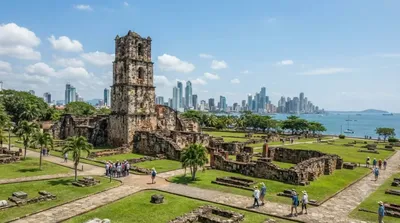
Heritage & monuments
Panamá Viejo
The remains of the old capital on the outskirts of Panama City, left in ruins after a 17th-century pirate raid. Designated a UNESCO World Heritage Site, it's a good place to walk through the ruins and trace the city's history.
Nature
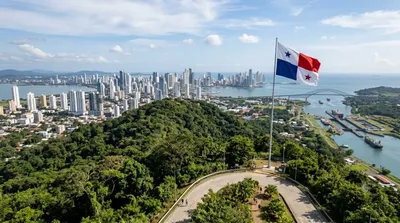
Ancon Hill
Standing 199 meters tall, Ancon Hill offers a sweeping view over Panama City and is the highest point in the city. Once part of the Panama Canal administrative zone, it now remains a protected nature reserve.
Temples & religious sites
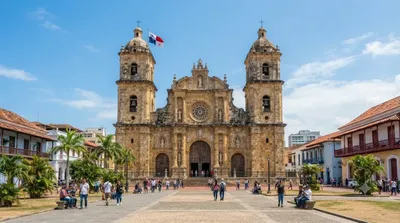
Metropolitan Cathedral of Panama City
This cathedral stands in the old quarter of Panama City and was consecrated in 1796 after 108 years of construction. As the seat of the archdiocese, it is a central stop on any tour of the old town.
Views & landmarks
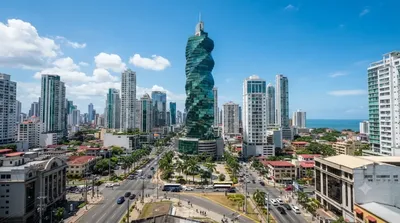
F&F Tower
A 242-meter, 52-story office building rising in Panama City. Its glass-and-concrete exterior stands as one of the defining features of the city's skyline.
More Panama City guides
Best value
Where to stay in Panama City for the best value and transit access
5-star & luxury
Where to stay in Panama City for five-star and luxury accommodations
Pool villas & resorts
Where to Stay for Pool Villas and Resorts in Panama City
Family travel
Where to stay in Panama City with kids: best areas and family accommodation guide
Couples & honeymoon
Where to Stay in Panama City for a Couples Getaway or Honeymoon
Central & near stations
Where to stay in Panama City near metro stations for easy transit
Best time to visit
When is the best time to visit Panama City?
First-time guide
How to Navigate Panama City on Your First Visit: Districts, Transit, and Essential Advice
Getting around guides for other destinations
Guantánamo
How to Get Around Guantánamo and Travel from Antonio Maceo Airport
Cetinje
How to Get Around Cetinje and Travel from Podgorica Airport
North Nicosia
How to get around North Nicosia and travel from Larnaca Airport
Cienfuegos
How to get around Cienfuegos: transport options and airport transfers