
Piraeus · Getting around
How to navigate transport in Piraeus and travel to Athens
August 29, 2026 · last updated · about 4 min read
Getting Around Piraeus
Piraeus serves as the primary port for Greece and is integrated into the Athens metropolitan transport network. Navigating the city requires a mix of rail and road transport depending on whether you are heading to the docks or central Athens.
Primary Modes of Transport
- Metro (Line 1 & 3): The most efficient way to reach central Athens (Syntagma/Monastiraki). Line 1 connects Piraeus to the city center, while Line 3 provides a direct link to the airport.
- Trams: Ideal for coastal travel toward Palaio Faliro or visiting the waterfront areas. They are slower than the metro but offer better views.
- Buses: Useful for reaching specific port gates or residential neighborhoods not served by rail.
- Taxis/Ride-hailing: Best for short trips with heavy luggage or late-night travel when public transit frequency drops.
Tickets and Passes
Integrated tickets are available for the metro, tram, and buses. A combined ticket is recommended for those visiting both Piraeus and Athens landmarks. These do not suit travelers staying exclusively in one small neighborhood or those who prefer the flexibility of on-demand ride-hailing.
From Athens International Airport (ATH) to Piraeus
- Metro Line 3: Moderate cost, medium effort. It is the most reliable method, requiring a transfer at Monastiraki or Syntagma to reach the port area.
- Bus (Express): Lower cost, higher effort. Takes longer due to traffic and requires more walking from the drop-off point.
- Taxi/Private Transfer: High cost, low effort. The fastest door-to-door option, especially for groups with luggage.
Practical Notes
- Rush Hours: Avoid the Metro Line 1 during morning and evening commutes, as it becomes extremely crowded with workers.
- Luggage: Metro stations have elevators, but some older bus stops may be less accessible for large suitcases.
- Accessibility: Most metro stations are accessible, though some older street-level bus stops in Piraeus have uneven pavement.
- Last Services: Metro and bus frequencies decrease significantly after midnight.
Pick your dates — we'll search Piraeus hotels for you
Choose dates and guests, and the buttons below will open search results with your criteria. Prices differ between sites, so compare before you book.
 View on Booking.com
 View on Hotels.com
Things to see in Piraeus
See all →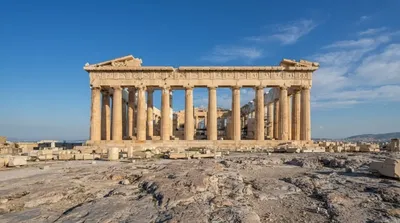
Temples & religious sites
Parthenon
The Parthenon is an ancient temple standing atop the Acropolis of Athens, built of marble in honor of the goddess Athena. Regarded as a masterpiece of Doric architecture, it stands as a highlight of any trip to Greece.
Heritage & monuments
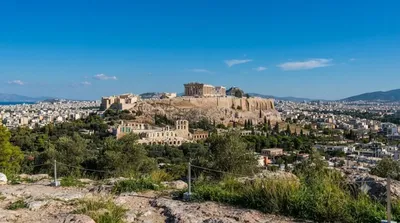
Acropolis of Athens
The Acropolis is an ancient citadel perched on a hill in Athens, Greece. Travelers keep coming to explore its storied buildings, including the Parthenon.
Temples & religious sites
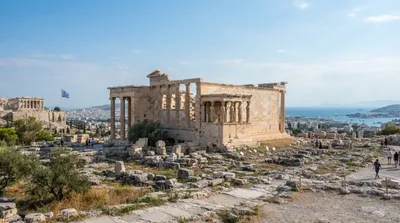
Erechtheion
The Erechtheion is an ancient Greek temple on the Acropolis hill in Athens, built to honor the goddess Athena. It's well known for its elaborate Ionic columns and worth visiting alongside the site's other landmarks.

Temples & religious sites
Daphni Monastery
A Middle Byzantine-style monastery located in Daphni, near Athens, Greece. It holds great value for its surviving 11th-century mosaics, though restoration work is currently underway following earthquake damage.
More Piraeus guides
Best value
Where to stay in Piraeus for the best value
5-star & luxury
Where to stay in Piraeus for a luxury experience
Pool villas & resorts
Where to find pool villas and resorts in Piraeus
Family travel
Where to choose the best area to stay in Piraeus for families
Couples & honeymoon
Where to stay in Piraeus for couples and honeymooners
Central & near stations
Where to stay in Piraeus for easy access to transport and the city center
Best time to visit
When is the best time to visit Piraeus, Greece?
First-time guide
How to visit Piraeus for the first-time travelers
Getting around guides for other destinations
Guantánamo
How to Get Around Guantánamo and Travel from Antonio Maceo Airport
Cetinje
How to Get Around Cetinje and Travel from Podgorica Airport
North Nicosia
How to get around North Nicosia and travel from Larnaca Airport
Cienfuegos
How to get around Cienfuegos: transport options and airport transfers