
Punakha · Getting around
How to get around Punakha, Bhutan
August 29, 2026 · last updated · about 3 min read
Transport Overview
Punakha is a small valley town where the scale of movement is limited. Unlike Thimphu, there is no extensive public transit network. Most visitors rely on pre-arranged private transport as part of their mandatory tour package.
Primary Modes of Transport
- Private Hired Cars: The most efficient option for reaching the Punakha Dzong and the Khamsum Yulley Namgyal Chorten. These win on flexibility and speed.
- Walking: Ideal for the town center and the riverside paths. Walking is the only way to access certain temple trails and the suspension bridges.
- Taxis: Available for short hops within the valley, though less common than in larger cities.
Airport to Punakha
Since Punakha has no airport, all visitors arrive via Paro International Airport (PBH). The journey to Punakha involves crossing the Dochula Pass.
- Private Tour Vehicle: Low effort, medium-to-high cost. This is the standard for most travelers and takes approximately three to four hours.
- Public Bus: High effort, low cost. Buses run from Paro to Thimphu, then Thimphu to Punakha. This significantly increases travel time and is not recommended for those with heavy luggage.
Practical Navigation Notes
- Luggage: Most roads in the valley are paved, but walking trails to monasteries can be uneven. Use lightweight bags for day trips.
- Accessibility: Many sites, including the climb to certain viewpoints, involve steep stairs or unpaved paths, making them difficult for those with limited mobility.
- Timing: There are no formal "rush hours" like in metropolitan areas, but traffic can slow down near the Dzong during festivals.
- Last Services: Taxis and private drivers generally operate during daylight hours; arranging transport the evening before is advised for early morning departures.
Pick your dates — we'll search Punakha hotels for you
Choose dates and guests, and the buttons below will open search results with your criteria. Prices differ between sites, so compare before you book.
 View on Booking.com
 View on Hotels.com
Things to see in Punakha
See all →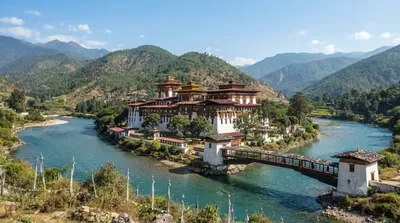
Temples & religious sites
Punakha Dzong
Punakha Dzong serves as the administrative center of Bhutan's Punakha region. Built in 1637, it is the second oldest and second largest dzong in Bhutan and houses sacred relics of the Drukpa Kagyu tradition.
Nature
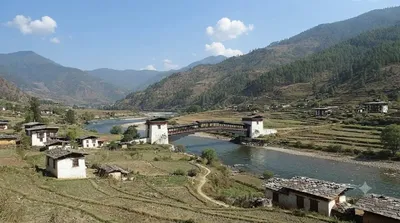
Sankosh River
A river that rises in northern Bhutan and flows into the Brahmaputra River in Assam, India; the section near Wangdue Phodrang is also known as the Puna Tsang Chhu.
Views & landmarks
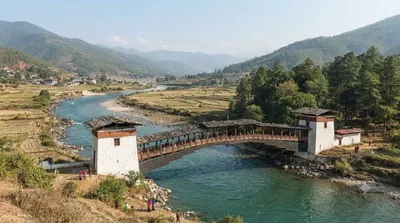
Punakha Cantilever Bridge
A roofed wooden bridge spanning the Mo Chhu River to Punakha Dzong, notable for its distinctive cantilever structure. It also holds deep religious significance, used when monks move to their winter residence or during festival processions.
Nature
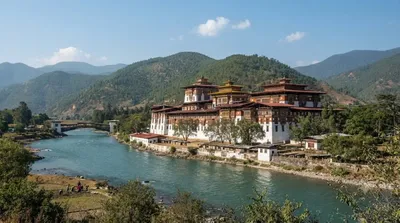
Mo Chhu
A river flowing through Punakha, Bhutan, originating in the mountains along the Tibetan border and running south. Just below where it meets the Pho Chhu River stands Punakha Dzong, set against beautiful scenery.
More Punakha guides
Best value
How to choose the best value accommodation in Punakha, Bhutan
5-star & luxury
Where to stay for a luxury experience in Punakha, Bhutan
Pool villas & resorts
How to choose a pool villa or luxury resort in Punakha, Bhutan
Family travel
How to choose the best area to stay in Punakha for family travel
Couples & honeymoon
Where to stay in Punakha for couples and honeymooners
Central & near stations
Where to stay in Punakha for central access and convenience
Best time to visit
When is the best time to visit Punakha, Bhutan?
First-time guide
How to plan your first visit to Punakha, Bhutan
Getting around guides for other destinations
Guantánamo
How to Get Around Guantánamo and Travel from Antonio Maceo Airport
Cetinje
How to Get Around Cetinje and Travel from Podgorica Airport
North Nicosia
How to get around North Nicosia and travel from Larnaca Airport
Cienfuegos
How to get around Cienfuegos: transport options and airport transfers