
Quito · Getting around
How to get around Quito, Ecuador
August 29, 2026 · last updated · about 4 min read
Transport Modes in Quito
Quito's geography, defined by the Andes mountains and a narrow valley, dictates how the city moves. The most effective modes are:
- Ride-Hailing Apps: The most reliable option for tourists. They provide transparent pricing and GPS tracking, winning on safety and convenience for trips between the Historic Center and La Mariscal.
- Taxis: Plentiful and available on the street. They are useful for short hops, but users should agree on the fare or ensure the meter is running before departing.
- Metro de Quito: The new underground system is the fastest way to bypass surface traffic, connecting the north and south of the city. It wins for long-distance cross-city travel.
- Bus (Trolebús/Ecovía): High-capacity articulated buses with dedicated lanes. These are cost-effective for those familiar with the city layout but can be extremely crowded.
Airport to City Center
Mariscal Sucre International Airport (UIO) is located outside the city. Options include:
- Official Airport Taxis: Low effort, medium-to-high cost. These are available at designated kiosks and provide the most direct route.
- Ride-Hailing: Medium effort, medium cost. Requires a smartphone and data; pickup points are specific.
- Shuttle Services: Medium effort, low-to-medium cost. Shared transport that takes longer due to multiple stops.
Practical Navigation Notes
- Rush Hours: Traffic peaks heavily during morning and evening commutes, particularly on Avenida Amazonas and near the Historic Center. Use the Metro during these windows to save time.
- Luggage: Large suitcases are generally not permitted on the Metro during peak hours. Taxis or ride-hailing are necessary for airport transfers.
- Accessibility: The Metro is the most accessible mode. Older buses and the steep, cobblestone streets of the Historic Center present significant challenges for those with limited mobility.
- Last Services: Public transport frequency drops significantly late at night; ride-hailing is the only viable option after midnight.
Pick your dates — we'll search Quito hotels for you
Choose dates and guests, and the buttons below will open search results with your criteria. Prices differ between sites, so compare before you book.
 View on Booking.com
 View on Hotels.com
Things to see in Quito
See all →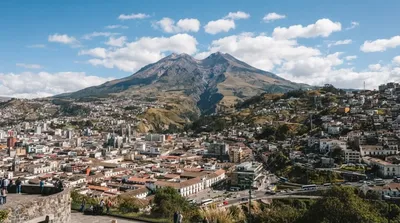
Nature
Pichincha Volcano
An active volcano rising right beside Quito, with a caldera and a still-smoking crater near its summit. Trekking here lets you take in both sweeping city views and volcanic terrain.
Temples & religious sites
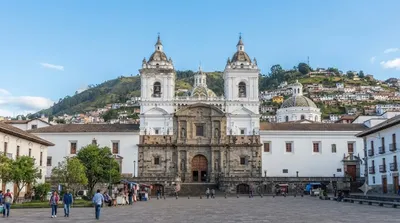
Cathedral of Quito
The cathedral stands southwest of Independence Square in Quito. It has served as a parish church since 1545 and is now the most prestigious Catholic cathedral in Ecuador.
Temples & religious sites
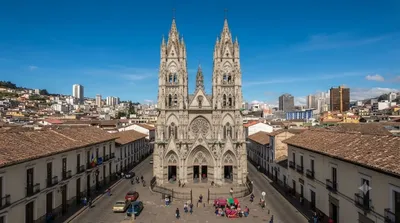
Basilica of the National Vow
This Roman Catholic basilica in Quito's old town, Ecuador, rises 83 meters high. It's a landmark visible from almost anywhere in the historic center, so you're likely to spot it while wandering the streets.
Attraction
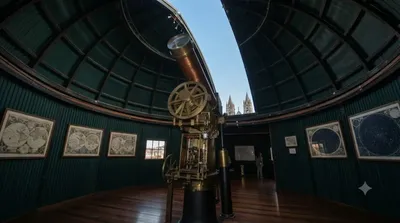
Quito Astronomical Observatory
An astronomical research institute affiliated with Quito's National Polytechnic School, focused on astronomy and atmospheric physics. Visitors can tour the historic observatory building and take in traces of scientific history.
More Quito guides
Best value
Where to stay in Quito for the best value
5-star & luxury
Where to stay in Quito for a luxury experience
Pool villas & resorts
Where to find pool villas and resorts in Quito, Ecuador
Family travel
Where to stay in Quito for a family trip
Couples & honeymoon
Where to stay in Quito for couples and honeymooners
Central & near stations
Where to stay in Quito for central access and transport convenience
Best time to visit
When is the best time to visit Quito, Ecuador?
First-time guide
How to plan your first trip to Quito, Ecuador
Getting around guides for other destinations
Guantánamo
How to Get Around Guantánamo and Travel from Antonio Maceo Airport
Cetinje
How to Get Around Cetinje and Travel from Podgorica Airport
North Nicosia
How to get around North Nicosia and travel from Larnaca Airport
Cienfuegos
How to get around Cienfuegos: transport options and airport transfers