World by City

Museums & galleries

Altare della Patria
Altare della Patria

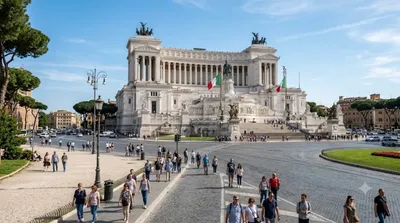
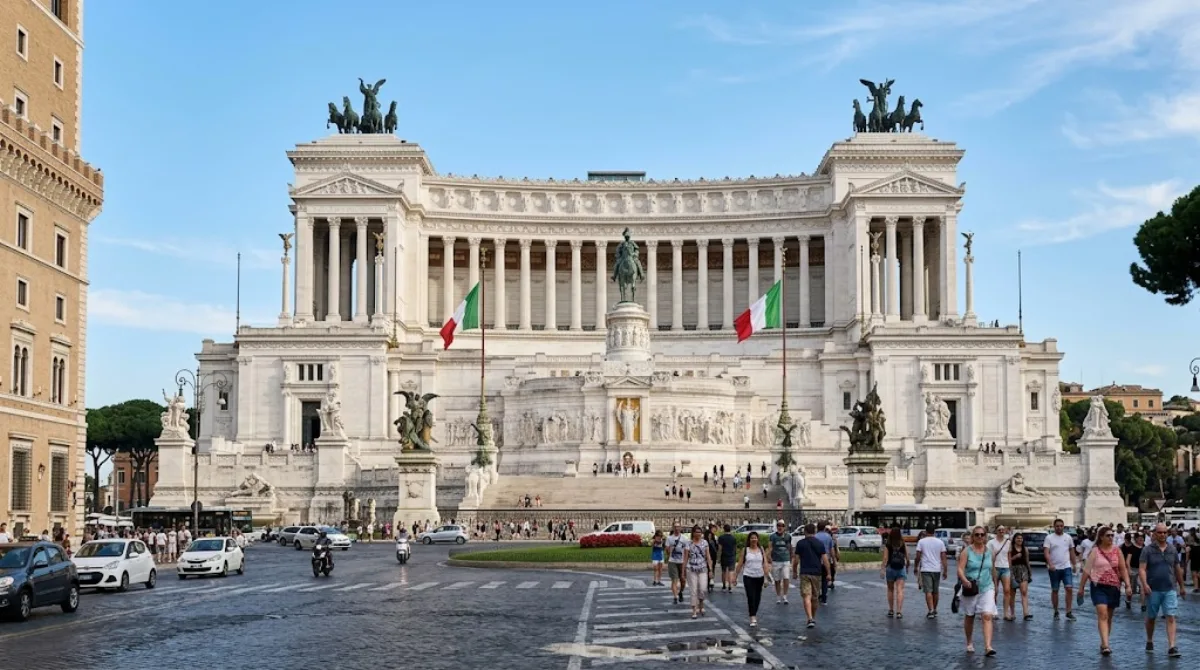
The Victor Emmanuel II National Monument, also known as the Vittoriano or for synecdoche Altare della Patria, is a large national monument built between 1885 and 1935 to honour Victor Emmanuel II, the first king of a unified Italy, in Rome, Italy. It occupies a site between the Piazza Venezia and the Capitoline Hill. The monument was realized by Giuseppe Sacconi.

What it is

The Altare della Patria (officially the Vittorio Emanuele II National Monument) is a vast white marble structure built between 1885 and 1935 to commemorate the first king of unified Italy. It dominates the north side of Piazza Venezia with rows of columns, equestrian statues, and sweeping staircases. Inside and around it are the Tomb of the Unknown Soldier, museums on Italian unification and the world wars, and terraces that give some of the best rooftop views over central Rome, including the Roman Forum and Capitoline Hill.

Getting there

It sits right on Piazza Venezia, a short walk from most central Rome landmarks. From the Trevi Fountain or the Pantheon it's about 10-15 minutes on foot. Several bus lines stop at Piazza Venezia itself; the nearest metro stop, Colosseo (Line B), is roughly a 10-minute walk away.

How much time to allow

Allow 30-45 minutes to see the exterior, staircases, and lower terraces. If you plan to take the panoramic elevator to the rooftop or visit one of the museums inside, budget an extra hour or more.

When to go

The piazza and staircases get crowded around midday, especially with tour groups. Early morning or later in the afternoon tends to be calmer and better for photos, and also avoids the strongest summer heat, since there's little shade on the monument itself.

Combine it with

Its location makes it easy to pair with several sights in the immediate area:

  • Piazza Venezia (0.2km) - the square right at its base
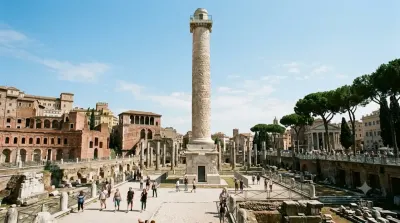
  • Trajan's Column (0.2km) - a short walk away
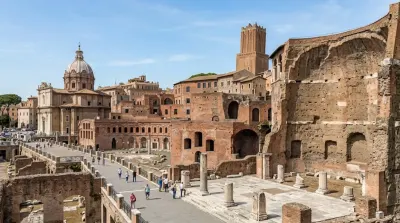
  • Imperial Fora (0.2km) - ancient Roman forums nearby
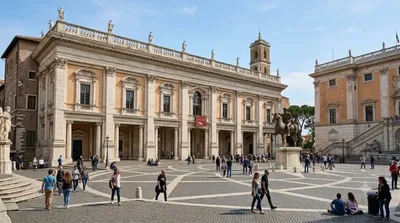
  • Capitoline Museums (0.2km) - just up the adjacent hill

Sources: open data from Wikipedia and OpenStreetMap · Updated August 5, 2026 · Edited by the World by City editors

Tickets & tours

Admission prices and opening hours change often, so we don't list them here. Check what's on sale and at what price below — booking ahead can cut the queue at some places.

This place may not appear in the results — some sites are free to enter or sell tickets only at the gate.

Stays near Altare della Patria

Sorted by distance, walkable ones first. Distances are straight-line.

Map © OpenStreetMap contributors. Lines are straight connections, not actual routes.

Altare della Patria Nearby stays

Locations and names come from OpenStreetMap. Check prices and availability on the booking sites.

Itineraries including this place

Good to visit alongside

Trajan's Column

Heritage & monuments

Trajan's Column

Trajan's Column is a Roman triumphal column in Rome, Italy, that commemorates Roman emperor Trajan's victory in the Dacian Wars. It was probably constructed under the supervision of the architect Apollodorus of Damascus at the order of the Roman Senate. It is located in Trajan's Forum, north of the Roman Forum. Completed and dedicated on 12 May 113 AD, the freestanding column is most famous for its spiral bas relief, which depicts the wars between the Romans and Dacians. Its design has inspired numerous victory columns, both ancient and modern.

0.2 km away

Capitoline Museums

Museums & galleries

Capitoline Museums

The Capitoline Museums are a group of art and archaeological museums located on the Capitoline Hill in Rome, Italy, and constitute the main civic museum complex of the city. Their principal buildings are the Palazzo dei Conservatori and the Palazzo Nuovo, which face each other across Piazza del Campidoglio, the square designed by Michelangelo in 1536 and completed over the course of the following centuries.

0.2 km away

piazza Venezia

Parks & gardens

piazza Venezia

Piazza Venezia is a central hub of Rome, Italy, in which several thoroughfares intersect, including the Via dei Fori Imperiali and the Via del Corso. It takes its name from the Palazzo Venezia, built by the Venetian Cardinal, Pietro Barbo alongside the church of Saint Mark, the patron saint of Venice. The Palazzo Venezia served as the embassy of the Republic of Venice in Rome.

0.2 km away

Imperial fora

Heritage & monuments

Imperial fora

The Imperial Fora are a series of monumental fora, constructed in Rome over a period of one and a half centuries, between 46 BC and 113 AD. The fora were the center of the Roman Republic and of the Roman Empire.

0.2 km away

Trajan's Forum

Parks & gardens

Trajan's Forum

Trajan's Forum was the last of the Imperial fora to be constructed in ancient Rome. The architect Apollodorus of Damascus oversaw its construction.

0.2 km away

Arch of Septimius Severus (Roman Forum)

Heritage & monuments

Arch of Septimius Severus (Roman Forum)

The Arch of Septimius Severus at the northwestern end of the Roman Forum is a white marble triumphal arch dedicated in 203 AD to commemorate the Parthian victories of Emperor Septimius Severus and his two sons, Caracalla and Geta, in the two campaigns against the Parthians of 194–195 and 197–199. After the death of Septimius Severus, his sons Caracalla and Geta were initially joint Emperors. Caracalla had Geta assassinated in Rome; in the practice now known as damnatio memoriae, Geta's memorials were destroyed and all images or mentions of him were removed from street buildings and monuments....

0.3 km away