
 Italy
Italy
Rome
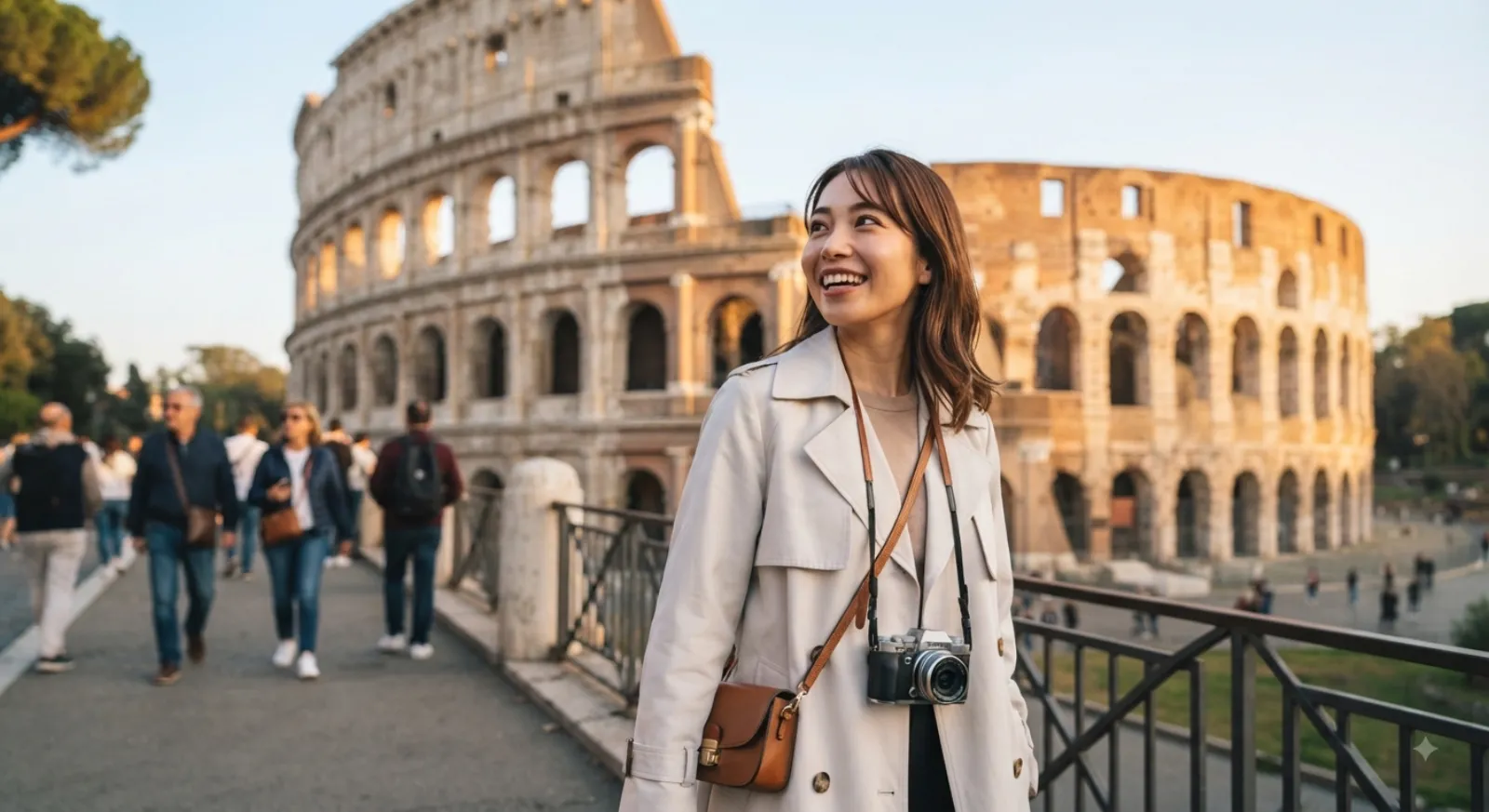
Two-thousand-year-old ruins stand in the middle of a working city. The main sights sit within walking distance of each other, which makes it an easy first stop in Italy.
Updated August 15, 2026 · Edited by the World by City editors
- Gateway airport
- Fiumicino (FCO) & Ciampino (CIA)
- Best season
- Apr–Jun, Sep–Oct
- Time zone
- Europe/Rome
- Sights covered
- 40 places
Sights worth seeing
See all 40 →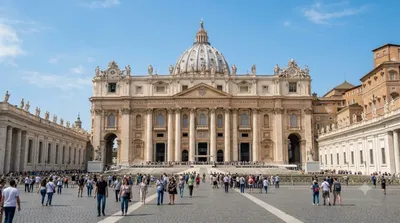
Temples & religious sites
St. Peter's Basilica
St. Peter's Basilica is a Catholic church in Vatican City, built between 1506 and 1626 under Popes Nicholas V and Julius II to replace the original 4th-century basilica founded by Constantine. Visitors come to see its Renaissance and Baroque architecture and interiors, shaped by Michelangelo, Bernini, and others, and it remains a central site of the Catholic faith.
Temples & religious sites
Sistine Chapel
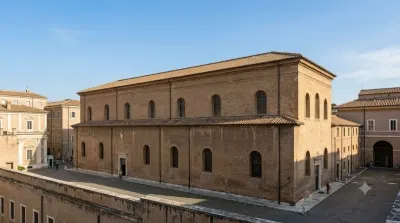
The Sistine Chapel is a chapel within the Apostolic Palace, the pope's official residence in Vatican City. Commissioned by Pope Sixtus IV between 1473 and 1481, who gave it his name, it has served as a venue for religious ceremonies and official Vatican functions, and remains the site where the conclave elects each new pope.
Museums & galleries
Pantheon
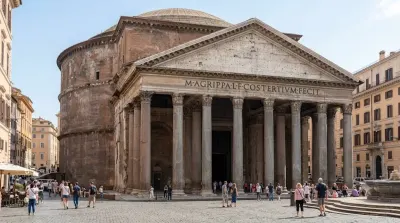
The Pantheon is an ancient Roman temple built in the 2nd century, and since 609 it has served as a Catholic church (Santa Maria ad Martyres). It is considered one of the best-preserved buildings from ancient Rome, and its highlight is the domed interior, lit by sunlight streaming through the oculus at the center of the roof.
Parks & gardens
Roman Forum
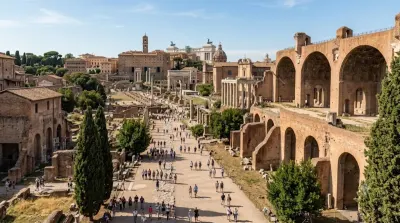
The Roman Forum is a rectangular plaza that once served as the political, economic, and religious center of ancient Rome, originally used as a marketplace. Today the remains of temples, public buildings, and triumphal arches are scattered across the site, letting visitors walk through ruins that were once the everyday living space of Roman citizens.
Parks & gardens
Saint Peter's Square
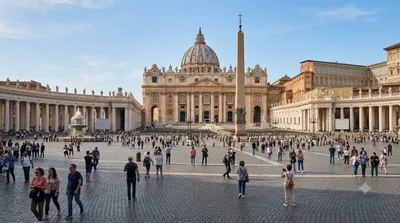
St. Peter's Square is the vast plaza that opens up directly in front of St. Peter's Basilica in Vatican City. Rows of columns forming a colonnade enclose the oval space on either side, creating a natural approach visitors pass through before entering the basilica.
Museums & galleries
Vatican Museums
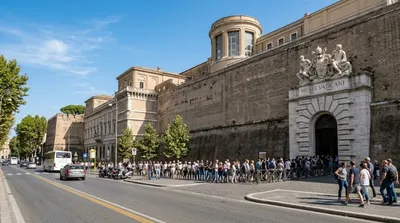
The Vatican Museums are a group of museums in Vatican City displaying collections gathered by the Catholic Church and its popes over centuries. They present major works of ancient Roman sculpture alongside Renaissance art, from a total collection of about 70,000 pieces, of which roughly 20,000 are on permanent display.
Museums & galleries
Palatine Hill
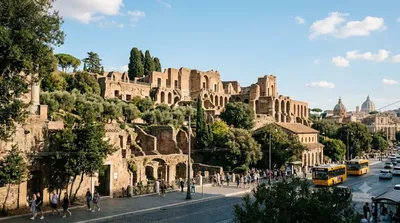
Palatine Hill sits at the very center of Rome's seven hills and is one of the areas with the oldest traces of habitation in the city. Ruins including the palaces of ancient Roman emperors spread across the open-air site, effectively forming an outdoor museum, while the Palatine Museum displays artifacts unearthed both here and at excavation sites across Italy.
Temples & religious sites
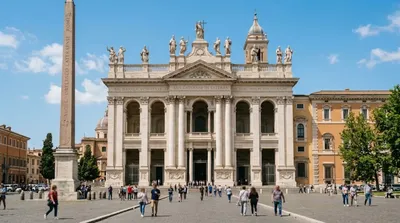
Archbasilica of St. John Lateran
The Archbasilica of St. John Lateran is the cathedral of the Diocese of Rome, the seat from which the Pope presides as Bishop of Rome. St. Peter's Basilica in the Vatican may be more famous, but this is actually the mother church of the Roman diocese, and it holds the unique distinction of being the only church in the world titled an "archbasilica."
How many days do you need?
Routes grouped by travel distance so each day stays comfortable.
Average temperature by month
5-year average
Getting there
Check flights to Rome first
Pick a departure airport and date to jump straight to results for Fiumicino (FCO) & Ciampino (CIA).
Check fares and seat availability on the flight search site.
Getting around the city
What you will actually use to get around Rome, and whether you need a car.
- Metro & rail
- Three lines (A, B and C). Ruins make tunnelling hard, so the network is small. It reaches the Colosseum and the Vatican; for the rest you walk or take a bus.
- Buses & trams
- Trams and buses fill the gaps, though delays are common — leave margin. Pickpocketing is a known problem on the main tourist routes.
- Transit cards & payment
- Metrebus tickets. You must validate on entry — inspections carry heavy fines.
- Airport to city
- The Leonardo Express runs non-stop from Fiumicino to Termini. From Ciampino, buses are standard.
- Car rental
- Central Rome has ZTL restricted zones — entering unaware means a fine. Leave the car for trips out to Tuscany and elsewhere.
Book transport
Fares and timetables change often, so we don't list them here. Check the operator or the booking site for current prices and schedules.
Getting to other cities
Useful when you're combining several cities. Times are approximate; fares and timetables change often, so we don't list them.
Transit options connecting Rome and Naples.
- High-Speed Train · approx. 1 hrs 10 mins~1 hrs 20 mins Convenient transit between the two cities. Please check official booking sites for current schedules.
- Express Bus · approx. 2 hrs 30 mins~3 hrs Convenient transit between the two cities. Please check official booking sites for current schedules.
- Car / Drive · approx. 2 hrs~2 hrs 30 mins Convenient transit between the two cities. Please check official booking sites for current schedules.
- Flight · approx. 1 hrs(flight hrs) Convenient transit between the two cities. Please check official booking sites for current schedules.
Transit options connecting Rome and Florence.
- Train · approx. 1 hrs 30 mins Convenient transit between the two cities. Please check official booking sites for current schedules.
- Bus · approx. 3 hrs to 3 hrs 30 mins Convenient transit between the two cities. Please check official booking sites for current schedules.
- Car / Drive · approx. 3 hrs Convenient transit between the two cities. Please check official booking sites for current schedules.
Transit options connecting Rome and Venice.
- Train · approx. 3 hrs 30 mins to 4 hrs Convenient transit between the two cities. Please check official booking sites for current schedules.
- Flight · incl. airport transfer approx. 3 hrs to 3 hrs 30 mins Convenient transit between the two cities. Please check official booking sites for current schedules.
- Car / Drive · approx. 4 hrs to 4 hrs 30 mins Convenient transit between the two cities. Please check official booking sites for current schedules.
Transit options connecting Rome and Milan.
- Train · approx. 3 hrs Convenient transit between the two cities. Please check official booking sites for current schedules.
- Flight · flight approx. approx. 1 hrs 15 mins, incl. airport transfer approx. 3~4 hrs Convenient transit between the two cities. Please check official booking sites for current schedules.
- Bus · approx. 7~8 hrs Convenient transit between the two cities. Please check official booking sites for current schedules.
- Car / Drive · approx. 6 hrs Convenient transit between the two cities. Please check official booking sites for current schedules.
Transit options connecting Rome and Dolomites.
- Train + Bus/Rental Car · total approx. 6~7 hrs Convenient transit between the two cities. Please check official booking sites for current schedules.
- Flight + Rental Car/Bus · total approx. 4~5 hrs(incl. airport transfer) Convenient transit between the two cities. Please check official booking sites for current schedules.
- Car / Rental Car · approx. 6~7 hrs Convenient transit between the two cities. Please check official booking sites for current schedules.
- Long-Distance Bus · approx. 9~10 hrs or more Convenient transit between the two cities. Please check official booking sites for current schedules.
Rome Tours & Experiences Booking
Book local tours, tickets, and experiences in advance to enjoy without waiting. Check available products and prices now.
 GetYourGuide
 Klook
Klook
 Tiqets
 KKday
KKday
 WeGoTrip
Check prices and availability on the booking sites.
 Airalo
 Yesim
Yesim
 Saily
Saily
 Drimsim
Where to stay
See all stays →Pick your dates — we'll search Rome hotels for you
Choose dates and guests, and the buttons below will open search results with your criteria. Prices differ between sites, so compare before you book.
 View on Booking.com
 View on Hotels.com
Hotel membership
Staying at Accor hotels often? ALL Accor+ Explorer
A paid annual membership. It includes two free nights a year across Asia-Pacific, 30% off dining and 15% off drinks, and 15% off stays at more than 4,500 hotels worldwide.
Explore the membership
Visit stories: Rome
Have you been to this city?
Share your visit story with photos you took yourself. Once checked, it goes into the Magazine.
Guides by theme
Best value
Where to stay in Rome for the best value without losing walkability
Read guide →
5-star & luxury
Where to Stay in Rome for a Five-Star or Luxury Trip
Read guide →
Pool villas & resorts
Where should you stay in Rome for a pool villa or resort?
Read guide →
Family travel
Where should families stay in Rome to keep sights and transport walkable?
Read guide →
Couples & honeymoon
Which Rome neighborhood should couples pick for a honeymoon stay?
Read guide →
Central & near stations
Where should you stay in Rome to be close to stations and the main sights?
Read guide →
Best time to visit
When is the best time to visit Rome?
Read guide →
First-time guide
How Should First-Time Visitors Plan a Trip to Rome, Italy?
Read guide →
Getting around
How do you get around Rome: metro, bus, or on foot?
Read guide →