
Rome · Central & near stations
Where should you stay in Rome to be close to stations and the main sights?
August 2, 2026 · last updated · about 4 min read
Choosing where to stay near Rome's stations and center
Rome's metro has just three lines because ruins make tunnelling slow. For a first visit, staying near Termini or the historic core matters more than staying near a metro line, since most sights are walkable once inside the center.
Termini and Esquilino
Termini is where trains from Fiumicino arrive, and it's the only point where Metro A and B cross. A few blocks from the station puts you on both lines and near trains to other cities. The station area is busy; a short walk toward Esquilino or Monti softens that without losing the link.
Historic center (Pantheon, Navona, Trevi)
This is the walkable core: Pantheon, Trevi Fountain, Navona and the Colosseum approach are reachable on foot. No metro station sits inside it, only edges like Spagna (Line A) or Colosseo (Line B). It suits travelers who want to drop bags and start walking, not commute by metro.
Monti, near the Colosseum
Monti sits between Termini and the Colosseum, served by Cavour on Line B. It's residential and quieter than Termini, within walking distance of the Forum.
Prati, near the Vatican
Prati is the base for the Vatican side, served by Ottaviano on Line A. It's separated from the Termini/Colosseum cluster by the river, so expect a change or a longer walk to reach the rest.
What to check before booking
- Distance to the nearest Line A or B station; Line C barely touches the center.
- Whether the listing sits inside the pedestrian core, harder for luggage and taxi drop-off.
- Airport route: Fiumicino trains run to Termini; Ciampino has no train link, so check your transfer.
When to visit and availability
Spring and early autumn bring the largest crowds and tightest availability near Termini and the center. Midsummer is hot but rooms open up outside busiest blocks. Book early for central, station-adjacent areas.
Pick your dates — we'll search Rome hotels for you
Choose dates and guests, and the buttons below will open search results with your criteria. Prices differ between sites, so compare before you book.
 View on Booking.com
 View on Hotels.com
Things to see in Rome
See all →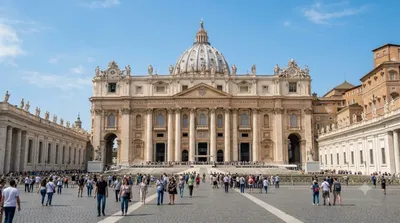
Temples & religious sites
St. Peter's Basilica
St. Peter's Basilica is a Catholic church in Vatican City, built between 1506 and 1626 under Popes Nicholas V and Julius II to replace the original 4th-century basilica founded by Constantine. Visitors come to see its Renaissance and Baroque architecture and interiors, shaped by Michelangelo, Bernini, and others, and it remains a central site of the Catholic faith.
Temples & religious sites
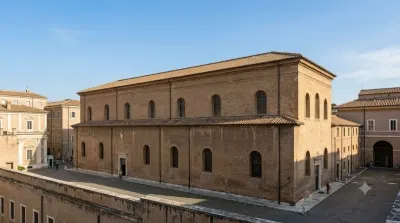
Sistine Chapel
The Sistine Chapel is a chapel within the Apostolic Palace, the pope's official residence in Vatican City. Commissioned by Pope Sixtus IV between 1473 and 1481, who gave it his name, it has served as a venue for religious ceremonies and official Vatican functions, and remains the site where the conclave elects each new pope.
Museums & galleries
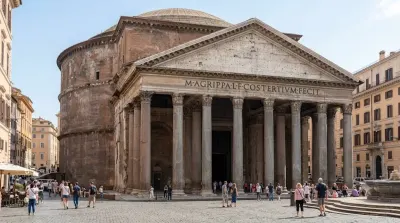
Pantheon
The Pantheon is an ancient Roman temple built in the 2nd century, and since 609 it has served as a Catholic church (Santa Maria ad Martyres). It is considered one of the best-preserved buildings from ancient Rome, and its highlight is the domed interior, lit by sunlight streaming through the oculus at the center of the roof.
Parks & gardens
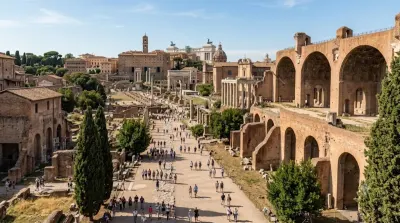
Roman Forum
The Roman Forum is a rectangular plaza that once served as the political, economic, and religious center of ancient Rome, originally used as a marketplace. Today the remains of temples, public buildings, and triumphal arches are scattered across the site, letting visitors walk through ruins that were once the everyday living space of Roman citizens.
More Rome guides
Best value
Where to stay in Rome for the best value without losing walkability
5-star & luxury
Where to Stay in Rome for a Five-Star or Luxury Trip
Pool villas & resorts
Where should you stay in Rome for a pool villa or resort?
Family travel
Where should families stay in Rome to keep sights and transport walkable?
Couples & honeymoon
Which Rome neighborhood should couples pick for a honeymoon stay?
Best time to visit
When is the best time to visit Rome?
First-time guide
How Should First-Time Visitors Plan a Trip to Rome, Italy?
Getting around
How do you get around Rome: metro, bus, or on foot?
Central & near stations guides for other destinations
Guantánamo
Where to stay in Guantánamo for central sights and transport connections
Cetinje
Where to stay in Cetinje for central sights and bus connections
North Nicosia
Where to Stay in North Nicosia for Transit and Central Sights
Cienfuegos
Where to Stay in Cienfuegos Near the Bus Station and City Center