
Rome · Best time to visit
When is the best time to visit Rome?
August 13, 2026 · last updated · about 3 min read
When to visit Rome
Rome has no truly bad season, but each one changes how much walking and queuing you'll do, since the ruins, piazzas and the Vatican are mostly outdoor or unshaded.
Spring (April-May)
Mild days, cool evenings, and the city's most reliable stretch of good weather. Also when school groups and Easter pilgrims peak, so the Colosseum, Vatican Museums and Trevi Fountain get busy by mid-morning. Book timed entry near Easter.
Summer (June-August)
Hot, often above 30C, with little shade at the Forum or Palatine Hill. August brings Ferragosto (around August 15), when many trattorias close for a week or two and residents leave the city, even as tourist numbers stay high near the main sights. Plan outdoor ruins for early morning or evening.
Autumn (September-October)
Similar to spring: warm days, cooler nights, and crowds that thin out after early September. Often the most comfortable balance of weather and manageable lines.
Winter (November-March)
Mild by northern standards but with more rain and shorter daylight. Crowds ease outside the Christmas and New Year period, when the center and Vatican fill up again. Easiest season for walking without heat fatigue.
Getting around
The metro has only three lines (A, B, C), limited by the archaeology underground, reaching the Colosseum and Vatican directly but leaving much of the center to buses and walking. Since major sights sit close together, comfortable shoes matter more than transit planning.
What to pack
- Spring/autumn: layers, a light rain jacket
- Summer: sun protection, a refillable water bottle, a midday rest
- Winter: a warm layer, umbrella, and bookings ahead for Christmas and New Year
Both gateway airports, Fiumicino (FCO) and Ciampino (CIA), see heaviest traffic in summer and around the winter holidays.
Pick your dates — we'll search Rome hotels for you
Choose dates and guests, and the buttons below will open search results with your criteria. Prices differ between sites, so compare before you book.
 View on Booking.com
 View on Hotels.com
Things to see in Rome
See all →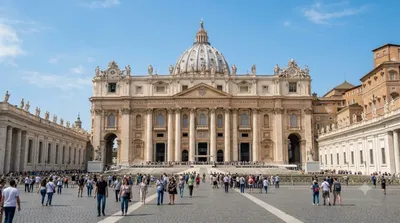
Temples & religious sites
St. Peter's Basilica
St. Peter's Basilica is a Catholic church in Vatican City, built between 1506 and 1626 under Popes Nicholas V and Julius II to replace the original 4th-century basilica founded by Constantine. Visitors come to see its Renaissance and Baroque architecture and interiors, shaped by Michelangelo, Bernini, and others, and it remains a central site of the Catholic faith.
Temples & religious sites
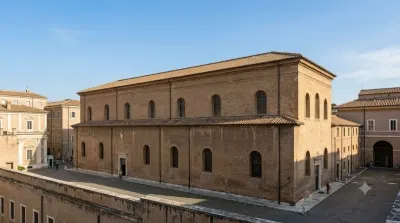
Sistine Chapel
The Sistine Chapel is a chapel within the Apostolic Palace, the pope's official residence in Vatican City. Commissioned by Pope Sixtus IV between 1473 and 1481, who gave it his name, it has served as a venue for religious ceremonies and official Vatican functions, and remains the site where the conclave elects each new pope.
Museums & galleries
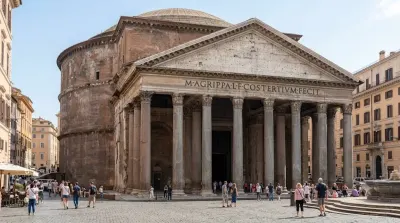
Pantheon
The Pantheon is an ancient Roman temple built in the 2nd century, and since 609 it has served as a Catholic church (Santa Maria ad Martyres). It is considered one of the best-preserved buildings from ancient Rome, and its highlight is the domed interior, lit by sunlight streaming through the oculus at the center of the roof.
Parks & gardens
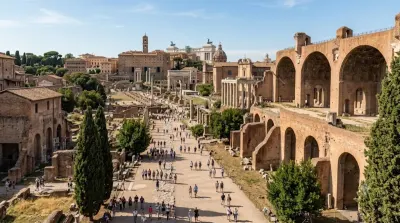
Roman Forum
The Roman Forum is a rectangular plaza that once served as the political, economic, and religious center of ancient Rome, originally used as a marketplace. Today the remains of temples, public buildings, and triumphal arches are scattered across the site, letting visitors walk through ruins that were once the everyday living space of Roman citizens.
More Rome guides
Best value
Where to stay in Rome for the best value without losing walkability
5-star & luxury
Where to Stay in Rome for a Five-Star or Luxury Trip
Pool villas & resorts
Where should you stay in Rome for a pool villa or resort?
Family travel
Where should families stay in Rome to keep sights and transport walkable?
Couples & honeymoon
Which Rome neighborhood should couples pick for a honeymoon stay?
Central & near stations
Where should you stay in Rome to be close to stations and the main sights?
First-time guide
How Should First-Time Visitors Plan a Trip to Rome, Italy?
Getting around
How do you get around Rome: metro, bus, or on foot?
Best time to visit guides for other destinations
Guantánamo
When is the best time to visit Guantánamo, Cuba?
Cetinje
The Best Time to Visit Cetinje: Weather, Crowds, and Season Guide
North Nicosia
When to Visit North Nicosia: Weather, Seasons, and Practical Advice
Banja Luka
The Best Time to Visit Banja Luka for Good Weather and Outdoor Activities