
Rome · Couples & honeymoon
Which Rome neighborhood should couples pick for a honeymoon stay?
August 2, 2026 · last updated · about 4 min read
Where couples should stay in Rome
Rome's centre is compact enough to base yourselves in one area and walk to most sights. For a honeymoon, favor a quiet, walkable street over proximity to a metro stop, since the historic core has barely any metro coverage.
Centro Storico (Navona, Pantheon, Campo de' Fiori)
Cobblestone lanes and evening strolls to the Trevi Fountain or Pantheon on foot. No metro line reaches here; you'll walk or bus to the Colosseo (Line B) or Vatican (Line A) stations. Pick a side street off the main squares, which get loud at night.
Trastevere
Ivy-covered facades and dinner-focused nightlife across the Tiber. Also no metro station; tram 8 and a walk over the river connect it to Centro Storico. Suits couples wanting neighborhood feel over sightseeing convenience.
Monti
A hillside district beside the Colosseum with wine bars and vintage shops, and the only area here with a metro stop nearby (Cavour or Colosseo, Line B). A middle ground: easy transit plus a residential, romantic feel.
Prati (near the Vatican)
Quieter streets close to Ottaviano or Cipro (Line A), useful if the Vatican is a priority. It's a longer walk or bus/metro ride to the ancient-Rome sights across the river.
What to check before booking
- Street noise: cobblestone squares and bar-lined streets stay loud late; ask about the exact street.
- Stairs and elevators: many historic buildings here are walk-ups without lifts.
- Distance to transit if you plan a Vatican-and-Colosseum day, since the two sit on different lines with no direct link.
- Air conditioning, confirmed for summer stays, since older buildings vary.
When to visit
Spring and fall bring mild weather and heavier demand in these same central areas, so book ahead. Fiumicino (FCO) and Ciampino (CIA) connect to the centre by train or bus, not metro, so plan that transfer into your arrival.
Pick your dates — we'll search Rome hotels for you
Choose dates and guests, and the buttons below will open search results with your criteria. Prices differ between sites, so compare before you book.
 View on Booking.com
 View on Hotels.com
Things to see in Rome
See all →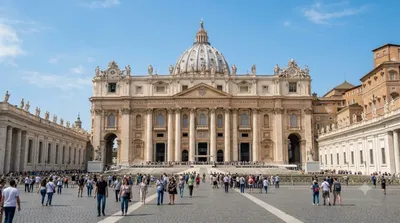
Temples & religious sites
St. Peter's Basilica
St. Peter's Basilica is a Catholic church in Vatican City, built between 1506 and 1626 under Popes Nicholas V and Julius II to replace the original 4th-century basilica founded by Constantine. Visitors come to see its Renaissance and Baroque architecture and interiors, shaped by Michelangelo, Bernini, and others, and it remains a central site of the Catholic faith.
Temples & religious sites
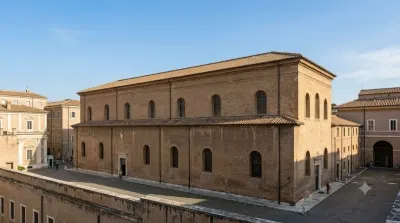
Sistine Chapel
The Sistine Chapel is a chapel within the Apostolic Palace, the pope's official residence in Vatican City. Commissioned by Pope Sixtus IV between 1473 and 1481, who gave it his name, it has served as a venue for religious ceremonies and official Vatican functions, and remains the site where the conclave elects each new pope.
Museums & galleries
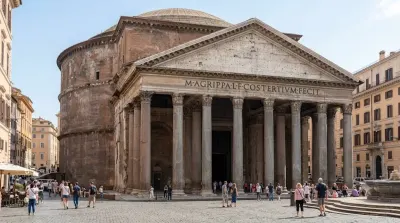
Pantheon
The Pantheon is an ancient Roman temple built in the 2nd century, and since 609 it has served as a Catholic church (Santa Maria ad Martyres). It is considered one of the best-preserved buildings from ancient Rome, and its highlight is the domed interior, lit by sunlight streaming through the oculus at the center of the roof.
Parks & gardens
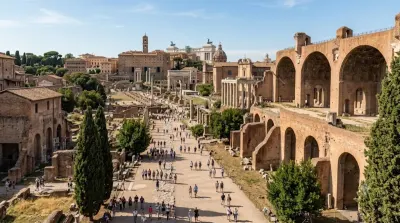
Roman Forum
The Roman Forum is a rectangular plaza that once served as the political, economic, and religious center of ancient Rome, originally used as a marketplace. Today the remains of temples, public buildings, and triumphal arches are scattered across the site, letting visitors walk through ruins that were once the everyday living space of Roman citizens.
More Rome guides
Best value
Where to stay in Rome for the best value without losing walkability
5-star & luxury
Where to Stay in Rome for a Five-Star or Luxury Trip
Pool villas & resorts
Where should you stay in Rome for a pool villa or resort?
Family travel
Where should families stay in Rome to keep sights and transport walkable?
Central & near stations
Where should you stay in Rome to be close to stations and the main sights?
Best time to visit
When is the best time to visit Rome?
First-time guide
How Should First-Time Visitors Plan a Trip to Rome, Italy?
Getting around
How do you get around Rome: metro, bus, or on foot?