World by City

Temples & religious sites

Archbasilica of St. John Lateran
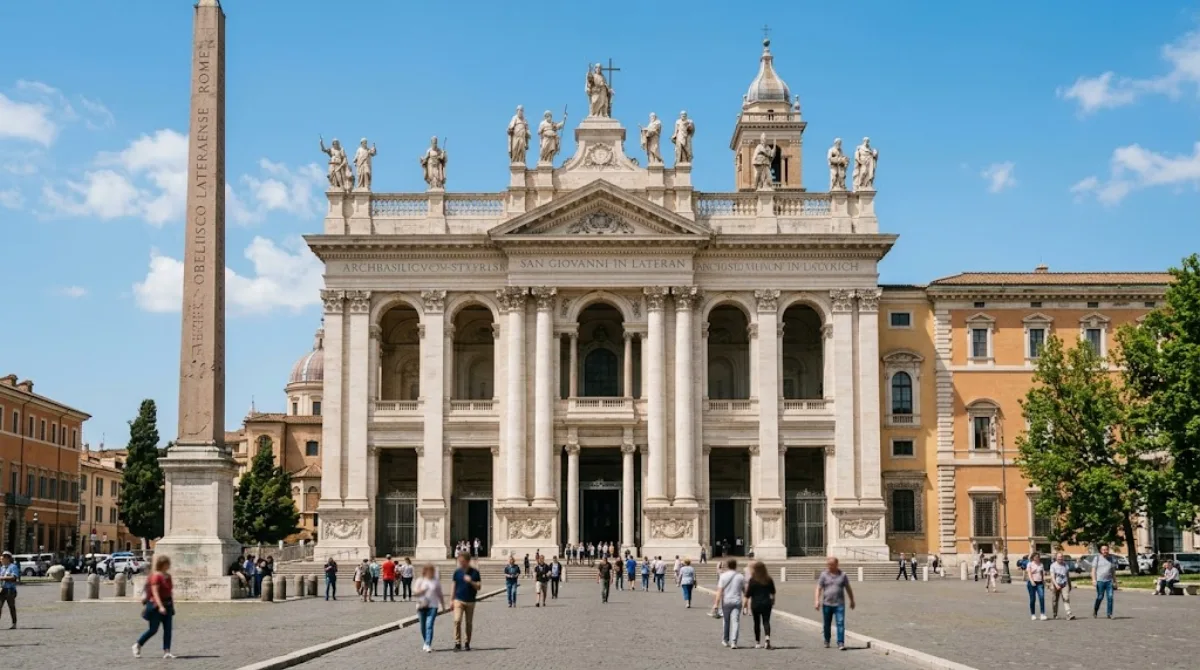
Archbasilica of St. John Lateran

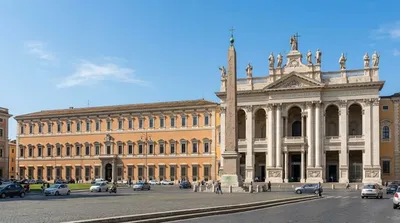
The Archbasilica of Saint John Lateran, commonly known as the Lateran Basilica or Saint John Lateran, is the Catholic cathedral of the Diocese of Rome in the city of Rome, Italy. It serves as the seat of the bishop of Rome and head of the worldwide Catholic Church: the pope. The only "archbasilica" in the world, it lies outside of Vatican City proper, which is located approximately four kilometres northwest. Nevertheless, as properties of the Holy See, the archbasilica and its adjoining edifices enjoy an extraterritorial status from Italy, pursuant to the terms of the Lateran Treaty of 1929. D...

What it is

This is the cathedral of Rome — the pope's actual seat as bishop of the city, which technically outranks St. Peter's Basilica in ceremonial status even though it's less visited. The interior is a long Baroque-remodeled nave (Borromini's 17th-century work) with a coffered ceiling and colossal statues of the apostles lining the walls. Attached to the basilica is a 13th-century cloister with twisted Cosmatesque columns, worth seeking out separately since it's easy to miss. Across the piazza stands the Lateran Baptistery, an octagonal building that shaped the design of baptisteries across Europe.

Getting there

From central Rome (Termini or the historic centre), the metro is the simplest option: Line A to San Giovanni station puts you right at the basilica. From Termini this takes about 10-15 minutes including the walk. Several bus lines also stop nearby if you'd rather avoid the metro.

Time to allow

Plan on 45 minutes to an hour for the basilica interior, and add 20-30 minutes if you want to see the cloister and step into the baptistery across the square.

When to go

Mornings tend to be calmer than afternoons. As an active cathedral, it can fill with worshippers or close to visitors during services, so this isn't a place to time down to the minute — build in some flexibility. It draws fewer crowds than St. Peter's, but tour groups still pass through midday.

Combine with

The Domus Aurea and Baths of Caracalla are both about a kilometre away and pair naturally with a walk from the basilica, as does the Arch of Constantine at 1.4km — all four can realistically fit into one loop on foot if you have a half-day free.

Sources: open data from Wikipedia and OpenStreetMap · Updated August 5, 2026 · Edited by the World by City editors

Tickets & tours

Admission prices and opening hours change often, so we don't list them here. Check what's on sale and at what price below — booking ahead can cut the queue at some places.

This place may not appear in the results — some sites are free to enter or sell tickets only at the gate.

Stays near Archbasilica of St. John Lateran

Sorted by distance, walkable ones first. Distances are straight-line.

Map © OpenStreetMap contributors. Lines are straight connections, not actual routes.

Archbasilica of St. John Lateran Nearby stays

Locations and names come from OpenStreetMap. Check prices and availability on the booking sites.

Good to visit alongside

Diocese of Rome

Temples & religious sites

Diocese of Rome

The Diocese of Rome is a Latin diocese of the Catholic Church under the direct jurisdiction of the pope, who is Bishop of Rome and hence the supreme pontiff and head of the worldwide Catholic Church. As the Holy See, the papacy is a sovereign entity with diplomatic relations, and it has civil jurisdiction over Vatican City. The Diocese of Rome consists of two geographical jurisdictions: the Vicariate of Rome, and the small Vicariate of Vatican City. It is the metropolitan diocese of the Province of Rome, an ecclesiastical province in the Ecclesiastical Region of Lazio in Italy. According to Ca...

0.0 km away

Domus Aurea

Museums & galleries

Domus Aurea

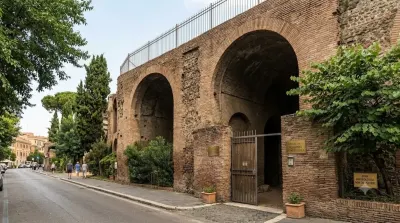
The Domus Aurea was a vast landscaped complex built by the Emperor Nero largely on the Oppian Hill in the heart of ancient Rome after the great fire in 64 AD had destroyed a large part of the city.

1.1 km away

Baths of Caracalla

Museums & galleries

Baths of Caracalla

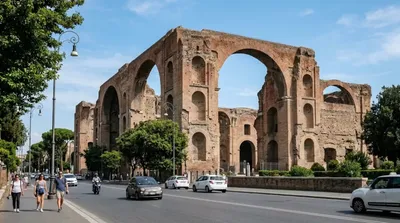
The Baths of Caracalla in Rome, Italy, were the city's second largest Roman public bath complex, or thermae, after the Baths of Diocletian. The baths were likely built between AD 212 and 216/217, during the reigns of emperors Septimius Severus and Caracalla. They were in operation until the 530s and then fell into disuse and ruin.

1.3 km away

Arch of Constantine

Heritage & monuments

Arch of Constantine

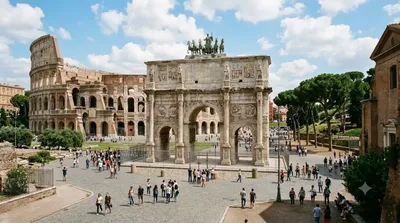
The Arch of Constantine is a triumphal arch in Rome dedicated to the emperor Constantine the Great. The arch was commissioned by the Roman Senate to commemorate Constantine's victory over Maxentius at the Battle of the Milvian Bridge in AD 312. Situated between the Colosseum and the Palatine Hill, the arch spans the Via Triumphalis, the route taken by victorious military leaders when they entered the city in a triumphal procession. Dedicated in 315, it is the largest Roman triumphal arch, with overall dimensions of 21 m (69 ft) high, 25.9 m (85 ft) wide and 7.4 m (24 ft) deep. It has three bay...

1.4 km away

San Pietro in Vincoli

Temples & religious sites

San Pietro in Vincoli

San Pietro in Vincoli is a Roman Catholic titular church and minor basilica in Rome, Italy. The church is on the Oppian Hill near Cavour metro station, a short distance from the Colosseum. The name alludes to the Biblical story of the Liberation of Peter.

1.4 km away

Basilica di Santa Maria Maggiore

Temples & religious sites

Basilica di Santa Maria Maggiore

The Papal Basilica of Saint Mary the Great, also informally known as the Basilica of Saint Mary Major, is a Roman Catholic Papal Basilica and one of the Seven Pilgrim Churches of Rome. The largest Marian church in Rome, it is regarded as the first Marian sanctuary and the mothership of all Marian shrines. The shrine is dedicated to the Blessed Virgin Mary under the title of Our Lady of the Snow.

1.4 km away