World by City

Museums & galleries

Baths of Caracalla
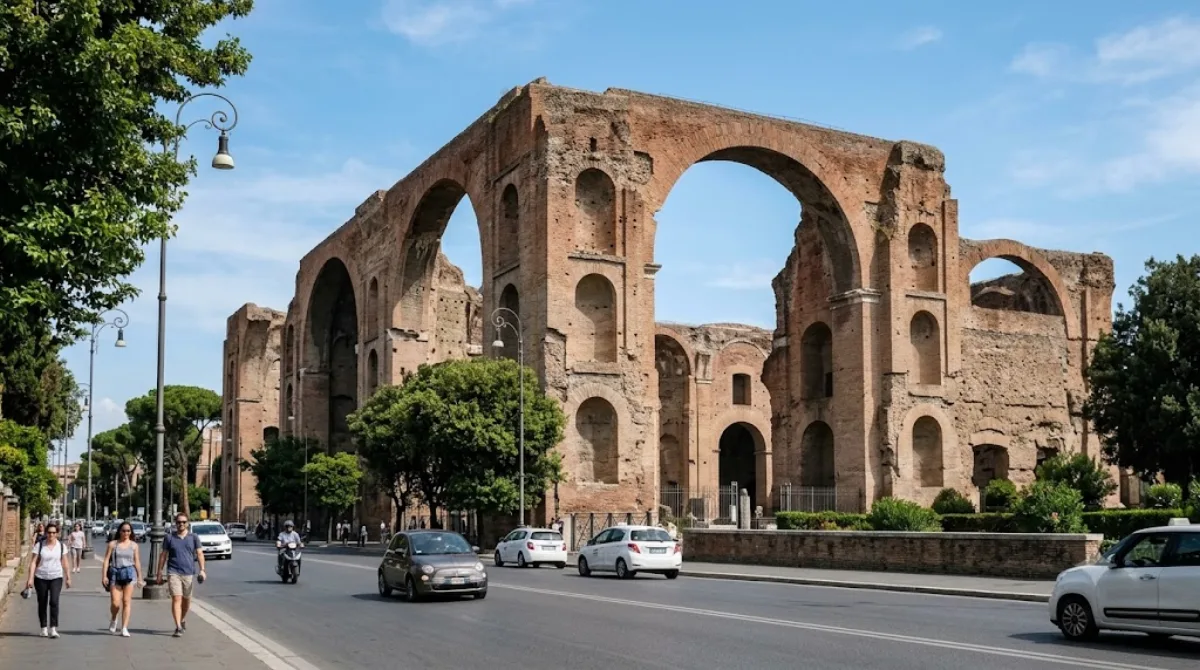
Baths of Caracalla

The Baths of Caracalla in Rome, Italy, were the city's second largest Roman public bath complex, or thermae, after the Baths of Diocletian. The baths were likely built between AD 212 and 216/217, during the reigns of emperors Septimius Severus and Caracalla. They were in operation until the 530s and then fell into disuse and ruin.

What it is

The Baths of Caracalla were a vast public bathing complex built in the early 3rd century AD, second in size only to the later Baths of Diocletian. Romans came here not just to bathe but to exercise, socialize, and use libraries and gardens on the grounds. Today you're looking at towering brick ruins, the outlines of the original hot, warm, and cold bathing halls, and sections of surviving mosaic floor. It gives a strong sense of the scale of Roman public infrastructure, without the crowds of the Colosseum.

Getting there

From the city centre, it's a walk of around 20-25 minutes from the Colosseum area, or a short ride on Metro Line B to the Circo Massimo stop, followed by a 5-10 minute walk. Several bus and tram lines also stop nearby along Viale Aventino.

How long to spend

Most visitors need 1 to 1.5 hours to walk the site at a relaxed pace. If you're interested in the substructures or use an audio guide, allow closer to 2 hours.

When to go

The site is largely uncovered and open-air, so summer midday visits can be hot with little shade. Mornings tend to be quieter and cooler. It sees far fewer visitors than the major ancient sites near the Colosseum, so crowding is rarely a major issue here.

Combine it with

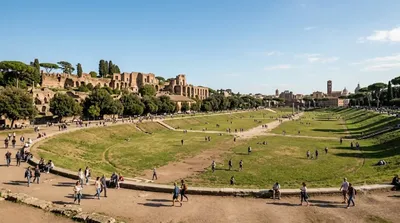
  • Circus Maximus (0.9km) - the ancient chariot-racing track, an easy walk away.
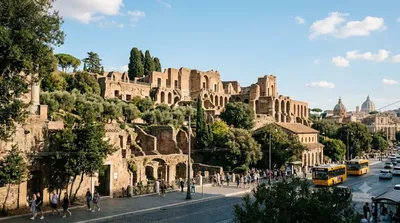
  • Palatine Hill (1km) - part of the Colosseum/Roman Forum archaeological area.
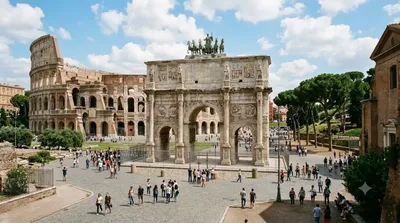
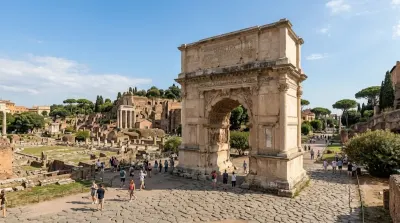
  • Arch of Constantine (1.1km) and Arch of Titus (1.2km) - both within walking distance, near the Colosseum.

These sites can reasonably be combined into a single half-day or full-day walking route through ancient Rome.

Sources: open data from Wikipedia and OpenStreetMap · Updated August 5, 2026 · Edited by the World by City editors

Tickets & tours

Admission prices and opening hours change often, so we don't list them here. Check what's on sale and at what price below — booking ahead can cut the queue at some places.

This place may not appear in the results — some sites are free to enter or sell tickets only at the gate.

Stays near Baths of Caracalla

Sorted by distance, walkable ones first. Distances are straight-line.

Map © OpenStreetMap contributors. Lines are straight connections, not actual routes.

Baths of Caracalla Nearby stays

Locations and names come from OpenStreetMap. Check prices and availability on the booking sites.

Good to visit alongside

Circus Maximus

Heritage & monuments

Circus Maximus

The Circus Maximus is an ancient Roman chariot-racing stadium and mass entertainment venue in Rome, Italy. In the valley between the Aventine and Palatine hills, it was the first and largest stadium in ancient Rome and its later Empire. It measured 621 m (2,037 ft) in length and 118 m (387 ft) in width and could accommodate over 150,000 spectators. In its fully developed form, it became the model for circuses throughout the Roman Empire. The site is now a public park.

0.9 km away

Palatine Hill

Museums & galleries

Palatine Hill

The Palatine Hill, which is the centremost of the seven hills of Rome, is one of the most ancient parts of the city; it has been called "the first nucleus of the Roman Empire". The site is now mainly a large open-air museum and the Palatine Museum houses many finds from the excavations here and from other ancient Italian sites.

1.0 km away

Arch of Constantine

Heritage & monuments

Arch of Constantine

The Arch of Constantine is a triumphal arch in Rome dedicated to the emperor Constantine the Great. The arch was commissioned by the Roman Senate to commemorate Constantine's victory over Maxentius at the Battle of the Milvian Bridge in AD 312. Situated between the Colosseum and the Palatine Hill, the arch spans the Via Triumphalis, the route taken by victorious military leaders when they entered the city in a triumphal procession. Dedicated in 315, it is the largest Roman triumphal arch, with overall dimensions of 21 m (69 ft) high, 25.9 m (85 ft) wide and 7.4 m (24 ft) deep. It has three bay...

1.1 km away

Arch of Titus

Heritage & monuments

Arch of Titus

The Arch of Titus is a 1st-century AD honorific arch, located on the Via Sacra, Rome, just to the south-east of the Roman Forum. It was constructed in c. 81 AD by Emperor Domitian shortly after the death of his older brother Titus to commemorate Titus's official deification or consecratio and the victory of Titus together with their father, Vespasian, over the Jewish rebellion in Judaea.

1.2 km away

Domus Aurea

Museums & galleries

Domus Aurea

The Domus Aurea was a vast landscaped complex built by the Emperor Nero largely on the Oppian Hill in the heart of ancient Rome after the great fire in 64 AD had destroyed a large part of the city.

1.3 km away

Archbasilica of St. John Lateran

Temples & religious sites

Archbasilica of St. John Lateran

The Archbasilica of Saint John Lateran, commonly known as the Lateran Basilica or Saint John Lateran, is the Catholic cathedral of the Diocese of Rome in the city of Rome, Italy. It serves as the seat of the bishop of Rome and head of the worldwide Catholic Church: the pope. The only "archbasilica" in the world, it lies outside of Vatican City proper, which is located approximately four kilometres northwest. Nevertheless, as properties of the Holy See, the archbasilica and its adjoining edifices enjoy an extraterritorial status from Italy, pursuant to the terms of the Lateran Treaty of 1929. D...

1.3 km away