Heritage & monuments
Arch of Titus
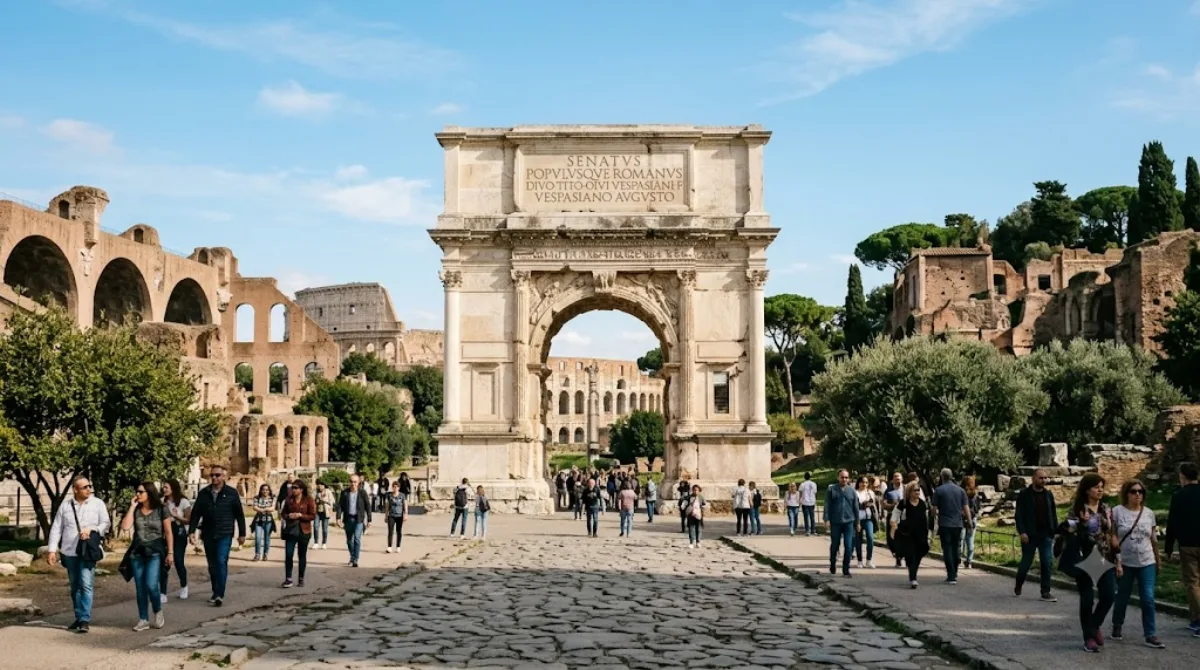
Arch of Titus
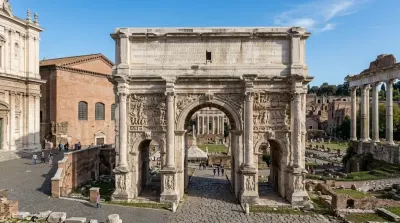
The Arch of Titus is a triumphal arch built around 81 AD by Emperor Domitian to honor his brother Titus after his death, commemorating both Titus's deification and the joint victory of Titus and their father Vespasian over the Jewish revolt in Judaea. Its relief panels, showing spoils from the sack of Jerusalem including the Temple menorah, and a Roman legion in procession, are among the best-preserved examples of Roman commemorative sculpture and a key reference point for later triumphal arches, including the Arc de Triomphe in Paris. It sits on the Via Sacra at the edge of the Roman Forum, so most visitors reach it while walking through the Forum rather than as a separate stop.
Getting there
From central Rome, it's a walk of 15-25 minutes from most points in the historic centre, or a short ride to the Colosseo metro stop (Line B), from which it's about a 5-10 minute walk uphill.
How much time to allow
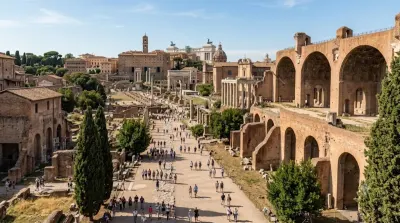
Seeing the arch itself takes only a few minutes, but it's usually visited as part of a Roman Forum walk, which can take 1.5-3 hours depending on how much you explore.
When to go
Mornings, shortly after opening, tend to be quieter and cooler, especially in summer. The surrounding Forum area gets busy by midday and can be crowded with tour groups, so if you want photos without crowds, aim early.
What to combine it with
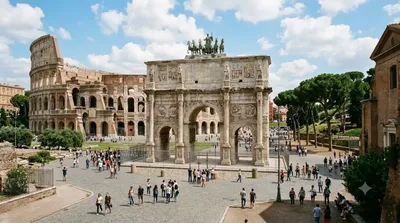
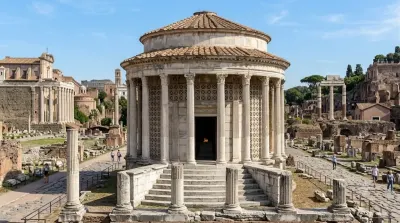
The arch is essentially at the entrance to the Roman Forum (0.3km), and the Temple of Vesta (0.2km) and Palatine Hill (0.3km) are within the same archaeological area, making it easy to see all three in one visit. The Arch of Constantine (0.2km) is a short walk away near the Colosseum, so many visitors link all of these sites into a single route.
Updated September 20, 2026 · Edited by the World by City editors
 GetYourGuide
 Klook
Klook
 Tiqets
 KKday
KKday
 WeGoTrip
 Booking.com
 Hotels.com