World by City

Museums & galleries

Domus Aurea
Domus Aurea

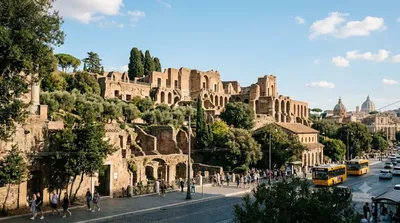
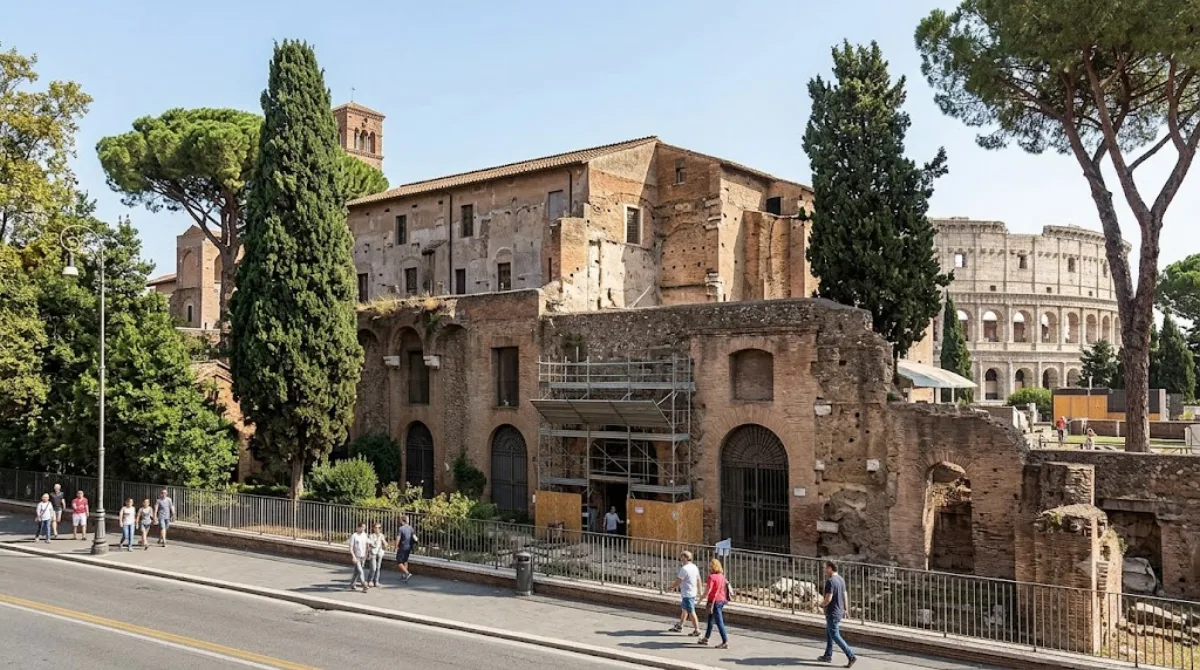
The Domus Aurea was a vast landscaped complex built by the Emperor Nero largely on the Oppian Hill in the heart of ancient Rome after the great fire in 64 AD had destroyed a large part of the city.

What It Is

The Domus Aurea ("Golden House") was Emperor Nero's palace complex, built on the Oppian Hill after the fire of 64 AD destroyed much of central Rome. What survives are the underground brick vaults and chambers of the original structure, later buried and used as foundations for the Baths of Trajan. Visitors walk through cavernous halls with fragments of frescoes and stucco decoration still visible on the ceilings. It's a site for people interested in Roman engineering and imperial history rather than a conventional art museum with displayed objects — the space itself, and its scale, is the main draw.

Getting There

The site sits on the Oppian Hill, an easy walk from the Colosseum area — roughly 10-15 minutes on foot from the Colosseum or Roman Forum. From Rome's city centre (e.g., Piazza Venezia), it's about a 20-minute walk, or a short ride on the metro (Colosseo station, Line B) followed by a walk uphill through Parco del Colle Oppio.

Time to Allow

Visits typically run about an hour, often as a guided tour through the underground rooms, since the site is managed with timed access to protect the structure.

When to Go

Because access is limited and often only via scheduled visits, arriving without checking ahead can mean not getting in. Weekends and midday in high season tend to be busier; the underground setting means temperature and crowd levels are more consistent than at open-air ruins nearby.

Combine It With

The location makes it easy to pair with other ancient Rome sites: San Pietro in Vincoli is just 0.3km away, while the Arch of Constantine (0.4km) and Arch of Titus (0.6km) sit near the Colosseum on the walk down the hill. Basilica di Santa Maria Maggiore, about 0.7km away, works well as a next stop if continuing toward the Esquiline Hill.

Sources: open data from Wikipedia and OpenStreetMap · Updated August 5, 2026 · Edited by the World by City editors

Tickets & tours

Admission prices and opening hours change often, so we don't list them here. Check what's on sale and at what price below — booking ahead can cut the queue at some places.

This place may not appear in the results — some sites are free to enter or sell tickets only at the gate.

Stays near Domus Aurea

Sorted by distance, walkable ones first. Distances are straight-line.

Map © OpenStreetMap contributors. Lines are straight connections, not actual routes.

Domus Aurea Nearby stays

Locations and names come from OpenStreetMap. Check prices and availability on the booking sites.

Good to visit alongside

San Pietro in Vincoli

Temples & religious sites

San Pietro in Vincoli

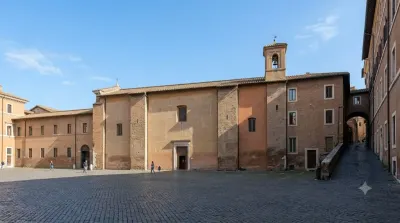
San Pietro in Vincoli is a Roman Catholic titular church and minor basilica in Rome, Italy. The church is on the Oppian Hill near Cavour metro station, a short distance from the Colosseum. The name alludes to the Biblical story of the Liberation of Peter.

0.3 km away

Arch of Constantine

Heritage & monuments

Arch of Constantine

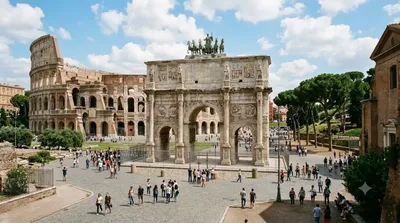
The Arch of Constantine is a triumphal arch in Rome dedicated to the emperor Constantine the Great. The arch was commissioned by the Roman Senate to commemorate Constantine's victory over Maxentius at the Battle of the Milvian Bridge in AD 312. Situated between the Colosseum and the Palatine Hill, the arch spans the Via Triumphalis, the route taken by victorious military leaders when they entered the city in a triumphal procession. Dedicated in 315, it is the largest Roman triumphal arch, with overall dimensions of 21 m (69 ft) high, 25.9 m (85 ft) wide and 7.4 m (24 ft) deep. It has three bay...

0.4 km away

Arch of Titus

Heritage & monuments

Arch of Titus

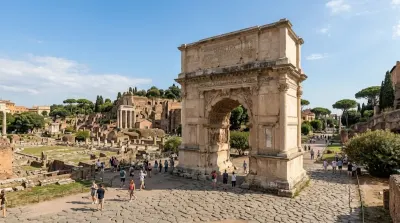
The Arch of Titus is a 1st-century AD honorific arch, located on the Via Sacra, Rome, just to the south-east of the Roman Forum. It was constructed in c. 81 AD by Emperor Domitian shortly after the death of his older brother Titus to commemorate Titus's official deification or consecratio and the victory of Titus together with their father, Vespasian, over the Jewish rebellion in Judaea.

0.6 km away

Basilica di Santa Maria Maggiore

Temples & religious sites

Basilica di Santa Maria Maggiore

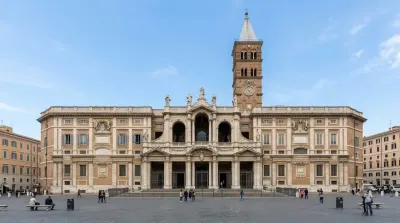
The Papal Basilica of Saint Mary the Great, also informally known as the Basilica of Saint Mary Major, is a Roman Catholic Papal Basilica and one of the Seven Pilgrim Churches of Rome. The largest Marian church in Rome, it is regarded as the first Marian sanctuary and the mothership of all Marian shrines. The shrine is dedicated to the Blessed Virgin Mary under the title of Our Lady of the Snow.

0.7 km away

Temple of Vesta

Temples & religious sites

Temple of Vesta

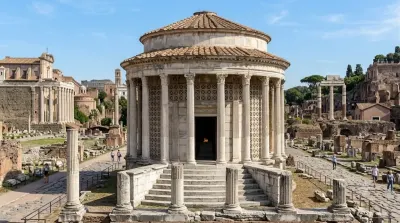
The Temple of Vesta, or the aedes, was an ancient edifice in Rome, Italy. It is located in the Roman Forum near the Regia and the House of the Vestal Virgins. The Temple of Vesta housed Vesta's holy fire, which was a symbol of Rome's safety and prosperity. The temple has a circular footprint, making it a tholos.

0.8 km away

Palatine Hill

Museums & galleries

Palatine Hill

The Palatine Hill, which is the centremost of the seven hills of Rome, is one of the most ancient parts of the city; it has been called "the first nucleus of the Roman Empire". The site is now mainly a large open-air museum and the Palatine Museum houses many finds from the excavations here and from other ancient Italian sites.

0.8 km away