
 Italy
Italy
Each city holds a different era. Roman ruins, the Renaissance in Florence, the canals of Venice and modern Milan — all connected by train.
- Currency
- EUR
- Language
- Italian
- Visa
- Schengen Visa-free 90 days
- Power & plug
- 230V · Type C/F/L
Italy currency guide — today's rate & payment tips
Best time to visit · Apr–Jun, Sep–Oct
Visa and entry rules change often. Check your government's travel advisory or the local embassy before you go.
Average temperature by month
Based on Rome · 5-year average
Choose a city
Map and place data © OpenStreetMap contributors
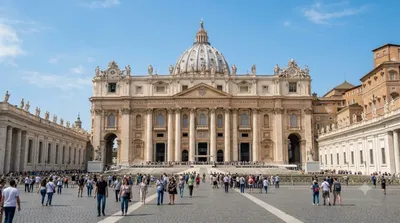
Rome
Two-thousand-year-old ruins stand in the middle of a working city. The main sights sit within walking distance of each other, which makes it an easy first stop in Italy.
40 sights 9 guides Fiumicino (FCO) & Ciampino (CIA)
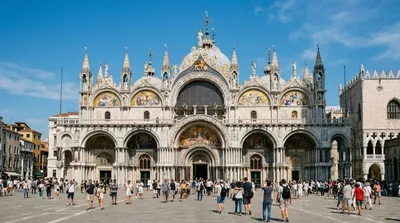
Venice
A city on water with no cars. Staying on the main island or on the mainland (Mestre) changes both your budget and your travel time considerably.
42 sights 9 guides Venice Marco Polo (VCE)
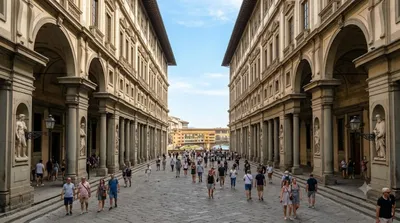
Florence
Renaissance art concentrated in one place. The centre is small enough to walk, and it works as a base for day trips across Tuscany.
40 sights 9 guides Florence (FLR) & Pisa (PSA)
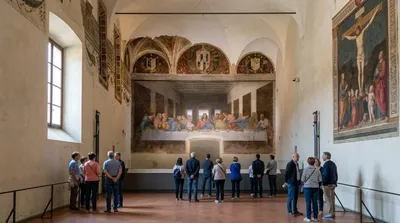
Milan
Fashion and design, and Italy's northern rail gateway. The metro is good, so staying near a station keeps things simple.
40 sights 9 guides Malpensa (MXP) & Linate (LIN)
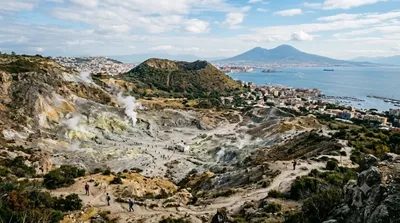
Naples
The home of pizza and the jumping-off point for Pompeii and the Amalfi Coast. Lively, and worth keeping an eye on your belongings.
40 sights 9 guides Naples Capodichino (NAP)
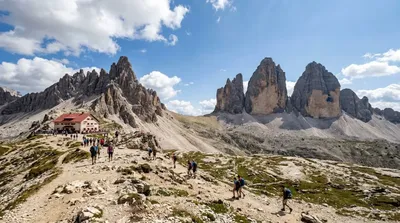
Dolomites
A limestone mountain range in northern Italy and a UNESCO World Heritage site. It is a region rather than a city, so you pick a base village (Cortina d'Ampezzo, Ortisei and the like) and get around by car.
42 sights 9 guides Venice Marco Polo (VCE) & Innsbruck (INN)
Top sights in Italy
Temples & religious sites
St. Peter's Basilica
St. Peter's Basilica is a Catholic church in Vatican City, built between 1506 and 1626 under Popes Nicholas V and Julius II to replace the original 4th-century basilica founded by Constantine. Visitors come to see its Renaissance and Baroque architecture and interiors, shaped by Michelangelo, Bernini, and others, and it remains a central site of the Catholic faith.
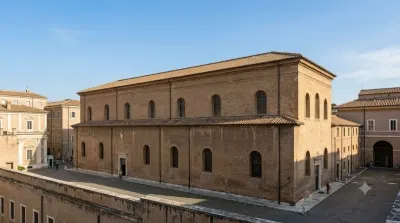
Temples & religious sites
Sistine Chapel
The Sistine Chapel is a chapel within the Apostolic Palace, the pope's official residence in Vatican City. Commissioned by Pope Sixtus IV between 1473 and 1481, who gave it his name, it has served as a venue for religious ceremonies and official Vatican functions, and remains the site where the conclave elects each new pope.
Heritage & monuments
The Last Supper
The Last Supper is a mural painted by Leonardo da Vinci around 1495–1498, still in its original location on the wall of the refectory at Santa Maria delle Grazie. It captures the moment just after Jesus tells his twelve apostles at their final meal, "One of you will betray me," and is renowned for its use of perspective and its vivid depiction of each figure's expression and gesture.
Museums & galleries
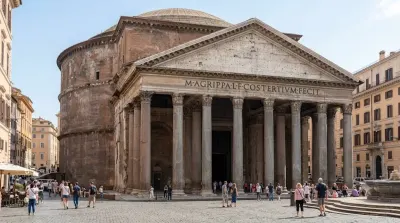
Pantheon
The Pantheon is an ancient Roman temple built in the 2nd century, and since 609 it has served as a Catholic church (Santa Maria ad Martyres). It is considered one of the best-preserved buildings from ancient Rome, and its highlight is the domed interior, lit by sunlight streaming through the oculus at the center of the roof.
Temples & religious sites
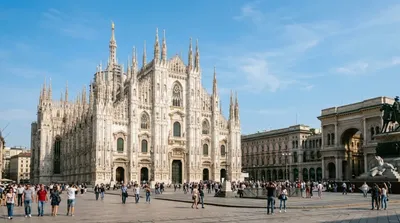
Milan Cathedral
Milan Cathedral (the Duomo) is a Roman Catholic cathedral dedicated to the Nativity of the Virgin Mary and the seat of the Archdiocese of Milan. Many visitors come to see its facade, covered in ornate spires and statues, and its stained-glass-filled interior firsthand. Climbing to the rooftop terrace offers a close-up view of the spires, and on clear days, panoramic views of the city as well.
Nature
Phlegraean Fields
The Phlegraean Fields are a vast volcanic caldera west of Naples, so close to the city that part of Naples itself sits atop it. The terrain, shaped by volcanic activity, is dotted with fumaroles and other signs of geothermal activity, and the area is often described in the media as a "supervolcano."
Culture & venues
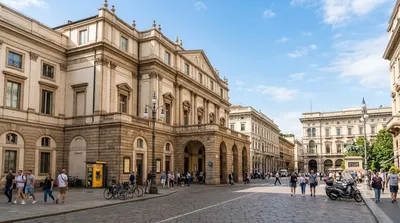
La Scala
La Scala is a historic opera house in Milan that opened on August 3, 1778, originally under the name "Nuovo Regio Ducale Teatro alla Scala." Its opening performance was Antonio Salieri's "Europa riconosciuta." Still an active venue for opera, ballet, and classical concerts today, it's worth a visit simply to see its opulent auditorium and stage in person.
Museums & galleries
Uffizi Gallery
The Uffizi Gallery, located near Piazza della Signoria in Florence, is renowned for its collection of Italian Renaissance paintings. With works by Botticelli, Leonardo da Vinci, Michelangelo, and Raphael all under one roof, it's an ideal stop for travelers wanting to trace the development of Renaissance art firsthand.
Visit stories: Italy
Have you been to this country?
Share your visit story with photos you took yourself. Once checked, it goes into the Magazine.
Local data
Get an eSIM for Italy before you go
Activate mobile data with a QR code instead of swapping SIM cards. Buy it before departure and switch it on the moment you land.
 Airalo
 Yesim
Yesim
 Saily
Saily
 Drimsim
Check prices and availability on the booking sites.