World by City

Heritage & monuments

Afrasiab painting
Open in Maps
Afrasiab painting

Overview

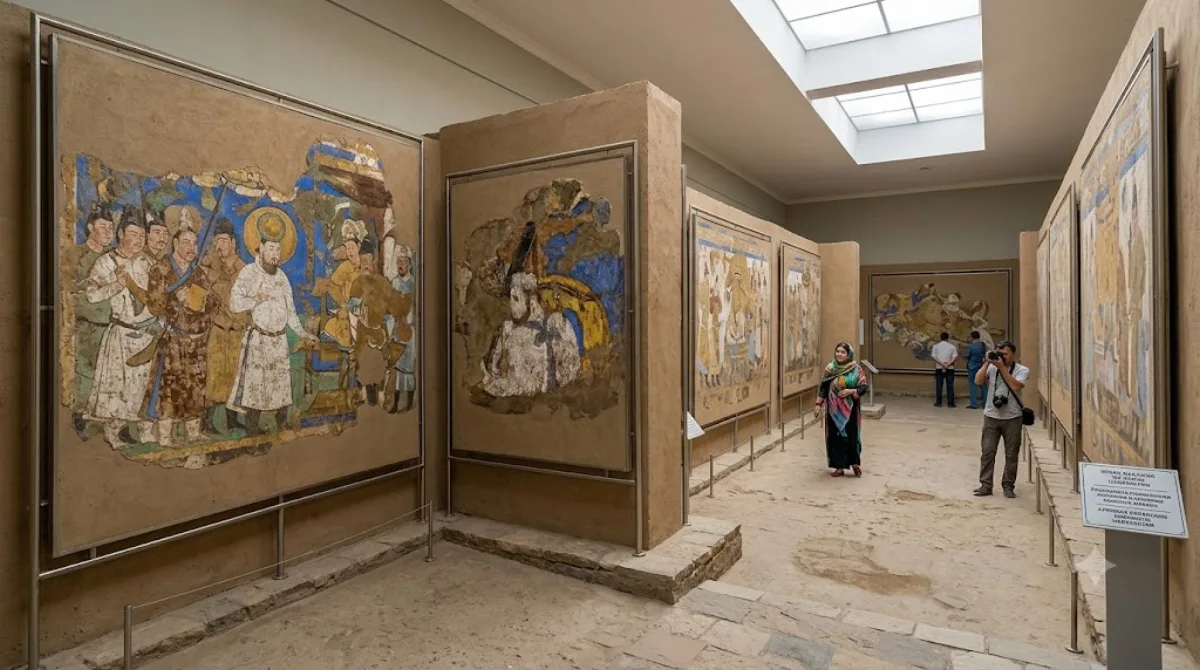
Discovered in 1965, these 7th-century Sogdian palace murals depict diplomatic receptions, royal processions, and court life. The western wall is notable for portraying foreign delegates, including figures identified as envoys from the Korean kingdom of Goguryeo, documenting early trans-Eurasian diplomatic ties along the Silk Road.

Getting There

The site is in northern Samarkand. From the city centre near the Registan, a taxi takes roughly 10 to 15 minutes. Local minibuses also travel along the northern road toward the site.

Time to Allow

Plan for 45 to 60 minutes. This provides sufficient time to view the reconstructed mural room and read the accompanying historical exhibits.

When to Visit

Spring (April–May) and autumn (September–October) offer comfortable temperatures. In summer, visit in the morning to avoid midday heat. Organized tour groups visit periodically, but the hall is rarely crowded.

Nearby Attractions

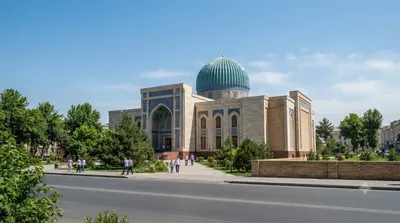
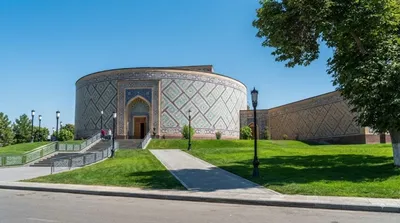
The paintings are housed inside the Afrasiab Museum of Samarkand (0 km). You can combine your visit with nearby sites:

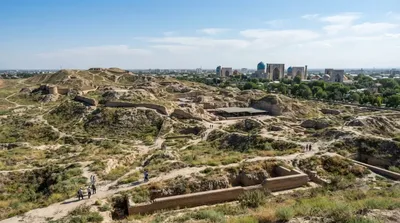
  • Afrasiyab (0.5 km): Ancient settlement hill behind the museum.
  • Hazrat-Hyzr Mosque (1.1 km): Historic hillside mosque.
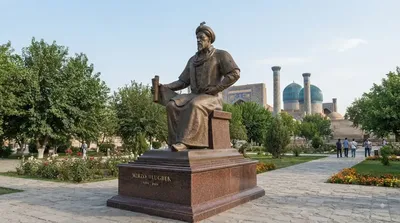
  • Statue of Ulugh Beg (Samarkand) (1.2 km): Monument near the historic center.

Updated September 8, 2026 · Edited by the World by City editors

Tickets & tours

Admission prices and opening hours change often, so we don't list them here. Check what's on sale and at what price below — booking ahead can cut the queue at some places.

This place may not appear in the results — some sites are free to enter or sell tickets only at the gate.

Stays near Afrasiab painting

Sorted by distance, walkable ones first. Distances are straight-line.

Map and place data © OpenStreetMap contributors

Afrasiab painting Nearby stays

Check prices and availability on the booking sites.

Pick your dates — we'll search Samarkand hotels for you

Choose dates and guests, and the buttons below will open search results with your criteria. Prices differ between sites, so compare before you book.

Hotel membership

Staying at Accor hotels often? ALL Accor+ Explorer

A paid annual membership. It includes two free nights a year across Asia-Pacific, 30% off dining and 15% off drinks, and 15% off stays at more than 4,500 hotels worldwide.

Explore the membership

Itineraries including this place

Good to visit alongside

Afrasiab Museum of Samarkand

Museums & galleries

Afrasiab Museum of Samarkand

A museum located at the Afrasiab archaeological site in northeastern Samarkand. Its artifacts from the ancient city, destroyed by the Mongols, reveal the region's long history.

0.0 km away

Afrasiyab

Heritage & monuments

Afrasiyab

An ancient archaeological site north of Samarkand, Uzbekistan, situated on a hill near the Bibi-Khanym Mosque. The Afrasiyab murals uncovered during excavation can be viewed at a nearby museum.

0.5 km away

Hazrat-Hyzr Mosque

Temples & religious sites

Hazrat-Hyzr Mosque

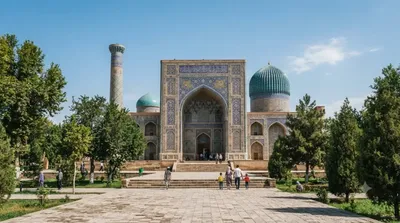
This historic mosque sits on a hill in Samarkand, facing the Shah-i-Zinda necropolis. It was built on the site of an earlier mosque, and the grounds also hold the tomb of Uzbekistan's first president.

1.1 km away

Statue of Ulugh Beg (Samarkand)

Heritage & monuments

Statue of Ulugh Beg (Samarkand)

A statue honoring Ulugh Beg, the Timurid astronomer and ruler most associated with Samarkand. A good spot to reflect on his achievements while exploring the city.

1.2 km away

Ulugbek observatory museum

Museums & galleries

Ulugbek observatory museum

This is the site of an observatory built in the 15th century by Ulugh Beg, ruler of the Timurid dynasty, where remains of the huge sextant once used there can still be seen. The adjacent museum displays astronomical records and artifacts that reveal the sophistication of Central Asian astronomy.

1.2 km away

Bibi-Khanym Mosque

Temples & religious sites

Bibi-Khanym Mosque

This mosque in Samarkand, Uzbekistan, is named after the wife of Amir Timur, founder of the 14th-century Timurid Empire. It stands as an iconic example of Timurid-era architecture.

1.5 km away