World by City

Nature

Venetian Ghetto
Venetian Ghetto

The Venetian Ghetto was the area of Venice in which Jews were forced to live by the government of the Venetian Republic. The English word ghetto is derived from the Jewish ghetto in Venice. The Venetian Ghetto was instituted on 29 March 1516 by decree of Doge Leonardo Loredan and the Venetian Senate. It was not the first time that Jews in Venice were compelled to live in a segregated area of the city. In 1555, Venice had 160,208 inhabitants, including 923 Jews, who were mainly merchants.

What it is

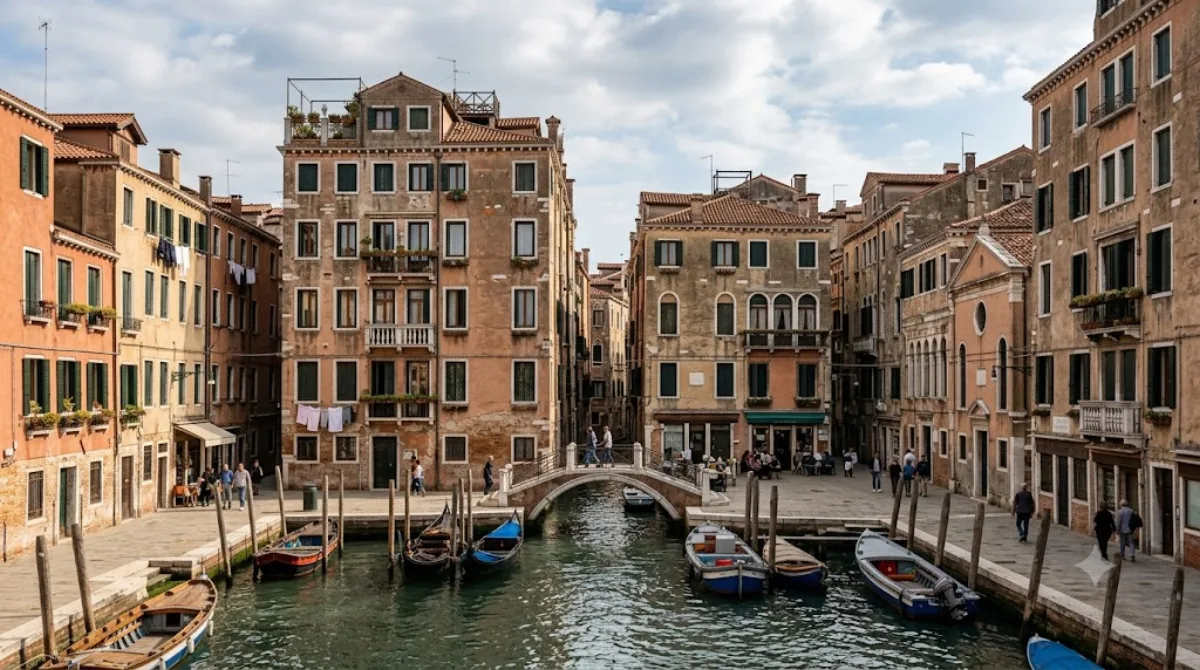
The Venetian Ghetto is a compact island district in the Cannaregio sestiere where, from 1516, the Venetian Republic confined the city's Jewish population. The word "ghetto" itself comes from this neighbourhood. Visitors come for the tall, narrow tenement buildings — built up rather than out, since the community couldn't expand the footprint — and for the Ghetto's five historic synagogues, several of which can be visited. It's also home to a small Jewish museum and kosher bakeries and restaurants that keep the area a living community rather than a preserved relic.

Getting there

From central Venice (San Marco), it's roughly a 25-30 minute walk, or you can take the vaporetto (water bus) from San Marco or the train station toward Cannaregio, getting off near the Guglie or San Marcuola stop and walking a few minutes inland.

How much time to allow

Budget 1.5 to 2 hours to walk the two main squares, look at the synagogue exteriors, and stop in the museum or a bakery. Add extra time if you join a synagogue tour, as these run at set times.

When to go

Mornings tend to be quieter than afternoons. The area sees far less foot traffic than San Marco or the Rialto, though it can still fill up around midday with visitors on guided tours.

What to combine it with

The Ghetto sits right inside Cannaregio (0.1km), so pair it with a wider wander through this residential sestiere and its canals. Nearby, Ca' Vendramin Calergi (0.4km) and the Fondaco dei Turchi (0.4km) are both worth a stop along the Grand Canal, and Madonna dell'Orto (0.5km), a quiet parish church, rounds out a half-day loop through the neighbourhood.

Sources: open data from Wikipedia and OpenStreetMap · Updated August 5, 2026 · Edited by the World by City editors

Tickets & tours

Admission prices and opening hours change often, so we don't list them here. Check what's on sale and at what price below — booking ahead can cut the queue at some places.

This place may not appear in the results — some sites are free to enter or sell tickets only at the gate.

Stays near Venetian Ghetto

Sorted by distance, walkable ones first. Distances are straight-line.

Map © OpenStreetMap contributors. Lines are straight connections, not actual routes.

Venetian Ghetto Nearby stays

Locations and names come from OpenStreetMap. Check prices and availability on the booking sites.

Good to visit alongside

Cannaregio

Shopping & districts

Cannaregio

Cannaregio is the northernmost of the six historic sestieri of Venice, Italy. It is the second largest sestiere by land area and the largest by population, with 13,169 people as of 2007.

0.1 km away

Fondaco dei Turchi

Museums & galleries

Fondaco dei Turchi

The Fondaco dei Turchi is a palazzo in classical Venetian style, later referred to as the Turks' Inn, on the Grand Canal of Venice, northeastern Italy.

0.4 km away

Ca' Vendramin Calergi

Castles & palaces

Ca' Vendramin Calergi

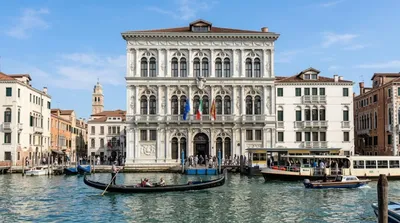
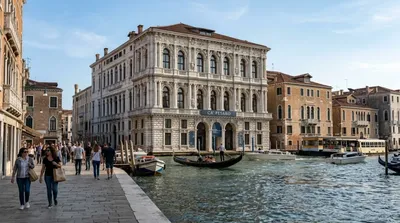
Ca' Loredan Vendramin Calergi is a 15th-century Renaissance palace on the Grand Canal in the sestiere (quarter) of Cannaregio in Venice, Italy. It was commissioned by the patrician Loredan dynasty, namely Andrea Loredan, and paid for by Doge Leonardo Loredan. The Loredan family spent an enormous sum of more than 200 thousand ducats on its construction, which started in 1481 and ended in 1509. The architecturally distinguished building was the home of many prominent people through history and was the place where composer Richard Wagner died.

0.4 km away

Madonna dell'Orto

Temples & religious sites

Madonna dell'Orto

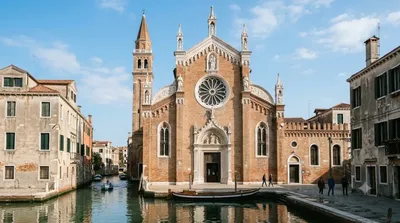
The Madonna dell'Orto is a church in Venice, Italy, in the sestiere of Cannaregio. This was the home parish of Tintoretto and holds a number of his works as well as his tomb.

0.5 km away

Ca' Pesaro

Museums & galleries

Ca' Pesaro

Ca' Pesaro is a Baroque marble palace turned art museum, facing the Grand Canal of Venice, Italy. Today it is one of the 11 museums run by the Fondazione Musei Civici di Venezia system.

0.6 km away

ponte della Costituzione

Views & landmarks

ponte della Costituzione

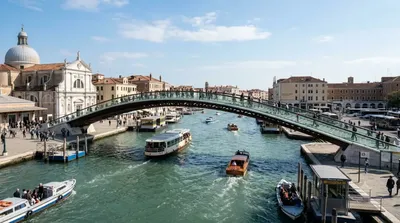
The Ponte della Costituzione is the fourth bridge over the Grand Canal in Venice, Italy. It was designed by Santiago Calatrava, and was moved into place in 2007, amid protest by politicians and the general public. The bridge was installed in 2008 and opened to the public on the night of September 11, 2008. The bridge was known as Quarto Ponte sul Canal Grande before the official name was adopted to celebrate the 60th anniversary of the Italian constitution in 2008. Tourists and locals in Venice now refer to it as the Calatrava Bridge.

0.9 km away