
Denkmäler & Ausgrabungen
Goa Gajah
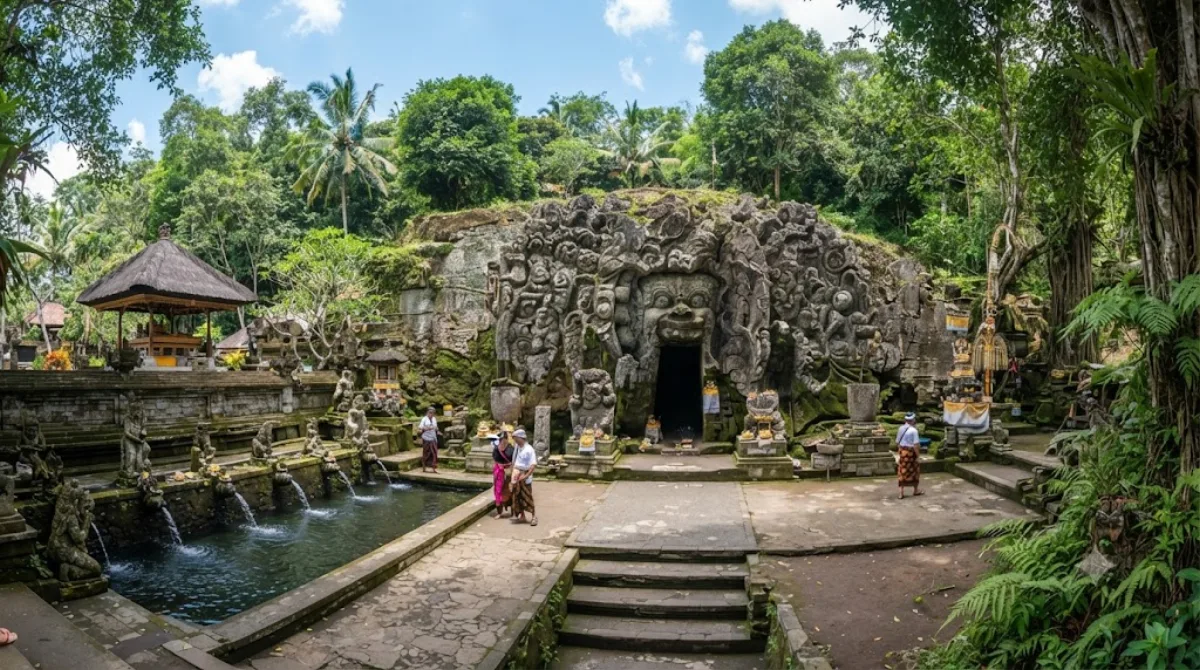
Goa Gajah: Die Elefantenhöhle von Bali
Goa Gajah ist eine in den Fels gehauene Höhlenanlage im Regierungsbezirk Gianyar in der Nähe von Ubud. Die Anlage stammt aus dem 9. Jahrhundert und diente als Ort der Meditation und Verehrung, an dem hinduistische und buddhistische Glaubensvorstellungen koexistierten. Das markanteste Merkmal ist der in die Felswand gemeißelte Eingang mit einem riesigen Gesicht, was der Stätte ihren Namen „Elefantenhöhle“ gab.
Anreise und Dauer
Die Anlage liegt außerhalb des Zentrums von Ubud. Die Anreise erfolgt am besten per Taxi oder gemietetem Roller. Die Fahrtzeit vom Ortskern von Ubud beträgt je nach Verkehrslage etwa 10 bis 15 Minuten.
Für den Besuch des Geländes und den Rundgang durch die Höhle sowie die umliegenden Gartenanlagen sollten etwa 1 bis 2 Stunden eingeplant werden.
Besucherinformationen
Ein Besuch in den frühen Morgenstunden ist ratsam, um der Mittagshitze zu entgehen. Da die Stätte eine bekannte Sehenswürdigkeit ist, wird es insbesondere zur Mittagszeit und am Nachmittag oft sehr voll.
Kombinationsmöglichkeiten
Aufgrund der Lage lassen sich weitere Sehenswürdigkeiten in der unmittelbaren Umgebung integrieren:
- Petanu River: 0,4 km entfernt
- Purbakala Archäologisches Museum: 0,9 km entfernt
- Pura Kebo Edan: 0,9 km entfernt
- Pura Penataran Sasih: 1,3 km entfernt
Aktualisiert 20. September 2026 · Redaktion die World by City-Redaktion
 GetYourGuide
 Klook
Klook
 Tiqets
 KKday
KKday
 WeGoTrip
 Booking.com
 Hotels.com