Heritage & monuments
Goa Gajah
What it is
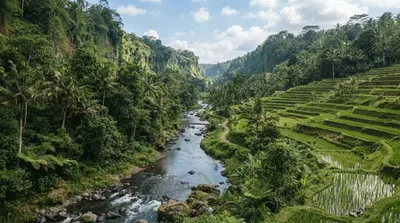
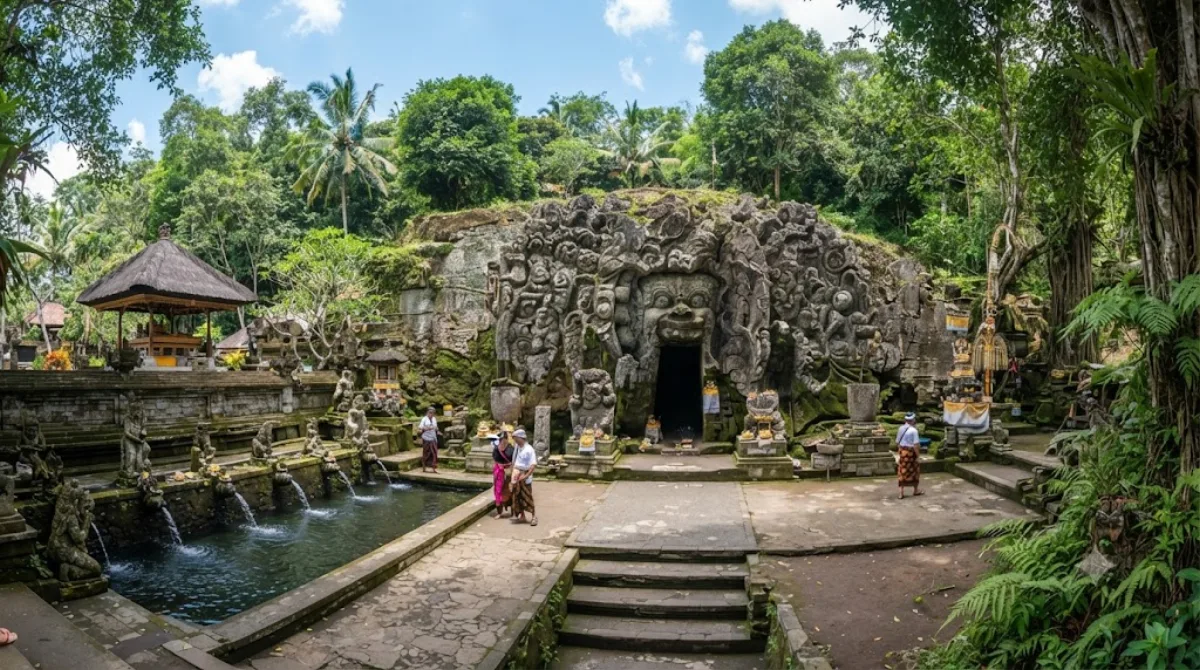
Goa Gajah is a 9th-century rock-cut sanctuary carved into a cliff face outside Ubud. The main draw is the cave entrance itself, a stone facade carved with a demon-like face, its mouth forming the doorway into a narrow, T-shaped chamber with worn niches for meditation and a few remaining statue fragments. Outside, the site includes bathing pools with carved fountain figures, and a path leading down through rice terraces to riverside ruins and a smaller rock relief. It's a place to see, not really to "do" — most visitors spend time looking at the carvings and walking the grounds rather than joining any activity.
Getting there
From central Ubud it's a short drive, typically 15-20 minutes by car or scooter, since the site sits just outside town on the road toward Gianyar. Taxis and drivers based in Ubud know it well, and it's often included as one stop on a half-day tour of nearby temples and rice terraces.
How long to stay
Most people need around 45 minutes to an hour, enough to see the cave, the bathing pools, and walk down to the river ruins and back up.
When to go
Mornings, shortly after the site opens, tend to be quieter and cooler for the walk down to the river. Midday can get busy with tour groups, and the site has limited shade in the open courtyard areas, so avoid the hottest part of the day if you can.
Combine it with
The Petanu River runs right alongside the site (0.4km), part of the same walk down through the ruins. The Purbakala Archaeological Museum (0.9km) and Pura Kebo Edan (0.9km) are both close enough to add on, and Pura Penataran Sasih (1.3km) makes for an easy extension if you have more time.
Updated September 20, 2026 · Edited by the World by City editors
 GetYourGuide
 Klook
Klook
 Tiqets
 KKday
KKday
 WeGoTrip
 Booking.com
 Hotels.com