
 Bolivia
Bolivia has many high-altitude cities like La Paz, making altitude adjustment a key factor for travelers. The Uyuni Salt Flats are the country's signature attraction, while Sucre sits lower and enjoys a milder climate. Since elevation changes a lot while traveling, it's best to plan an unhurried itinerary.
- Currency
- BOB
Bolivia currency guide — today's rate & payment tips
Visa and entry rules change often. Check your government's travel advisory or the local embassy before you go.
Average temperature by month
Based on La Paz · 5-year average
Choose a city
Map and place data © OpenStreetMap contributors
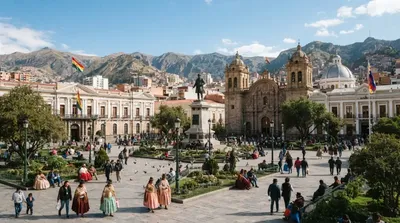
La Paz
La Paz is Bolivia's seat of government and the world's highest capital, sitting at 3,600 meters on the Altiplano plateau. It's also close to Lake Titicaca, letting visitors take in the striking scenery of the high plateau.
25 sights 9 guides El Alto International Airport (LPB)
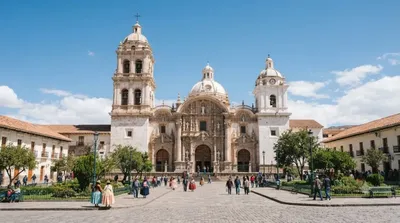
Sucre
Sucre is Bolivia's judicial capital, a historic city that houses the Supreme Court. Its old streets, designated a UNESCO World Heritage Site in 1991, are a pleasure to wander.
3 sights 9 guides Alcantari International Airport (SRE)
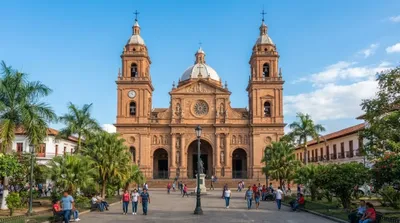
Santa Cruz de la Sierra
Santa Cruz de la Sierra lies in the Amazon basin of eastern Bolivia and has a tropical climate. From June to August, temperatures turn cool and dry, making it the most pleasant time to visit.
4 sights 9 guides Viru Viru International Airport (VVI)
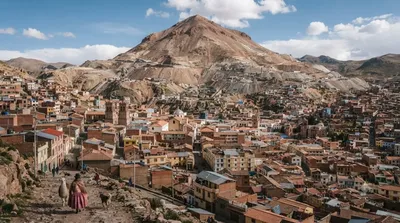
Potosí
Potosí is a Bolivian highland city considered one of the highest cities in the world. After silver was discovered here in 1545, it once accounted for half of the world's silver production, and traces of its mining history can be found throughout the city.
13 sights 9 guides Alcantari International Airport (SRE)
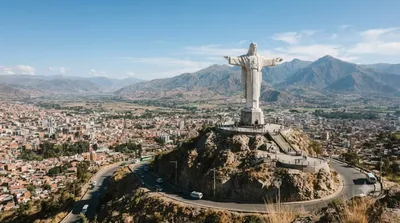
Cochabamba
Cochabamba is Bolivia's third-largest city, set in a basin within the Andes that gives it a mild climate. Its valley is known for fruit orchards, making it a great place to enjoy fresh fruit and relaxed scenery.
5 sights 9 guides Jorge Wilstermann International Airport (CBB)
Top sights in Bolivia
Nature
Cerro Rico
A mountain in the Andes near Potosí, Bolivia, famous for supplying vast quantities of silver to the Spanish Empire. It once accounted for a large share of the Andean region's silver production.
Heritage & monuments
Cristo de la Concordia
Cristo de la Concordia is a statue of Christ atop San Pedro hill east of Cochabamba, reached by cable car or a climb of 2,000 steps. Standing nearly 40 meters tall including its pedestal, it's regarded as one of Bolivia's iconic landmarks.
Parks & gardens
Plaza Murillo
This central square sits in the heart of La Paz's old town and serves as the stage of Bolivian politics. Surrounded by major landmarks such as the Presidential Palace, the Legislative Assembly, and the cathedral, it lets visitors take in the city's history all at once.
Temples & religious sites
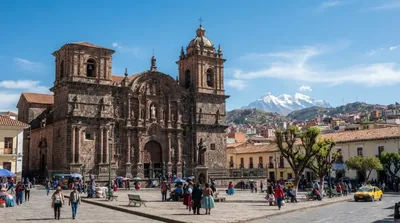
Basilica of San Francisco, La Paz, Bolivia
A Catholic church at Plaza San Francisco in the heart of downtown La Paz. Dedicated to Saint Francis of Assisi, it is one of the city's landmark sights.
Temples & religious sites
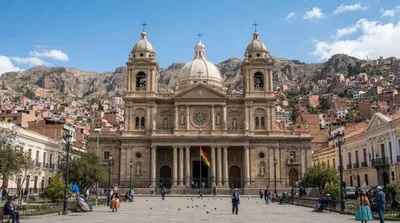
Cathedral Basilica of Our Lady of Peace, La Paz
A cathedral located on Plaza Murillo in La Paz, built in 1835 in a neoclassical style with Baroque elements. Its interior is divided into five naves, creating a grand sense of space.

Castles & palaces
Palacio Quemado
The Palacio Quemado, located on Plaza Murillo in central La Paz, served as the presidential residence from 1853 to 2018. With La Paz Cathedral and the National Congress nearby, it's a fine stop on a historic walk through the city center.
Temples & religious sites
Sucre Cathedral
The Metropolitan Cathedral of Sucre is the center of Bolivia's Catholic Church. Built over a long span from 1559 to 1712, it showcases centuries of architectural heritage.
Museums & galleries
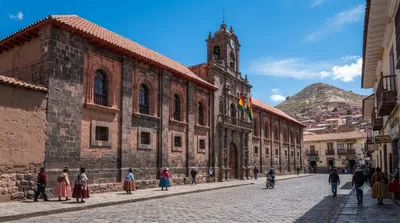
National Mint of Bolivia
The National Mint of Bolivia in Potosí was once the Royal Mint, where Spanish silver coins—once a global reserve currency—were struck. It's now a museum where visitors can explore the history of coin making.
Visit stories: Bolivia
Have you been to this country?
Share your visit story with photos you took yourself. Once checked, it goes into the Magazine.
Local data
Get an eSIM for Bolivia before you go
Activate mobile data with a QR code instead of swapping SIM cards. Buy it before departure and switch it on the moment you land.
 Airalo
 Yesim
Yesim
 Saily
Saily
 Drimsim
Check prices and availability on the booking sites.