World by City

Museums & galleries

Fort San Pedro
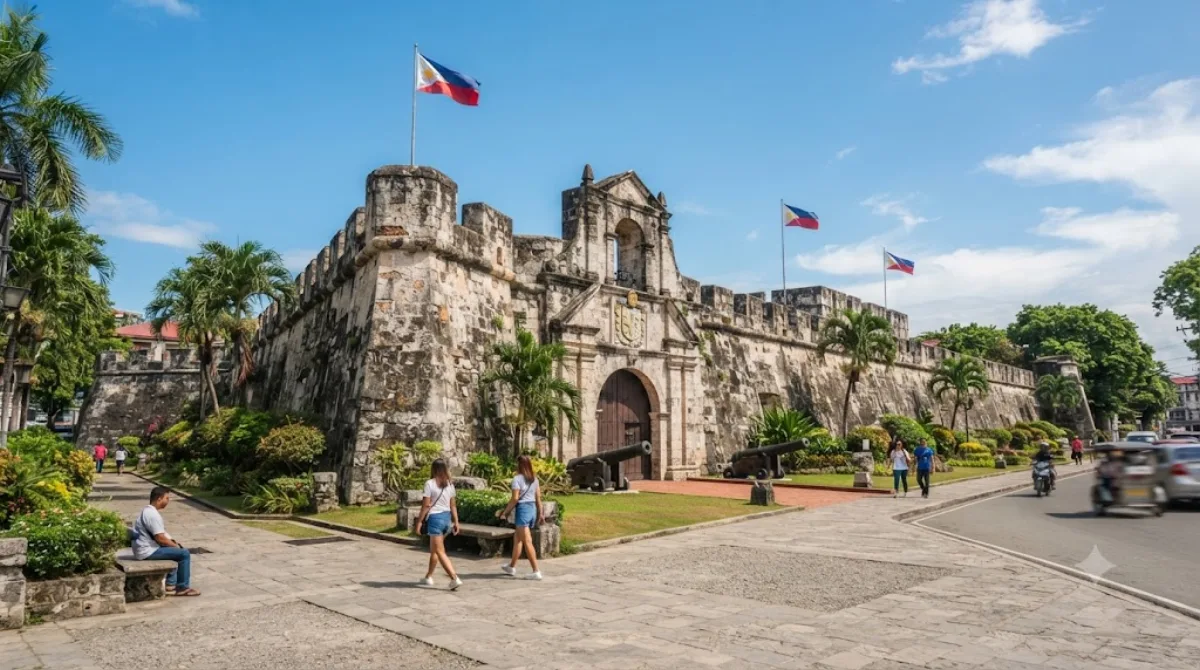
Fort San Pedro

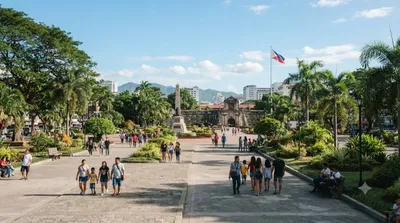
Fort San Pedro is a military defense structure in Cebu, Philippines, built by the Spanish under the command of Miguel López de Legazpi, first governor of the Captaincy General of the Philippines. It is located in the area now called Plaza Independencia, in the pier area of the city. The original fort was made of wood and built after the arrival of Legazpi and his expedition. In the early 17th century a stone fort was built to repel Muslim raiders. Today's structure dates from 1738 and is the oldest triangular bastion fort in the country. It served as the nucleus of the first Spanish settlement...

What it is

Fort San Pedro is a small stone fort built by the Spanish in the pier area of Cebu City, with the current structure dating to 1738. It began as a wooden garrison after Miguel López de Legazpi's expedition and was later rebuilt in stone to defend against raids; it's considered the oldest triangular bastion fort in the country. Inside the fort walls is a small museum with religious artifacts, old photographs, and colonial-era relics, and the grounds and ramparts are worth a slow walk for views over Plaza Independencia and the harbor area.

Getting there

The fort sits in Plaza Independencia near the port, within easy reach of Cebu City's historic core. From the city center, a taxi or ride-hailing car typically takes 10-20 minutes depending on traffic; jeepneys also pass through the downtown area. If you're already visiting the nearby heritage sites, it's a short walk from there.

How much time to allow

Most visitors spend 30-45 minutes walking the ramparts and browsing the small museum rooms. It's not a large site, so it pairs easily with other stops in the same afternoon.

When to go

Mornings tend to be quieter and cooler for walking the exposed stone walls, which offer little shade. Weekends and Philippine holidays can bring more visitors, along with the surrounding plaza and pier area being busier in general.

Combine it with

  • Magellan's Cross (0.4km) — a short walk away
  • Cathedral Museum of Cebu (0.5km)
  • Cebu Metropolitan Cathedral (0.5km)
  • Minor Basilica of the Holy Child (0.5km)

These four sites cluster within half a kilometer of the fort, making it straightforward to string together a half-day walking route through Cebu's colonial-era landmarks.

Sources: open data from Wikipedia and OpenStreetMap · Updated August 5, 2026 · Edited by the World by City editors

Tickets & tours

Admission prices and opening hours change often, so we don't list them here. Check what's on sale and at what price below — booking ahead can cut the queue at some places.

This place may not appear in the results — some sites are free to enter or sell tickets only at the gate.

Stays near Fort San Pedro

Sorted by distance, walkable ones first. Distances are straight-line.

Map © OpenStreetMap contributors. Lines are straight connections, not actual routes.

Fort San Pedro Nearby stays

Locations and names come from OpenStreetMap. Check prices and availability on the booking sites.

Itineraries including this place

Good to visit alongside

Plaza Independencia

Parks & gardens

Plaza Independencia

The Plaza Independencia is a Spanish colonial era plaza in Cebu City.

0.1 km away

Magellan’s Cross

Heritage & monuments

Magellan’s Cross

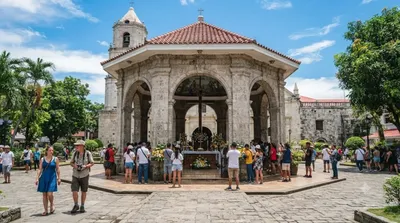
Magellan's Cross Pavilion is a stone kiosk in Cebu City, Philippines. The structure is situated on Plaza Sugbo beside the Basilica del Santo Niño. It houses a Christian cross that was planted by explorers of the Spanish expedition of the first circumnavigation of the world, led by Ferdinand Magellan, upon arriving in Cebu in the Philippines on April 21, 1521.

0.4 km away

Plaza Sugbu

Parks & gardens

Plaza Sugbu

Plaza Sugbu, formerly known as Plaza Rizal, is a public square in Cebu City, Philippines. The square connects the Magellan's Cross kiosk and the Cebu City Hall. The square was inaugurated in 2008 by Philippine president Gloria Arroyo.

0.4 km away

Cathedral Museum of Cebu

Museums & galleries

Cathedral Museum of Cebu

The Archdiocesan Museum of Cebu, also known as the Cathedral Museum of Cebu, is a museum in Downtown Cebu City in the Philippines, reopened in November 2006. It is the ecclesiastical museum of the Roman Catholic Archdiocese of Cebu.

0.5 km away

Cebu Metropolitan Cathedral

Temples & religious sites

Cebu Metropolitan Cathedral

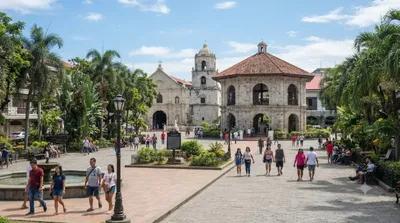
The Metropolitan Cathedral of Cebu and Parish of Saint Vitalis of Milan or commonly known as the Cebu Metropolitan Cathedral is the ecclesiastical seat of the Metropolitan Archdiocese of Cebu in Cebu City, Philippines. The church is dedicated to Saint Vitalis of Milan. Cebu was established as a diocese on August 14, 1595. It was elevated as a metropolitan archdiocese on April 28, 1934, with the dioceses of Dumaguete, Maasin, Tagbilaran, and Talibon as suffragans. Before being raised as a primatial church in Cebu, the church was one of the first churches in the Philippines, dedicated to St. Vit...

0.5 km away

Minor Basilica of the Holy Child

Temples & religious sites

Minor Basilica of the Holy Child

The Basílica Minore del Santo Niño de Cebú, or simply the Santo Niño Basilica, is a Catholic minor basilica in Cebu City, Philippines. It was originally founded by Augustinian friars Andrés de Urdaneta and Diego de Herrera in 1565. It is the oldest church in the country and is purported to have been built on the site where the image of the Santo Niño de Cebú was rediscovered during the expedition of the Spanish conquistador Miguel López de Legazpi.

0.5 km away