Museums & galleries
Basilica of Santa Maria Novella
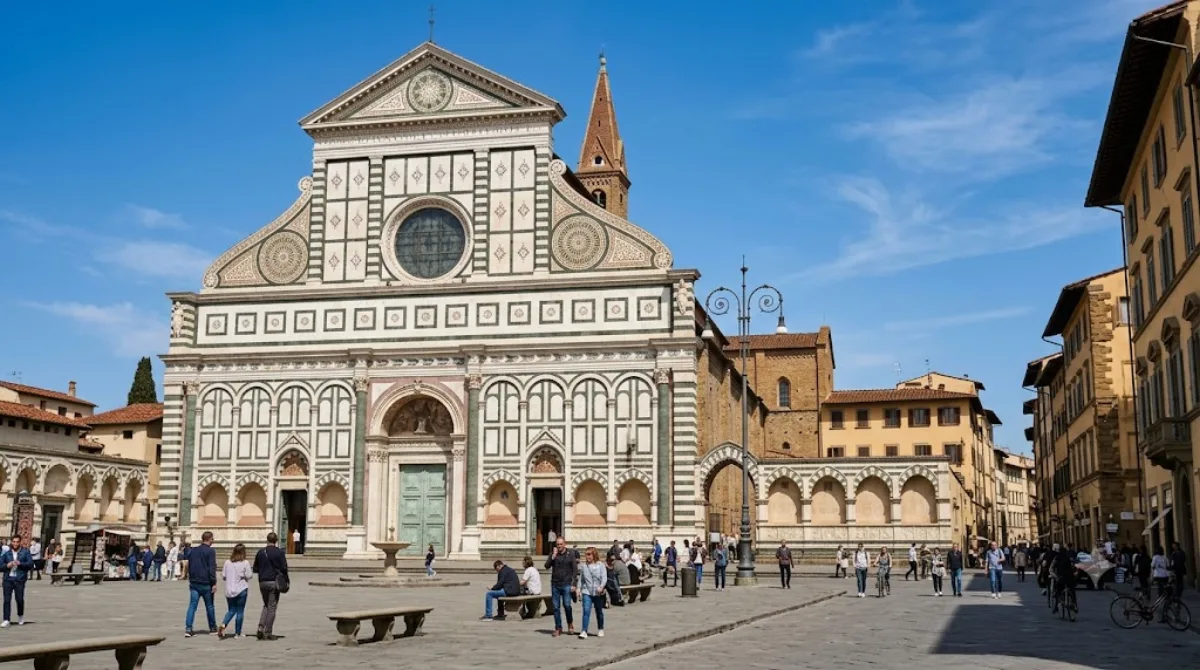
Basilica of Santa Maria Novella
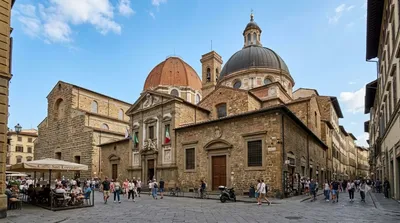
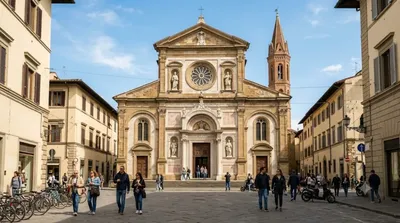
Santa Maria Novella is a Dominican church, one of the major Gothic churches of Tuscany, built between 1290 and the late 1400s and consecrated in 1420. Visitors come mainly for the marble facade and the church interior, including the adjoining cloisters and chapter house, which hold Renaissance frescoes and artworks from the church's construction period. It rewards travellers interested in medieval and early Renaissance art and architecture rather than casual sightseers.
Getting there
The basilica sits right by Florence's main train station, Santa Maria Novella, so most visitors arrive on foot within a few minutes of stepping off the train. From the historic centre (Duomo, Piazza della Signoria), it's a walk of about 10-15 minutes. If arriving by air, both Florence (FLR) and Pisa (PSA) airports connect to the city centre by train or shuttle bus, from which the church is an easy walk.
Time to allow
Plan on roughly 45 minutes to an hour for the church interior, and longer, up to 1.5-2 hours, if you also visit the cloisters and museum spaces attached to it.
When to go
Mornings tend to be quieter, before tour groups arrive later in the day. Because of its location next to the train station, the surrounding piazza can be busy with transiting travellers at most hours, though this doesn't necessarily reflect crowding inside the church itself.
Combine with
- Ognissanti Church (0.3km) — another Florentine church within easy walking distance.
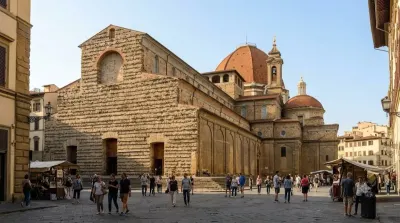
- Medici Chapels (0.3km) and Basilica of San Lorenzo (0.4km) — grouped together near San Lorenzo, making for a natural extension of a church-focused walk.
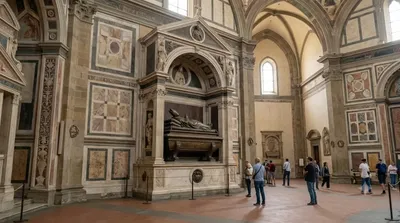
- Tomb of Antipope John XXIII (0.4km) — located inside the San Lorenzo complex, worth combining with that stop.
Updated September 20, 2026 · Edited by the World by City editors
 GetYourGuide
 Klook
Klook
 Tiqets
 KKday
KKday
 WeGoTrip
 Booking.com
 Hotels.com