Castles & palaces
Nijō Castle
What it is
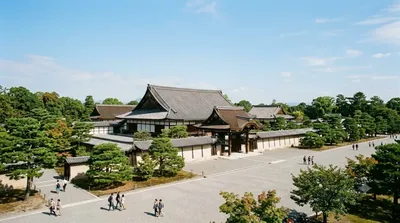
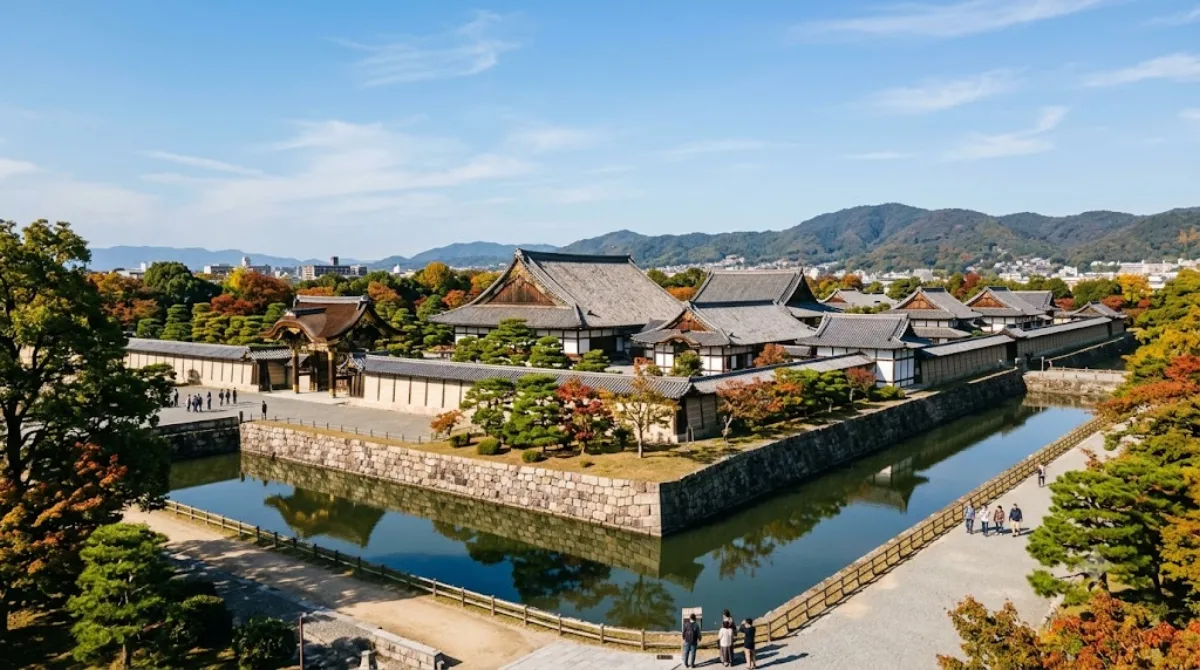
Nijō Castle is a flatland castle built by the Tokugawa shogunate, used as the shogun's Kyoto residence. It's not a hilltop fortress like many Japanese castles — the appeal is the layout itself: two concentric moats and walls enclosing the Ninomaru Palace, the earthwork ruins of the former Honmaru Palace, and several gardens. The main draw is the Ninomaru Palace interior, with its painted sliding doors and "nightingale" floors that chirp underfoot, a security feature meant to alert guards to intruders.
Getting there
From central Kyoto (Kyoto Station area), it's about 15-20 minutes by subway on the Tozai Line to Nijōjō-mae Station, followed by a short walk to the gate. Buses also run there directly from Kyoto Station, though travel time depends on traffic.
How long to stay
Plan on roughly 1.5 to 2 hours to walk through the palace interior, cross the grounds, and see the gardens without rushing.
When to go
Arriving early in the day helps avoid the largest tour groups, which tend to build up mid-morning through early afternoon. The grounds include cherry trees and maples, so spring and autumn bring both the best scenery and the heaviest crowds. Note that the Ninomaru Palace interior is closed to photography and can feel congested during peak visiting hours since foot traffic is funneled through in one direction.
Nearby
The Kyoto International Manga Museum is about 1.1km away and easy to combine with a castle visit on foot. The Kyoto Imperial Palace, another major historical residence, is about 1.8km off. Honnō-ji Temple sits roughly 1.9km away, and Kitano Tenmangū shrine is around 2km — both reasonable additions if you're spending a full day in this part of the city.
Updated September 20, 2026 · Edited by the World by City editors
 GetYourGuide
 Klook
Klook
 Tiqets
 KKday
KKday
 WeGoTrip
 Booking.com
 Hotels.com