
 Japan
Japan
Kyoto
Temples and shrines are spread across the city, so pick a base near the line you will use most.
Updated August 15, 2026 · Edited by the World by City editors
- Gateway airport
- Kansai International Airport (KIX)
- Best season
- Mar–Apr, Nov
- Time zone
- Asia/Tokyo
- Sights covered
- 40 places
Sights worth seeing
See all 40 →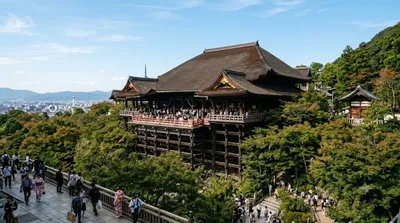
Temples & religious sites
Kiyomizu-dera Temple
Kiyomizu-dera is a Buddhist temple at the foot of the mountains in eastern Kyoto, formally known as Otowasan Kiyomizu-dera. It is the head temple of the Kita Hosso sect of Japanese Buddhism, its principal image is the eleven-headed Kannon, and it is the 16th temple on the Saikoku 33 Kannon Pilgrimage.
Temples & religious sites
Kinkaku-ji Temple
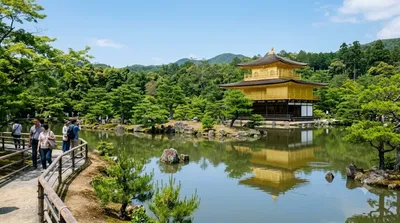
Kinkaku-ji, formally known as Rokuon-ji, is a Rinzai Zen temple whose symbol is the three-story reliquary hall (Shariden) seen across the pond, Kyoko-chi. Its top two floors are covered in gold leaf, which is why it's more commonly called the "Golden Pavilion." The current building is a 1955 reconstruction, and visitors view it and the surrounding garden while walking the path along the pond rather than entering it.
Temples & religious sites
Fushimi Inari-taisha
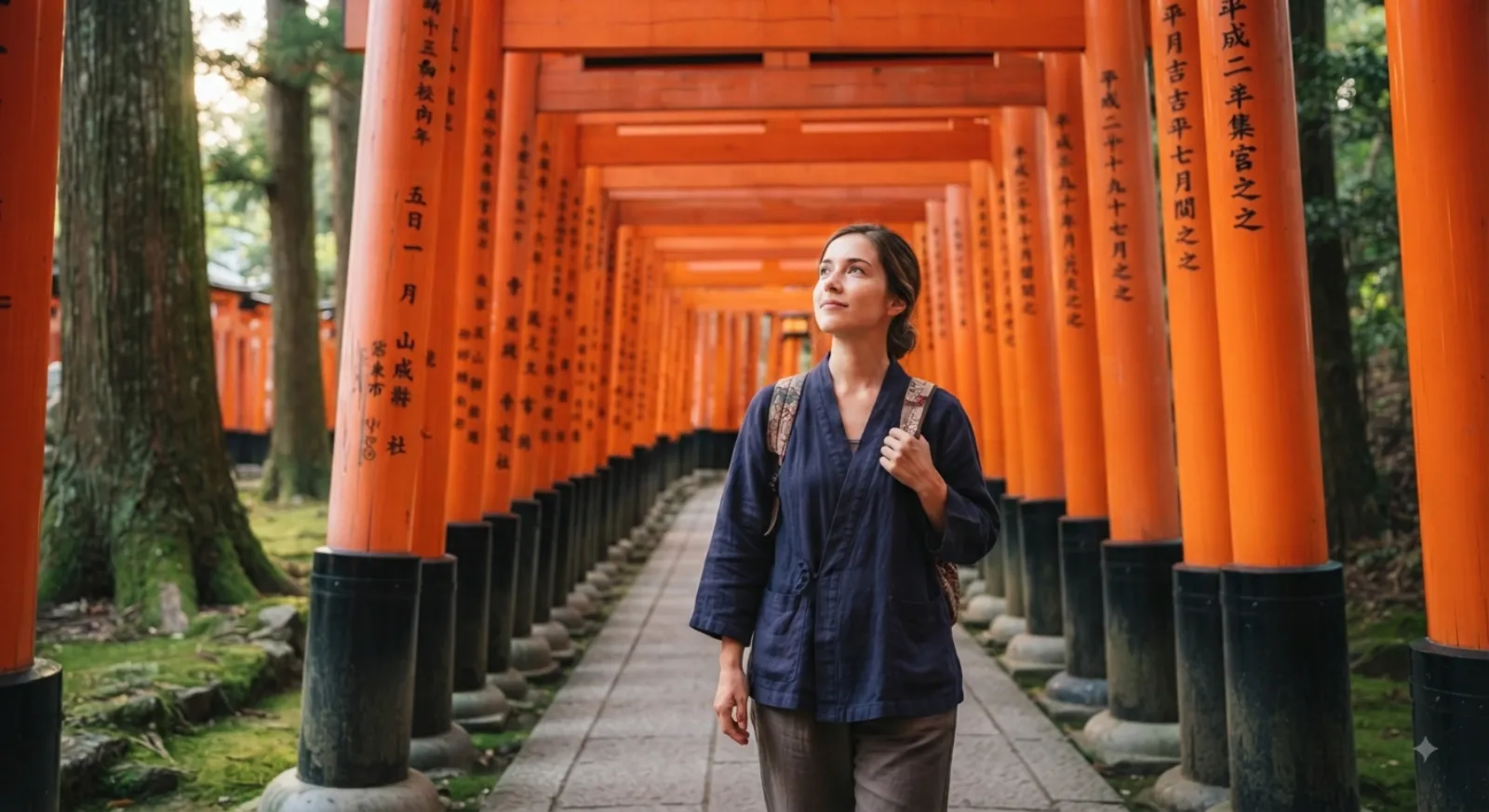
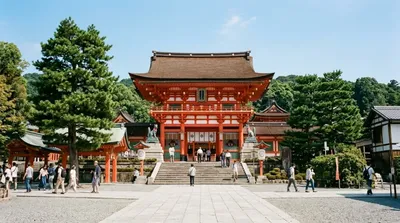
Fushimi Inari Taisha is the head shrine of all Inari shrines across Japan, located at the foot of Mount Inari. The main draw is the Senbon Torii, thousands of vermilion torii gates forming a tunnel along the path that winds up to the summit.
Nature
Arashiyama
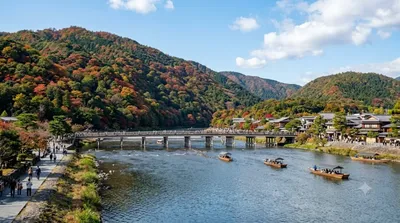
Arashiyama is a district on Kyoto's western outskirts, set against the mountains rising beyond the Oi River. Designated a national historic and scenic site, it offers a walkable landscape combining riverside views, a bamboo grove path, and nearby temples.
Castles & palaces
Kyoto Imperial Palace
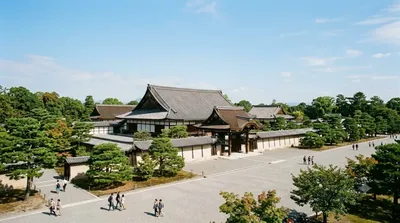
Kyoto Imperial Palace was the actual residence of Japan's emperors from 1331 until the Meiji Restoration in 1869, when the imperial seat moved to Tokyo. It now sits within the large Kyoto Gyoen park, where visitors can view the buildings and gardens maintained by the Imperial Household Agency. Rather than a flashy tourist attraction, it's more a place to quietly walk through a historic space tied to Japan's imperial family.
Temples & religious sites
Ginkaku-ji Temple
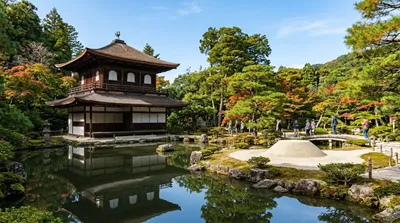
Ginkaku-ji, formally named Jisho-ji, is a Zen temple that epitomizes the Higashiyama culture of the Muromachi period. Despite its name ("Silver Pavilion"), its exterior is not actually covered in silver leaf; instead, its modest wooden pavilion and meticulously groomed garden define the temple. A cone-shaped sand mound and moss-covered paths come together to create a restrained, understated atmosphere rather than one of opulence.
Shopping & districts
Gion
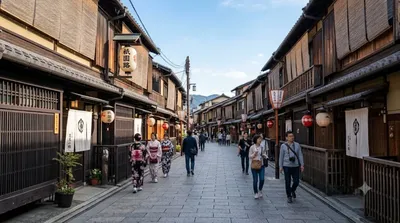
Gion is a district in Kyoto's Higashiyama Ward that originated as an entertainment quarter formed during the Sengoku period to serve pilgrims and travelers visiting Yasaka Shrine. It later grew into one of Japan's foremost geisha (geiko and maiko) districts, and its narrow lanes lined with wooden buildings, traditional teahouses, and exclusive restaurants still preserve that old-world atmosphere.
Temples & religious sites
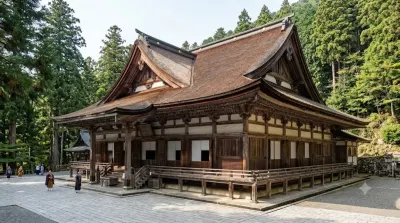
Enryaku-ji Temple
Enryaku-ji sits atop Mount Hiei, overlooking Kyoto, and has served as the head temple of Japan's Tendai sect since its founding by Saicho in 788. Rather than a single building, it is a vast complex spread across the mountain in three areas—Toto, Saito, and Yokawa—and is listed as a UNESCO World Heritage Site as part of the "Historic Monuments of Ancient Kyoto."
How many days do you need?
Routes grouped by travel distance so each day stays comfortable.
Average temperature by month
5-year average
Getting there
Check flights to Kyoto first
Pick a departure airport and date to jump straight to results for Kansai International Airport (KIX).
Check fares and seat availability on the flight search site.
Getting around the city
What you will actually use to get around Kyoto, and whether you need a car.
- Metro & rail
- Only two subway lines (north–south and east–west), so coverage is thin. Most temples are not reachable by subway alone.
- Buses & trams
- Buses do the heavy lifting in Kyoto. Kiyomizu-dera, Ginkaku-ji and Arashiyama all rely on city buses, so checking routes in advance saves real time. They get crowded in season.
- Transit cards & payment
- ICOCA — works on buses, the subway and in convenience stores.
- Airport to city
- JR Haruka runs direct from Kansai Airport to Kyoto Station, or take a limousine bus. Buses also run from Itami (Osaka) Airport.
- Car rental
- Narrow streets and scarce parking make driving a poor choice in central Kyoto. Buses and bicycles are the realistic options.
Book transport
Fares and timetables change often, so we don't list them here. Check the operator or the booking site for current prices and schedules.
Getting to other cities
Useful when you're combining several cities. Times are approximate; fares and timetables change often, so we don't list them.
Transit options connecting Osaka and Kyoto.
- Train (JR Kyoto Line) · approx. 30 mins approx. Convenient transit between the two cities. Please check official booking sites for current schedules.
- Train (Hankyu Kyoto Line) · approx. 40 mins to 1 hrs Convenient transit between the two cities. Please check official booking sites for current schedules.
- Train (Keihan Main Line) · approx. 50 mins approx. Convenient transit between the two cities. Please check official booking sites for current schedules.
- Express Bus · approx. 1 hrs to 1 hrs 30 mins Convenient transit between the two cities. Please check official booking sites for current schedules.
Transit options connecting Tokyo and Kyoto.
- Shinkansen (High-Speed Rail) · approx. 2 hrs 15 mins Convenient transit between the two cities. Please check official booking sites for current schedules.
- Express Bus · approx. 7~8 hrs Convenient transit between the two cities. Please check official booking sites for current schedules.
- Flight · total approx. 4~5 hrs(incl. airport transfer) Convenient transit between the two cities. Please check official booking sites for current schedules.
- Car / Drive · approx. 6 hrs Convenient transit between the two cities. Please check official booking sites for current schedules.
Transit options connecting Fukuoka and Kyoto.
- Shinkansen(High-Speed Train) · approx. 2 hrs 30 mins to 3 hrs Convenient transit between the two cities. Please check official booking sites for current schedules.
- Flight · flight approx. 1 hrs, 공항 이동 포함 total approx. 3 hrs or more Convenient transit between the two cities. Please check official booking sites for current schedules.
- Express Bus · approx. 10 hrs to 11 hrs Convenient transit between the two cities. Please check official booking sites for current schedules.
- Car / Drive · approx. 6 hrs to 7 hrs Convenient transit between the two cities. Please check official booking sites for current schedules.
Transit options connecting Kyoto and Sapporo.
- Flight · 공항 이동과 수속 포함 approx. 4~5 hrs (flight approx. approx. 2 hrs) Convenient transit between the two cities. Please check official booking sites for current schedules.
- 철도 · approx. 9~10 hrs or more Convenient transit between the two cities. Please check official booking sites for current schedules.
- Ferry(차량 동반 시) · approx. 20~30 hrs Convenient transit between the two cities. Please check official booking sites for current schedules.
Kyoto Tours & Experiences Booking
Book local tours, tickets, and experiences in advance to enjoy without waiting. Check available products and prices now.
 GetYourGuide
 Klook
Klook
 Tiqets
 KKday
KKday
 WeGoTrip
Check prices and availability on the booking sites.
 Airalo
 Yesim
Yesim
 Saily
Saily
 Drimsim
Where to stay
See all stays →Pick your dates — we'll search Kyoto hotels for you
Choose dates and guests, and the buttons below will open search results with your criteria. Prices differ between sites, so compare before you book.
 View on Booking.com
 View on Hotels.com
Hotel membership
Staying at Accor hotels often? ALL Accor+ Explorer
A paid annual membership. It includes two free nights a year across Asia-Pacific, 30% off dining and 15% off drinks, and 15% off stays at more than 4,500 hotels worldwide.
Explore the membership
Visit stories: Kyoto
Have you been to this city?
Share your visit story with photos you took yourself. Once checked, it goes into the Magazine.
Guides by theme
Best value
Where should I stay in Kyoto for the best value near the subway?
Read guide →
5-star & luxury
Where should you stay in Kyoto for a 5-star or luxury trip?
Read guide →
Pool villas & resorts
Where should you stay in Kyoto for a pool villa or resort-style stay?
Read guide →
Family travel
Where to Stay in Kyoto with Kids Around Just Two Subway Lines
Read guide →
Couples & honeymoon
Where should couples stay in Kyoto for a honeymoon trip?
Read guide →
Central & near stations
Where Should You Stay in Kyoto to Be Close to Stations and Trains?
Read guide →
Best time to visit
When Is the Best Time to Visit Kyoto?
Read guide →
First-time guide
How should first-time visitors plan a trip to Kyoto, Japan?
Read guide →
Getting around
How do you get around Kyoto's temples without a car?
Read guide →