
 Japan
Japan
Osaka
The hub for the Kansai region. Hotels cluster around Namba, Dotonbori and Umeda, and Kyoto and Nara are easy day trips.
Updated August 15, 2026 · Edited by the World by City editors
- Gateway airport
- Kansai International Airport (KIX)
- Best season
- Mar–May, Oct–Nov
- Time zone
- Asia/Tokyo
- Sights covered
- 40 places
Sights worth seeing
See all 40 →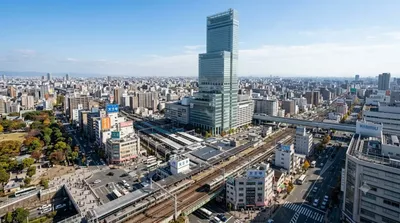
Views & landmarks
Abeno Harukas
Abeno Harukas, located in Osaka's Abeno Ward, is a 300-meter, 62-story mixed-use complex that was Japan's tallest building from 2014 to 2023. It houses a department store, offices, and a hotel, but for travelers the main draw is the observation deck near the top.
Temples & religious sites
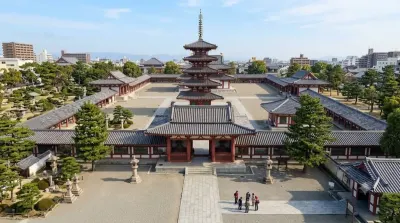
Shitennō-ji Temple
Shitennoji is a Buddhist temple in Osaka considered one of Japan's oldest state-administered temples. It has also been known by several other names, including Arahakaji, Naniwa-daiji, and Mitsuji, and has been destroyed and rebuilt many times over the centuries by fire and war, with the current buildings dating from a 1963 reconstruction.
Theme parks
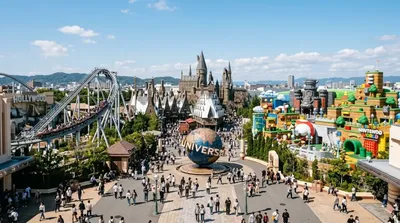
Universal Studios Japan
Universal Studios Japan, in Osaka, is a theme park based on Hollywood films and animation, and the first Universal Studios park built outside the United States. Beyond the rides, much of the fun comes from walking through streets recreating movie sets and franchise-themed areas, so it's especially worthwhile for travelers who are fans of specific franchises like Super Nintendo World or Harry Potter.

Views & landmarks
Umeda Sky Building
The Umeda Sky Building is a striking complex made up of two 40-story towers linked by a glass bridge at the top. Escalators and elevators run through the bridge, carrying visitors across the open atrium space between the two towers.
Views & landmarks
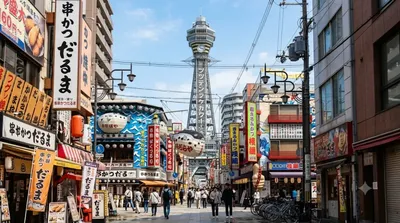
Tsūtenkaku
Tsutenkaku is an observation tower in the Shinsekai district of Naniwa Ward, Osaka, well known for the Hitachi billboard mounted near its top. It stands 108 meters tall with an observation deck at 91 meters, and beyond the skyline views, travelers come for the old-school downtown Osaka atmosphere of the surrounding Shinsekai neighborhood.
Shopping & districts
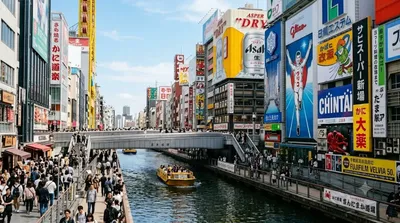
Dōtonbori
Dotonbori is a lively district in Osaka's Minami area, stretching along the Dotonbori River from Dotonboribashi Bridge to Nipponbashi Bridge. It flourished as a theater district during the Edo period and has since become a dining and entertainment strip lined with giant billboards and signs, most famously the Glico Man neon sign.
Zoos & aquariums
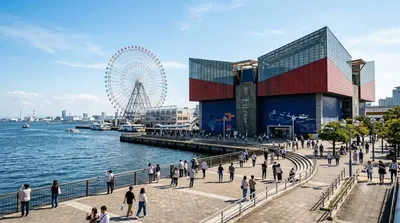
Osaka Aquarium Kaiyukan
Kaiyukan is a large aquarium near Osaka Bay in Minato Ward. It opened in 1990 as what was then the world's largest public aquarium, and it's known for recreating a range of Pacific Ocean habitats across multiple floors.
Temples & religious sites
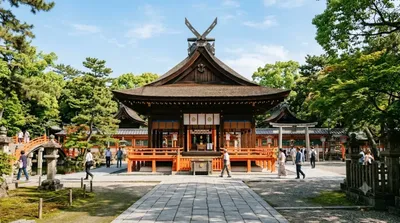
Sumiyoshi Taisha
Sumiyoshi Taisha is a shrine in Osaka's Sumiyoshi Ward and serves as the head shrine of all Sumiyoshi shrines across Japan. It's known for its red, crescent-shaped Taiko Bridge and four main halls standing side by side; its architectural style is so distinctive that it has its own name, "Sumiyoshi-zukuri," setting it apart from other shrines.
How many days do you need?
Routes grouped by travel distance so each day stays comfortable.
Average temperature by month
5-year average
Getting there
Check flights to Osaka first
Pick a departure airport and date to jump straight to results for Kansai International Airport (KIX).
Check fares and seat availability on the flight search site.
Getting around the city
What you will actually use to get around Osaka, and whether you need a car.
- Metro & rail
- Eight Osaka Metro lines cover most of the city. Namba, Umeda and Shinsaibashi are the interchange hubs — staying near them keeps journeys short.
- Buses & trams
- City buses mostly fill gaps the subway misses. For a visit, the subway and JR are usually enough.
- Transit cards & payment
- ICOCA, Suica and other nationwide IC cards. They also work at convenience stores and vending machines.
- Airport to city
- From Kansai Airport: Nankai Rapi:t to Namba, JR Haruka to Shin-Osaka, or limousine buses. Nankai suits a Namba base, JR suits Shin-Osaka or Kyoto.
- Car rental
- For the city alone a car is a burden — parking is expensive and one-way streets are common. Consider it only if you are adding Nara or Kobe.
Book transport
Fares and timetables change often, so we don't list them here. Check the operator or the booking site for current prices and schedules.
Getting to other cities
Useful when you're combining several cities. Times are approximate; fares and timetables change often, so we don't list them.
Transit options connecting Osaka and Kyoto.
- Train (JR Kyoto Line) · approx. 30 mins approx. Convenient transit between the two cities. Please check official booking sites for current schedules.
- Train (Hankyu Kyoto Line) · approx. 40 mins to 1 hrs Convenient transit between the two cities. Please check official booking sites for current schedules.
- Train (Keihan Main Line) · approx. 50 mins approx. Convenient transit between the two cities. Please check official booking sites for current schedules.
- Express Bus · approx. 1 hrs to 1 hrs 30 mins Convenient transit between the two cities. Please check official booking sites for current schedules.
Transit options connecting Osaka and Tokyo.
- Train (Shinkansen) · approx. 2 hrs 30 mins Convenient transit between the two cities. Please check official booking sites for current schedules.
- Flight · flight approx. approx. 1 hrs, incl. airport transfer to 3~4 hrs Convenient transit between the two cities. Please check official booking sites for current schedules.
- Express Bus (incl. Night Bus) · approx. 8~9 hrs Convenient transit between the two cities. Please check official booking sites for current schedules.
- Car / Drive · approx. 6~8 hrs Convenient transit between the two cities. Please check official booking sites for current schedules.
Transit options connecting Osaka and Fukuoka.
- Train(Shinkansen) · approx. 2 hrs 30 mins Convenient transit between the two cities. Please check official booking sites for current schedules.
- Flight · approx. 1 hrs 10 mins (based on flight time) Convenient transit between the two cities. Please check official booking sites for current schedules.
- Express Bus · approx. 9~10 hrs(overnight) Convenient transit between the two cities. Please check official booking sites for current schedules.
- Ferry · approx. 11~12 hrs(overnight) Convenient transit between the two cities. Please check official booking sites for current schedules.
Transit options connecting Osaka and Sapporo.
- Flight · approx. 2 hrs Convenient transit between the two cities. Please check official booking sites for current schedules.
- Train(Shinkansen+Limited Express Transfer) · approx. 9 hrs to 11 hrs Convenient transit between the two cities. Please check official booking sites for current schedules.
- Ferry · approx. 30 hrs approx. Convenient transit between the two cities. Please check official booking sites for current schedules.
Osaka Tours & Experiences Booking
Book local tours, tickets, and experiences in advance to enjoy without waiting. Check available products and prices now.
 GetYourGuide
 Klook
Klook
 Tiqets
 KKday
KKday
 WeGoTrip
Check prices and availability on the booking sites.
 Airalo
 Yesim
Yesim
 Saily
Saily
 Drimsim
Where to stay
See all stays →Pick your dates — we'll search Osaka hotels for you
Choose dates and guests, and the buttons below will open search results with your criteria. Prices differ between sites, so compare before you book.
 View on Booking.com
 View on Hotels.com
Hotel membership
Staying at Accor hotels often? ALL Accor+ Explorer
A paid annual membership. It includes two free nights a year across Asia-Pacific, 30% off dining and 15% off drinks, and 15% off stays at more than 4,500 hotels worldwide.
Explore the membership
Visit stories: Osaka
Have you been to this city?
Share your visit story with photos you took yourself. Once checked, it goes into the Magazine.
Guides by theme
Best value
Where to stay in Osaka for the best value without sacrificing location
Read guide →
5-star & luxury
Where should I stay in Osaka for a 5-star hotel trip?
Read guide →
Pool villas & resorts
Where should you stay in Osaka for pool villas and resort-style hotels?
Read guide →
Family travel
Where should families stay in Osaka?
Read guide →
Couples & honeymoon
Where Should Couples Stay in Osaka: Namba, Umeda, or Shinsaibashi?
Read guide →
Central & near stations
Where should I stay in Osaka to be near a station — Namba, Umeda, or Shinsaibashi?
Read guide →
Best time to visit
When Is the Best Time to Visit Osaka, Japan?
Read guide →
First-time guide
How should I plan my first trip to Osaka, Japan?
Read guide →
Getting around
How do you get around Osaka, and which passes are worth it?
Read guide →