Temples & religious sites
Shitennō-ji Temple
What it is
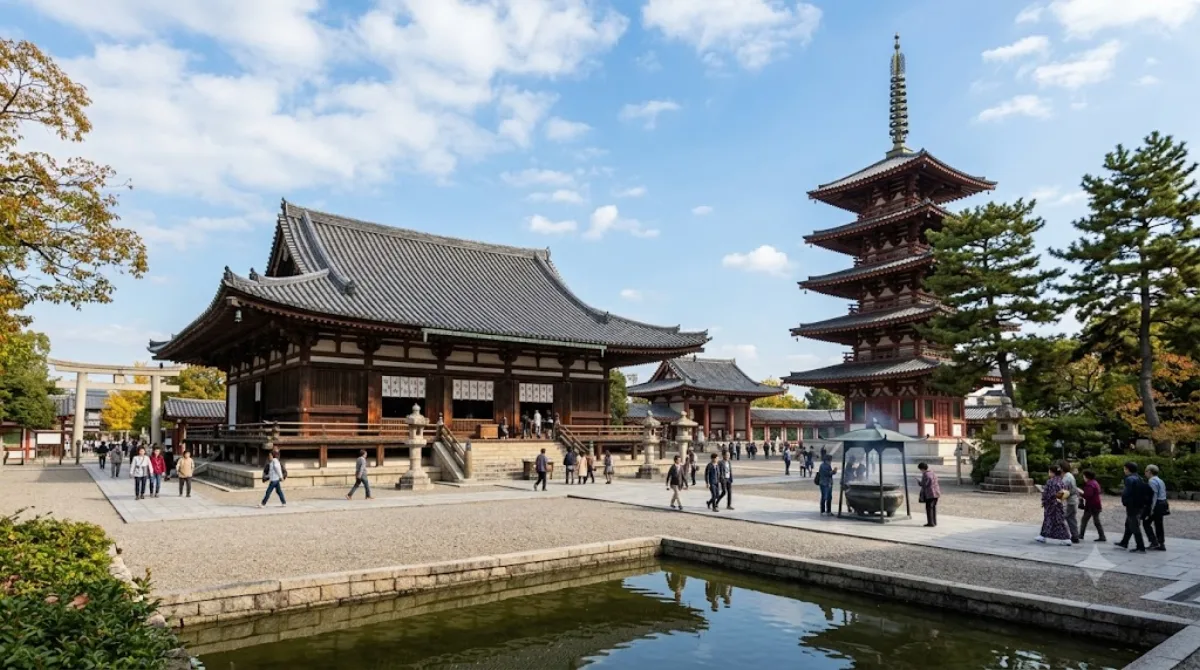
Shitennō-ji is one of Japan's oldest Buddhist temple sites, said to have been founded in 593 by Prince Shōtoku. The current buildings date only to a 1963 reconstruction in reinforced concrete, since fires and wartime bombing destroyed earlier versions, but the layout follows the original Asuka-period plan: a five-story pagoda, main hall, and lecture hall arranged in a straight line inside a covered corridor. The temple is worth visiting for that layout and history rather than for antique structures, along with its Turtle Pond garden and the associated Gokuraku-jōdo garden.
Getting there
From central Osaka (Namba or Umeda), take the subway to Shitennoji-mae Yuhigaoka Station on the Tanimachi Line; the temple is a short walk from the exit. From Osaka Station the ride plus walk takes roughly 25-30 minutes.
Time to allow
Plan for about 1 to 1.5 hours to see the central pagoda-hall complex and gardens at an unhurried pace.
When to go
Mornings tend to be quieter than afternoons. The temple grounds host a well-known flea market on certain days each month, which draws large crowds and changes the atmosphere considerably, so check ahead if you want either a quiet visit or the market experience.
Combine it with
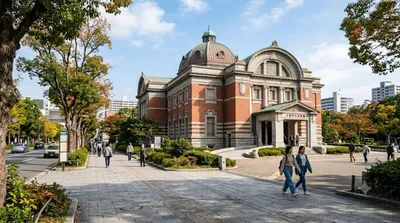
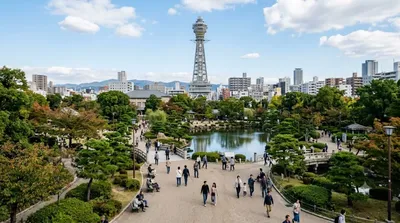
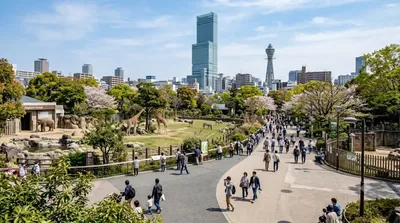
The temple sits close to several other Tennōji-area sights: Osaka City Museum of Fine Arts and Tennōji Park are both about 0.7km away, Tennōji Zoo is 0.8km, and Abeno Harukas, Japan's tallest building with an observation deck, is about 0.9km. These can reasonably be combined into a single half-day loop on foot.
Updated September 20, 2026 · Edited by the World by City editors
 GetYourGuide
 Klook
Klook
 Tiqets
 KKday
KKday
 WeGoTrip
 Booking.com
 Hotels.com