
Kyoto · Pool villas & resorts
Where should you stay in Kyoto for a pool villa or resort-style stay?
August 2, 2026 · last updated · about 4 min read
Choosing a base for a Kyoto pool villa or resort stay
Kyoto's pool villas and resort-style properties sit outside the dense historic core, mostly along the western river or in the northern hills. The main trade-off is scenery and pool privacy versus quick access to temples.
Arashiyama, western edge
The largest cluster of resort-style properties with pools sits along the Katsura River here, away from crowds. It suits travelers who want scenery over walkable sightseeing. Access is by JR Sagano Line or the Randen tram, not the subway, so reaching east-side sights like Gion or Kiyomizu-dera means a transfer and a long ride.
Takagamine, northern hills
North of Kinkaku-ji, a few secluded resorts are built around private pools or baths. This fits travelers who prioritize seclusion over temple-hopping. There is no nearby subway station; access is by bus or hotel shuttle from Kyoto Station or Kitaoji, the northern end of the Karasuma Line.
Central Kyoto, near Kyoto Station
True pool villas are rare here, but some larger hotels have rooftop or indoor pools. This is the only area where both subway lines meet, so it suits travelers who want daily temple access more than pool privacy.
What to check before booking
- Whether the pool is private or shared, and heated or seasonal, since outdoor pools here usually close over winter
- Shuttle frequency and last departure time if the property sits beyond walking distance of a station
- Onsen or bath rules, including tattoo policy, when a pool is paired with hot spring bathing
- Nearby food and shops, since resort areas can be quiet after dark
Timing and availability
Cherry blossom season in late March to early April and autumn foliage in November raise demand citywide, so book resort stays early for those weeks. Outdoor pools are most usable from May through September; confirm whether a pool is open or heated before a winter stay.
Pick your dates — we'll search Kyoto hotels for you
Choose dates and guests, and the buttons below will open search results with your criteria. Prices differ between sites, so compare before you book.
 View on Booking.com
 View on Hotels.com
Things to see in Kyoto
See all →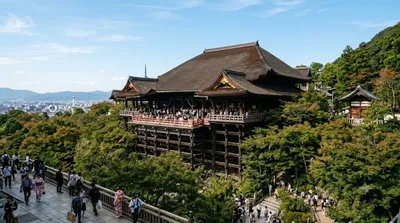
Temples & religious sites
Kiyomizu-dera Temple
Kiyomizu-dera is a Buddhist temple at the foot of the mountains in eastern Kyoto, formally known as Otowasan Kiyomizu-dera. It is the head temple of the Kita Hosso sect of Japanese Buddhism, its principal image is the eleven-headed Kannon, and it is the 16th temple on the Saikoku 33 Kannon Pilgrimage.
Temples & religious sites
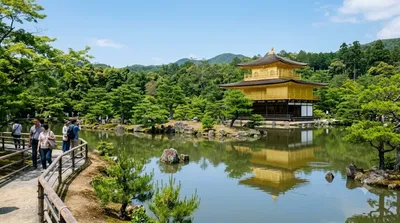
Kinkaku-ji Temple
Kinkaku-ji, formally known as Rokuon-ji, is a Rinzai Zen temple whose symbol is the three-story reliquary hall (Shariden) seen across the pond, Kyoko-chi. Its top two floors are covered in gold leaf, which is why it's more commonly called the "Golden Pavilion." The current building is a 1955 reconstruction, and visitors view it and the surrounding garden while walking the path along the pond rather than entering it.
Temples & religious sites
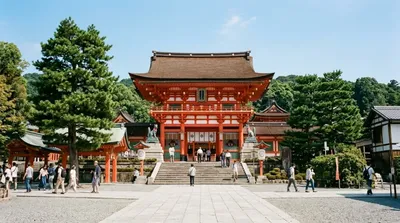
Fushimi Inari-taisha
Fushimi Inari Taisha is the head shrine of all Inari shrines across Japan, located at the foot of Mount Inari. The main draw is the Senbon Torii, thousands of vermilion torii gates forming a tunnel along the path that winds up to the summit.
Nature
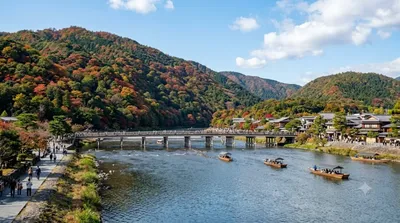
Arashiyama
Arashiyama is a district on Kyoto's western outskirts, set against the mountains rising beyond the Oi River. Designated a national historic and scenic site, it offers a walkable landscape combining riverside views, a bamboo grove path, and nearby temples.
More Kyoto guides
Best value
Where should I stay in Kyoto for the best value near the subway?
5-star & luxury
Where should you stay in Kyoto for a 5-star or luxury trip?
Family travel
Where to Stay in Kyoto with Kids Around Just Two Subway Lines
Couples & honeymoon
Where should couples stay in Kyoto for a honeymoon trip?
Central & near stations
Where Should You Stay in Kyoto to Be Close to Stations and Trains?
Best time to visit
When Is the Best Time to Visit Kyoto?
First-time guide
How should first-time visitors plan a trip to Kyoto, Japan?
Getting around
How do you get around Kyoto's temples without a car?
Pool villas & resorts guides for other destinations
Guantánamo
Where to stay for pool villas and resort-style accommodation in Guantánamo
Cetinje
Where to Stay in Cetinje for Pool Villas and Mountain Resorts
North Nicosia
Where to Stay in North Nicosia for Pool Villas and Resort Living
Cienfuegos
Where to stay in Cienfuegos for pool villas and coastal resorts