World by City

Views & landmarks

Sanjō Ōhashi Bridge
Sanjō Ōhashi Bridge

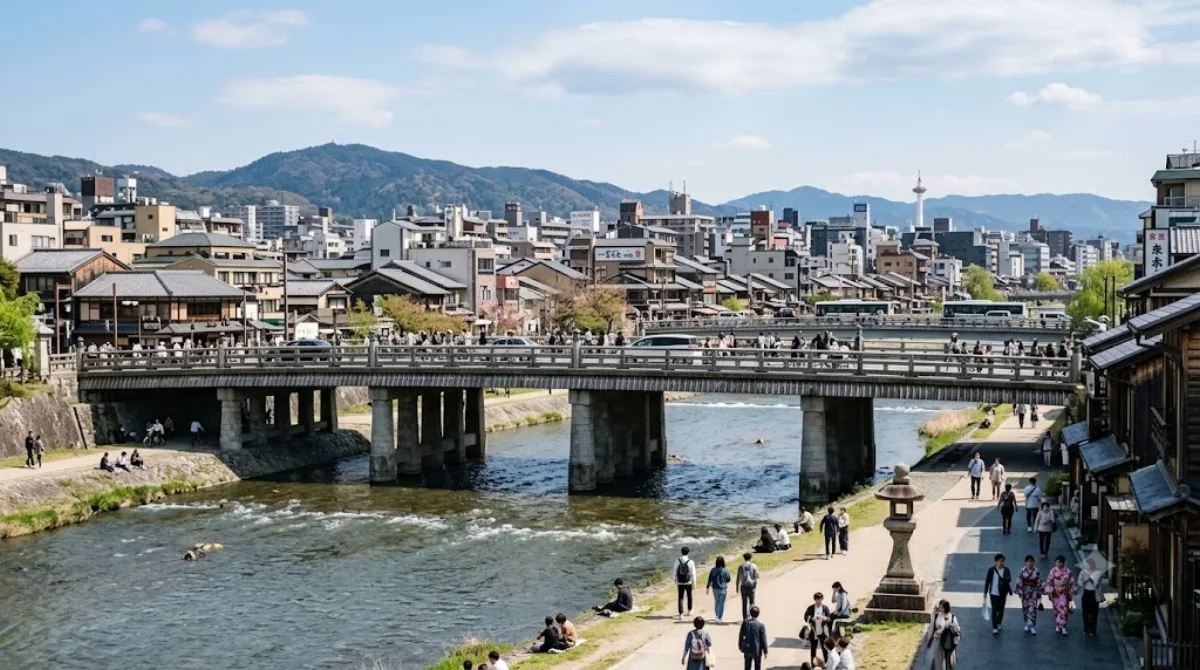
Sanjō Ōhashi (三条大橋) is a bridge in Kyoto, Kyoto Prefecture, Japan. It spans the Kamo River as part of Sanjō-dōri. It is well known because it served as the ending location for journeying on both the Nakasendō and the Tōkaidō; these were two of the famous "Five Routes" for long-distance travelers during the Edo period in Japan's past.

What it is

Sanjō Ōhashi is a bridge crossing the Kamo River in central Kyoto, carrying Sanjō-dōri across the water. Its significance is historical rather than visual: for centuries it marked the terminus of both the Tōkaidō and Nakasendō, the two main roads linking Kyoto and Edo (Tokyo) during the Edo period. Travellers arriving from either route ended their journey here, which makes the bridge a low-key but tangible link to Japan's pre-modern travel network. It's a working city bridge today, not a preserved monument, so the appeal is mostly in standing on the spot where those old roads converged and looking along the river.

Getting there

The bridge sits in the middle of downtown Kyoto, an easy walk from the Kawaramachi and Sanjō areas. From Kyoto Station, it's roughly 15 minutes by subway (Karasuma Line to Karasuma Oike, then Tozai Line to Kyoto-Shiyakusho-mae Station) followed by a short walk, or about 10 minutes by taxi depending on traffic.

Time to allow

Fifteen to twenty minutes is enough to cross the bridge, take in the river view, and read any plaques marking its history. It's more of a passing point on a walk than a standalone destination.

When to go

Since it's a public road bridge, there's no real crowding issue, though foot and vehicle traffic picks up during commuting hours. Early morning or evening gives a quieter view of the river and the hills beyond, especially at dusk when the surrounding streets light up.

Combine it with

  • Honnō-ji Temple, about 0.3km away, an easy add-on to the same walk
  • Gion, roughly 0.7km away, reachable on foot for a change of scenery from the modern downtown streets
  • Yasaka Shrine, about 0.9km further, often visited together with Gion
  • The National Museum of Modern Art, Kyoto, around 1km away, for those extending the walk toward the eastern hills

Sources: open data from Wikipedia and OpenStreetMap · Updated August 5, 2026 · Edited by the World by City editors

Tickets & tours

Admission prices and opening hours change often, so we don't list them here. Check what's on sale and at what price below — booking ahead can cut the queue at some places.

This place may not appear in the results — some sites are free to enter or sell tickets only at the gate.

Stays near Sanjō Ōhashi Bridge

Sorted by distance, walkable ones first. Distances are straight-line.

Map © OpenStreetMap contributors. Lines are straight connections, not actual routes.

Sanjō Ōhashi Bridge Nearby stays

Locations and names come from OpenStreetMap. Check prices and availability on the booking sites.

Good to visit alongside

Honnō-ji Temple

Temples & religious sites

Honnō-ji Temple

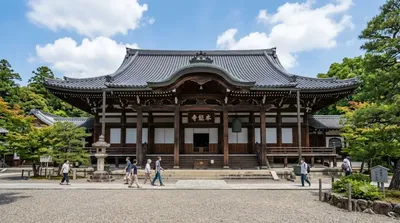
Honnō-ji (本能寺) is a temple of the Nichiren branch of Buddhism located in Kyoto, Japan.

0.3 km away

Gion

Shopping & districts

Gion

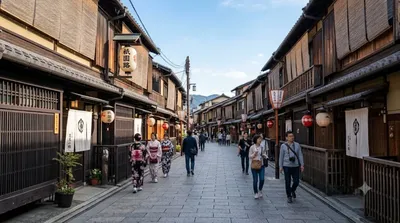
Gion (祇園) is a district of Higashiyama-ku, Kyoto, Japan, originating as an entertainment district in the Sengoku period, in front of Yasaka Shrine. The district was built to accommodate the needs of travellers and visitors to the shrine. It eventually evolved to become one of the most exclusive and well-known geisha districts in all of Japan. Gion is the Japanese translation of the Buddhist term Jetavana. Yasaka Shrine, located in this district is the center of the Gion faith.

0.7 km away

Yasaka Shrine

Temples & religious sites

Yasaka Shrine

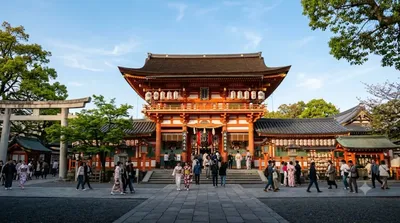
Yasaka Shrine , once called Gion Shrine , is a Shinto shrine in the Gion District of Kyoto, Japan. Situated at the east end of Shijō-dōri, the shrine includes several buildings, including gates, a main hall and a stage. The Yasaka shrine is dedicated to Susanoo in the tradition of the Gion faith as its chief kami, with his consort Kushinadahime on the east, and eight offspring deities on the west. The yahashira no mikogami include Yashimajinumi no kami, Itakeru no kami, Ōyatsuhime no kami, Tsumatsuhime no kami, Ōtoshi no kami, Ukanomitama no kami, Ōyatsuhiko no kami, and Suseribime no mikoto.

0.9 km away

National Museum of Modern Art, Kyoto

Museums & galleries

National Museum of Modern Art, Kyoto

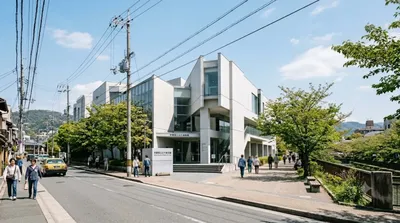
The National Museum of Modern Art, Kyoto is an art museum in Kyoto, Japan.

1.0 km away

Chion-in Temple

Temples & religious sites

Chion-in Temple

Chion-in in Higashiyama-ku, Kyoto, Japan is the headquarters of the Jōdo-shū founded by Hōnen (1133–1212), who proclaimed that sentient beings are reborn in Amida Buddha's Western Paradise by reciting the nembutsu, Amida Buddha's name.

1.1 km away

Kyoto International Manga Museum

Museums & galleries

Kyoto International Manga Museum

The Kyoto International Manga Museum is located in Nakagyō-ku, Kyoto, Japan. The museum's collection includes approximately 300,000 items as of 2016, with 50,000 volumes of manga that can be accessed and read by visitors and approximately 250,000 items in its closed-stack collection, which can be accessed via a dedicated research room supported by reference facilities. Collected materials include Edo period woodblock prints, pre-war magazines, post-war rental books, and popular modern series from around the world.

1.2 km away