World by City

Parks & gardens

Piazza Navona
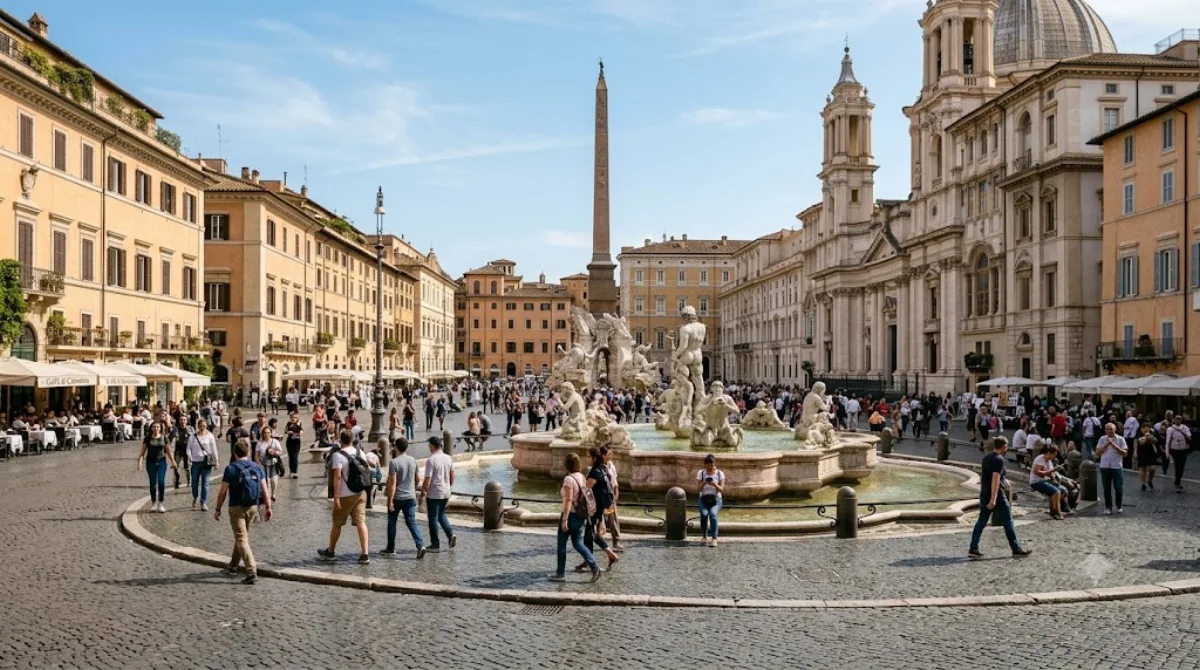
Piazza Navona

Piazza Navona is a public open space in Rome, Italy. It is built on the site of the 1st century AD Stadium of Domitian and follows the form of the open space of the stadium in an elongated oval. The ancient Romans went there to watch the agones ("games"), and hence it was known as "Circus Agonalis".

What it is

Piazza Navona is a long, oval public square built directly over the footprint of the Stadium of Domitian, a 1st-century AD arena used for athletic contests. Its elongated shape is essentially the ancient stadium's outline, and you can still trace the curve at the northern end. Today it's a pedestrian square lined with cafés, street artists, and three fountains, the central Fontana dei Quattro Fiumi being the best known. It's a good stop for seeing Roman history reused as everyday urban space rather than for any single monument.

Getting there

From Rome's historic centre, it's walkable from most points: about 15-20 minutes on foot from Termini station's general direction, or 10 minutes from the Pantheon. There's no metro stop directly on the square; the nearest useful public transport is bus routes serving Corso Vittorio Emanuele II, a short walk away.

Time to allow

Thirty to forty-five minutes covers a walk around the square and the fountains. Allow longer, an hour or more, if you plan to sit at a café or watch the street performers and artists who set up along the edges.

When to go

The square gets busy through the day and stays lively into the evening, since it's a popular gathering spot and tourist route. Early morning is the quietest time to see the fountains without crowds. Summer afternoons can be hot with little shade, as the square is fully open.

Combine it with

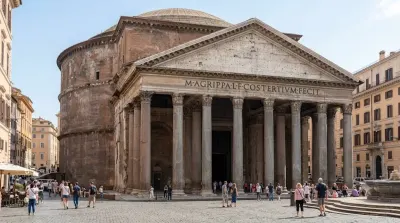
  • Pantheon (0.3km) — a short walk away, easy to pair in the same outing.
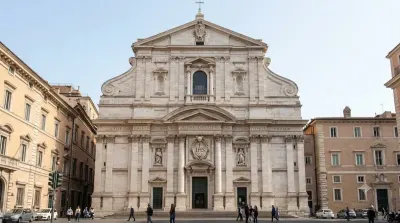
  • Church of the Gesù (0.6km) — within walking distance to the southeast.
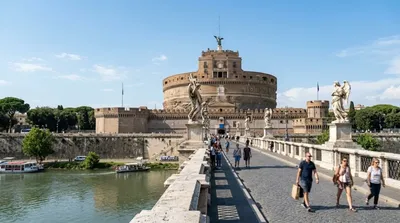
  • Castel Sant'Angelo (0.7km) — a walkable extension toward the Tiber.
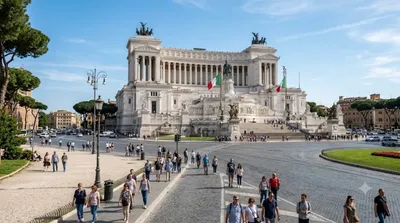
  • Piazza Venezia (0.8km) — reachable on foot if continuing a longer walking route through the centre.

Sources: open data from Wikipedia and OpenStreetMap · Updated August 5, 2026 · Edited by the World by City editors

Tickets & tours

Admission prices and opening hours change often, so we don't list them here. Check what's on sale and at what price below — booking ahead can cut the queue at some places.

This place may not appear in the results — some sites are free to enter or sell tickets only at the gate.

Stays near Piazza Navona

Sorted by distance, walkable ones first. Distances are straight-line.

Map © OpenStreetMap contributors. Lines are straight connections, not actual routes.

Piazza Navona Nearby stays

Locations and names come from OpenStreetMap. Check prices and availability on the booking sites.

Itineraries including this place

Good to visit alongside

Pantheon

Museums & galleries

Pantheon

The Pantheon is an ancient 2nd century Roman temple and, since AD 609, a Catholic church called the Basilica of St. Mary and the Martyrs in Rome, Italy. It is perhaps the most famous, and architecturally most influential, rotunda.

0.3 km away

Church of the Gesù

Temples & religious sites

Church of the Gesù

The Church of the Gesù, officially named Chiesa del Santissimo Nome di Gesù, is a church located at Piazza del Gesù in the Pigna rione of Rome, Italy. It is the mother church of the Society of Jesus. With its façade, described as "the first truly baroque façade", the church served as a model for innumerable Jesuit churches all over the world, especially in Central Europe and in Portuguese colonies. Its paintings in the nave, crossing, and side chapels became models for art in Jesuit churches throughout Italy and Europe, as well as those of other orders. The Church of the Gesù is one of the gre...

0.6 km away

Castel Sant'Angelo

Museums & galleries

Castel Sant'Angelo

Castel Sant'Angelo, also known as Mausoleum of Hadrian, is a towering rotunda in Parco Adriano, Rome, Italy. It was initially commissioned by the Roman Emperor Hadrian as a mausoleum for himself and his family. The popes later used the building as a fortress and castle dedicated to Saint Michael the Archangel, and it is now a museum. The structure was once the tallest building in Rome.

0.7 km away

piazza Venezia

Parks & gardens

piazza Venezia

Piazza Venezia is a central hub of Rome, Italy, in which several thoroughfares intersect, including the Via dei Fori Imperiali and the Via del Corso. It takes its name from the Palazzo Venezia, built by the Venetian Cardinal, Pietro Barbo alongside the church of Saint Mark, the patron saint of Venice. The Palazzo Venezia served as the embassy of the Republic of Venice in Rome.

0.8 km away

Mausoleum of Augustus

Heritage & monuments

Mausoleum of Augustus

The Mausoleum of Augustus is a large tomb built by the Roman Emperor Augustus in 28 BC on the Campus Martius in Rome, Italy. The mausoleum is located on the Piazza Augusto Imperatore, near the corner with Via di Ripetta as it runs along the Tiber. The grounds cover an area equivalent to a few city blocks nestled between the church of San Carlo al Corso and the Museum of the Ara Pacis. After being closed for fourteen years for restoration work, the mausoleum was temporarily reopened to the public in March 2021. However, the mausoleum has been temporarily closed from June 2022 due to the renovat...

0.9 km away

Ara Pacis

Museums & galleries

Ara Pacis

The Ara Pacis Augustae is an altar in Rome dedicated to the Pax Romana. The monument was commissioned by the Roman Senate on July 4, 13 BC to honour the return of Augustus to Rome after three years in Hispania and Gaul and consecrated on January 30, 9 BC. Originally located on the northern outskirts of Rome, a Roman mile from the boundary of the pomerium on the west side of the Via Flaminia, the Ara Pacis stood in the northeastern corner of the Campus Martius, the former flood plain of the Tiber River and gradually became buried under 4 metres (13 ft) of silt deposits. It was reassembled in it...

0.9 km away