
Heritage & monuments
Mausoleum of Augustus
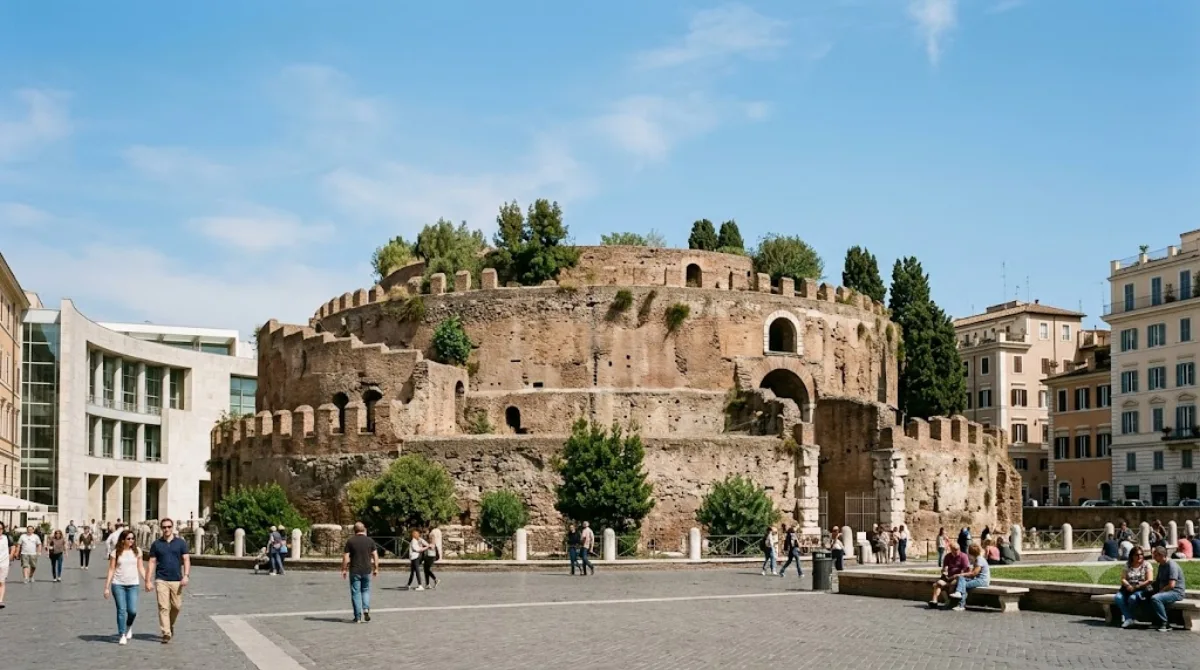
Mausoleum of Augustus
This is the burial monument Augustus built for himself and his family in 28 BC, a massive circular structure originally faced in travertine and topped with earth and cypress trees. Over the centuries it has served as a fortress, a garden, a bullring, and a concert hall before being excavated back to something closer to its ancient form. It's worth a stop for anyone interested in how Rome's rulers used monumental architecture to project power, and for the contrast between the raw brick core visible today and its once-lavish decoration.
Getting there
It sits on Piazza Augusto Imperatore, a short walk from the historic centre — around 10-15 minutes on foot from Piazza Navona or the Pantheon, or a similar walk from Piazza del Popolo. Several bus routes stop nearby along Via del Corso and the Tiber embankment.
How long to spend
Allow 30-45 minutes to walk around the exterior and read the surrounding piazza's information panels; if the interior is open to visitors, budget closer to an hour to see the burial chamber and displays.
When to go
Mornings tend to be quieter than afternoons. Because access to the interior has been intermittent in recent years due to restoration work, it's worth checking current status before planning a visit specifically to go inside — the exterior and piazza are always viewable regardless.
Combine with
- Ara Pacis (0.1km) — right next door, an altar with detailed relief carvings from the Augustan era.
- Piazza del Popolo (0.5km) — a large square with churches and an Egyptian obelisk.
- Spanish Steps and Piazza di Spagna (both 0.5km) — easily paired into the same walk through this part of central Rome.
Updated September 20, 2026 · Edited by the World by City editors
 GetYourGuide
 Klook
Klook
 Tiqets
 KKday
KKday
 WeGoTrip
 Booking.com
 Hotels.com