
Sidon · Getting around
How to get around Sidon, Lebanon
August 29, 2026 · last updated · about 3 min read
Navigating Sidon
Sidon is a coastal city where transport is largely informal. Because the city is divided between the historic old center and modern residential areas, your choice of transport depends on your destination.
Local Transport Modes
- Service Taxis: These are shared taxis that run on fixed routes. They are the most efficient way to move between the city center and the outskirts. They win on cost and frequency for short, linear trips.
- Private Taxis: Available via apps or street hails. These are best for reaching outlying sites like the Temple of Eshmun, where shared routes are less frequent.
- Walking: The best option for the Sea Castle and the surrounding souks. The old city area is pedestrian-friendly and too congested for vehicles.
Airport to Sidon
Travelers arrive via Beirut-Rafic Hariri International Airport (BEY). Options include:
- Private Transfer: Lowest effort and fastest time. Direct door-to-door service. High cost band.
- Shared Taxi/Service: Moderate effort. Requires a trip to a transit hub in Beirut before transferring to a Sidon-bound vehicle. Low cost band.
Practical Transit Notes
- Rush Hours: Traffic congestion is heavy during morning and afternoon commutes, particularly on the main coastal highway connecting Beirut and Sidon.
- Luggage: Service taxis have limited space; if traveling with large suitcases, a private taxi is necessary.
- Accessibility: Public transport and older sidewalks in the historic district have limited accessibility for wheelchairs or strollers.
- Payment: Most local transport operates on a cash basis. There are no integrated city-wide transport passes.
Pick your dates — we'll search Sidon hotels for you
Choose dates and guests, and the buttons below will open search results with your criteria. Prices differ between sites, so compare before you book.
 View on Booking.com
 View on Hotels.com
Things to see in Sidon
See all →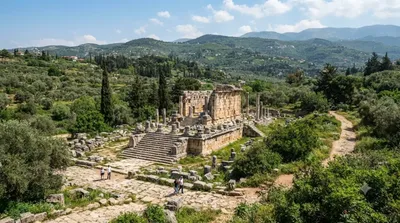
Heritage & monuments
Temple of Eshmun
An ancient temple dedicated to Eshmun, the Phoenician god of healing, located on the banks of the Awali River near Sidon. The site was expanded by successive kings from the 7th century BC onward, and visitors can explore these remains today.
Castles & palaces
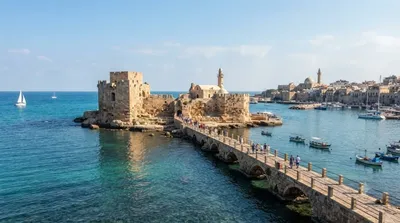
Sidon Sea Castle
Built by the Crusaders in the 13th century, this fortress is one of the defining historic landmarks of the Lebanese port city of Sidon. Set right against the sea, it preserves the traces of an ancient stronghold.
Castles & palaces
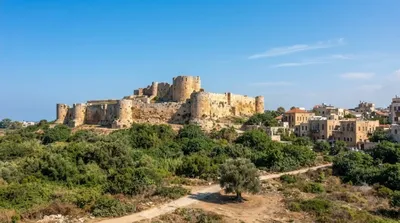
Saint Louis Castle
A ruined castle in the heart of Sidon, built by French Crusaders in 1254 on the site of a former Fatimid fortress. It was rebuilt several times up to the 17th century, and its layered history makes it an interesting place to explore.
Nature
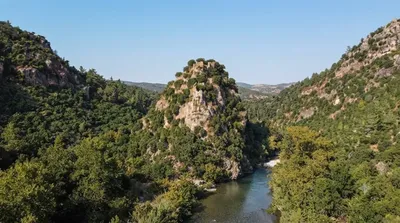
Awali River
A 48-kilometer river flowing through southern Lebanon, originating from Mount Barouk and Mount Niha before emptying into the Mediterranean. It's a great way to take in nature along the western slopes of Mount Lebanon.
More Sidon guides
Best value
Where to find the best value accommodation in Sidon, Lebanon
5-star & luxury
Where to stay for a luxury experience in Sidon, Lebanon
Pool villas & resorts
Where to find pool villas and resorts in Sidon, Lebanon
Family travel
Where to stay in Sidon for a family trip
Couples & honeymoon
Where to stay in Sidon for a romantic getaway
Central & near stations
Where to stay in Sidon for central access and transport
Best time to visit
When is the best time to visit Sidon, Lebanon?
First-time guide
How to visit Sidon for the first time: A practical orientation guide
Getting around guides for other destinations
Guantánamo
How to Get Around Guantánamo and Travel from Antonio Maceo Airport
Cetinje
How to Get Around Cetinje and Travel from Podgorica Airport
North Nicosia
How to get around North Nicosia and travel from Larnaca Airport
Cienfuegos
How to get around Cienfuegos: transport options and airport transfers