
Temples & religious sites
Sultan Abu Bakar Mosque
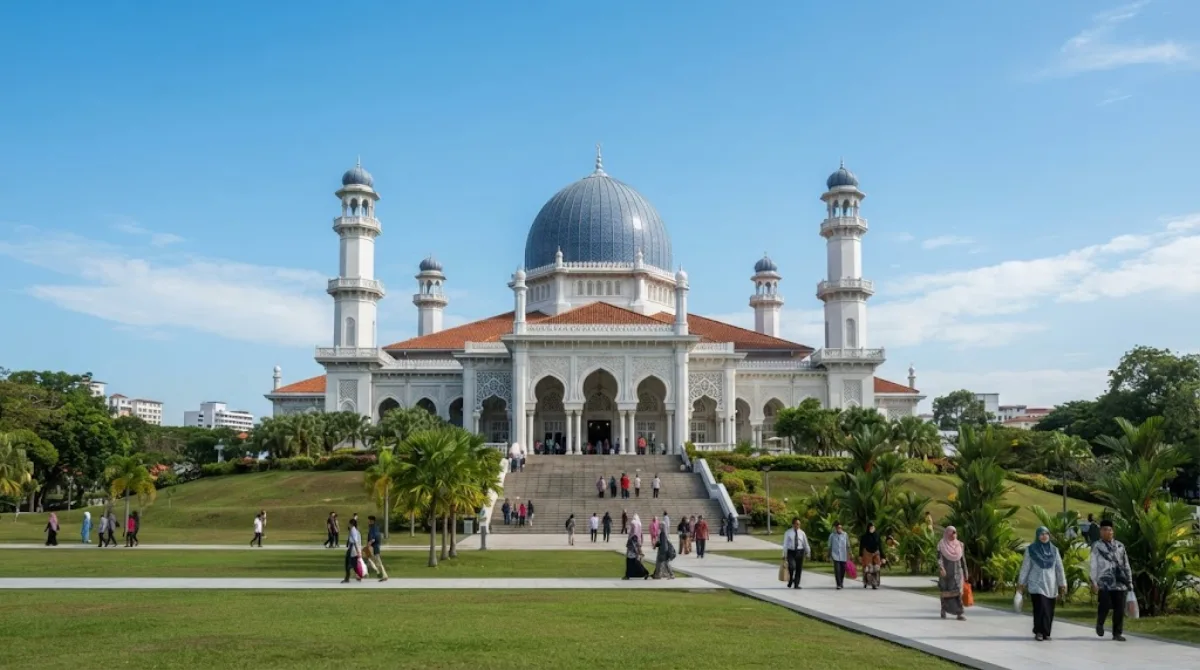
Sultan Abu Bakar State Mosque
Note: this mosque stands in Johor Bahru, Malaysia, not in Singapore, though it's a common day-trip pairing for travellers based across the Causeway. Built between 1892 and 1900 under Sultan Abu Bakar, it's the state mosque of Johor and a landmark of the city's skyline, set on a hill overlooking the Strait of Johor. Its architecture blends Victorian and Moorish elements, an unusual mix that reflects the period's British colonial influence on Johor's royal building projects. The mosque remains an active place of worship, so visitors should dress modestly and be mindful of prayer times.
Getting there
From central Singapore, the most direct route is via the Johor–Singapore Causeway, roughly 2.1km from the mosque. Crossing on foot or by bus involves immigration clearance on both sides, so total travel time varies with queue length — it can take anywhere from 30 minutes to over an hour during peak periods. From the Johor Bahru side of the checkpoint, the mosque is a short taxi or grab ride away.
Time to allow
Most visitors spend around 30 to 45 minutes here, enough to view the exterior and grounds and step inside if entry is permitted at the time.
When to go
Weekday mornings tend to be quieter than weekends, when local worshippers and visitors both pick up. Fridays see heavier use for congregational prayers, so plan around that if you're mainly sightseeing. The hilltop setting means little shade, so an overcast morning or late afternoon visit is more comfortable than midday.
Combine with
- Johor–Singapore Causeway (2.1km) — the natural link point if you're crossing back to Singapore.
- Sungei Buloh Wetland Reserve (2.7km) — a nature stop on the Singapore side after crossing.
- Singapore Zoo (7.3km) — a longer add-on for a fuller day combining culture and wildlife.
Updated September 20, 2026 · Edited by the World by City editors
 GetYourGuide
 Klook
Klook
 Tiqets
 KKday
KKday
 WeGoTrip
 Booking.com
 Hotels.com