
Tokyo · Getting around
How do you get around Tokyo: trains, subways, and airport transfers explained
August 13, 2026 · last updated · about 4 min read
Getting Around Tokyo
Tokyo is built around its railways, and which line you take depends on where you're headed. The JR Yamanote Line loops through the major hub districts like Shinjuku, Shibuya, Tokyo, and Ueno, making it the default choice for long crosstown hops. For anything off that loop, you'll switch to Tokyo Metro or Toei Subway lines, which cover the denser inner neighborhoods.
Metro vs. Toei: the transfer catch
Tokyo Metro and Toei are separately run companies, not one unified subway. Journeys that cross between them are charged as two separate fares rather than one continuous trip, so a route that looks like a simple transfer on the map can cost more than expected. Check whether your route stays on one operator before assuming a quick change is free.
Passes worth considering
An IC card (Suica or Pasmo) works across JR, Metro, Toei, and most buses, and is the simplest option for short stays. Multi-day subway passes covering Metro and Toei together can be worth it if you're based in the older downtown districts and riding often, but they don't include JR lines like the Yamanote, so travelers staying near JR hubs may get little value from them.
Airport to city
Haneda (HND) sits closest to central Tokyo; monorail or train links into the city are quick and simple, with limos and taxis also practical given the shorter distance. Narita (NRT) is much further out; direct trains such as the Narita Express or Skyliner are the most reliable way in, while a taxi from Narita takes considerably longer and costs more than most travelers expect.
Practical notes
- Weekday rush periods, especially the morning commute, bring serious crowding on central Yamanote and Metro segments — avoid these with luggage if you can.
- Trains stop running late at night; missing the last one usually means a taxi, so check schedules before a late outing.
- Stations vary in accessibility — major hubs have elevators, but older or smaller stations may not, and transfers can involve long underground walks.
- Coin lockers are common in bigger stations but fill up fast, so plan luggage drop-off if you're switching areas mid-day.
Pick your dates — we'll search Tokyo hotels for you
Choose dates and guests, and the buttons below will open search results with your criteria. Prices differ between sites, so compare before you book.
 View on Booking.com
 View on Hotels.com
Things to see in Tokyo
See all →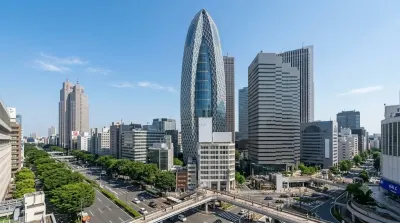
Views & landmarks
Mode Gakuen Cocoon Tower
This 50-story, 204-meter tower in Nishi-Shinjuku is actually an educational facility housing vocational schools for fashion, medicine, and IT. Its distinctive cocoon-shaped exterior makes it hard to miss while walking through Shinjuku's western skyscraper district; since it's a working school, the main draw is admiring and photographing its facade and night view from the street rather than going inside.
Views & landmarks
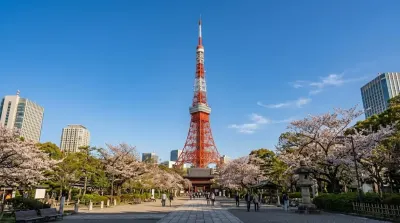
Tokyo Tower
Tokyo Tower is a communications and observation tower in Shiba Park, Minato Ward, completed in 1958. At 332.9 meters, it was Japan's tallest tower until Tokyo Skytree was built in 2012. Its lattice structure was inspired by the Eiffel Tower, and it is painted white and international orange in accordance with aviation safety regulations.
Shopping & districts
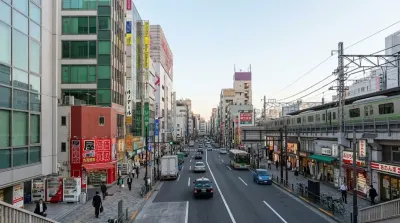
Akihabara
Akihabara is an electronics district in Tokyo's Chiyoda Ward and a hub of anime and gaming culture. Around Akihabara Station, large electronics stores, figure and merchandise shops, used game stores, and maid cafés cluster together, drawing travelers who want to browse the latest gadgets or shop for anime and manga goods.
Museums & galleries
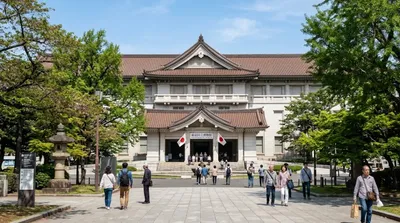
Tokyo National Museum
The Tokyo National Museum, located in Ueno Park, is Japan's oldest national museum and also its largest art museum. Its collection centers on ancient and medieval Japanese art along with Asian art that traveled the Silk Road, including a substantial number of Greco-Buddhist sculptures and artifacts from regions such as Gandhara.
More Tokyo guides
Best value
Where should you stay in Tokyo for the best value without losing convenience?
5-star & luxury
Which Tokyo neighborhood should you choose for a five-star hotel stay?
Pool villas & resorts
Where should you stay in Tokyo for a resort or pool hotel trip?
Family travel
Which Tokyo neighborhood should you stay in for a family trip?
Couples & honeymoon
Where Should Couples Stay in Tokyo for a Honeymoon Trip?
Central & near stations
Where should you stay in Tokyo if you want to be central and near a train station?
Best time to visit
When Is the Best Time to Visit Tokyo?
First-time guide
How should a first-time visitor plan a trip to Tokyo?
Getting around guides for other destinations
Guantánamo
How to Get Around Guantánamo and Travel from Antonio Maceo Airport
Cetinje
How to Get Around Cetinje and Travel from Podgorica Airport
North Nicosia
How to get around North Nicosia and travel from Larnaca Airport
Cienfuegos
How to get around Cienfuegos: transport options and airport transfers