Views & landmarks
St Mark's Campanile
What it is
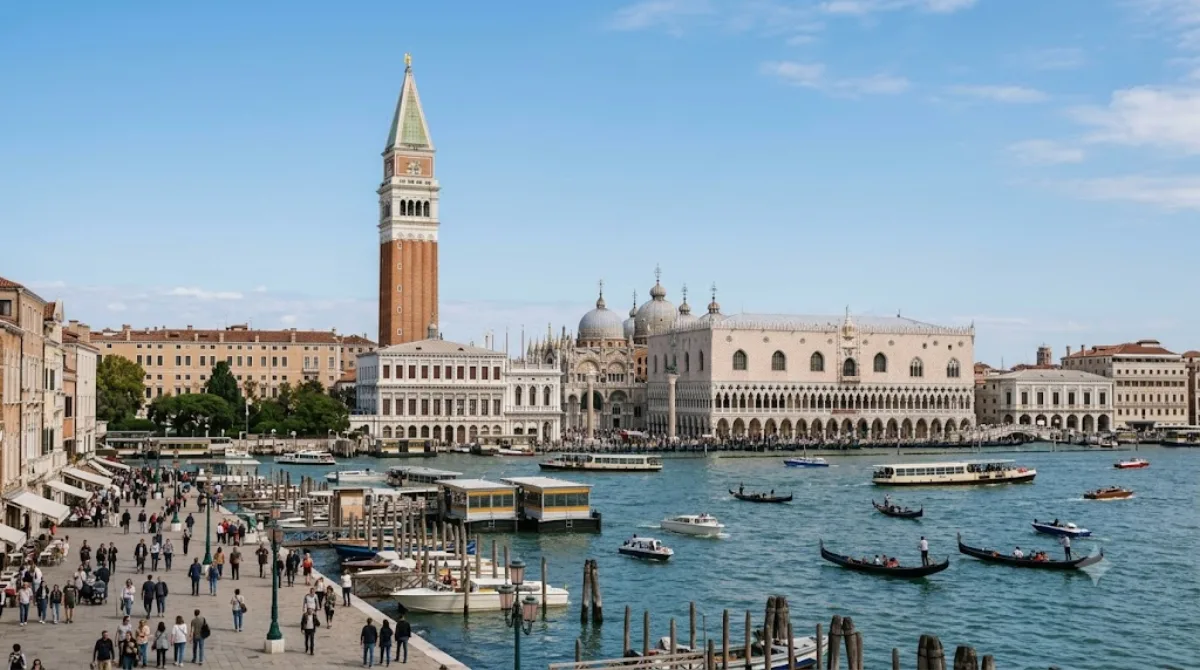
The bell tower of St Mark's Basilica, standing separately in Piazza San Marco. The current structure dates only to 1912 — it was rebuilt after the original collapsed in 1902 — but it occupies the same spot and has the same role: the tallest structure in Venice, and the one landmark visible from almost anywhere in the city or lagoon. People go up mainly for the view: an open-air platform looking over the piazza, the domes of the basilica, the rooftops of Venice, and out across the lagoon toward the islands.
Getting there and visiting
It sits right in Piazza San Marco, the city's main square, so if you're already anywhere near central Venice you can walk there in a few minutes. From the Rialto area, expect roughly a 15-20 minute walk; vaporetto lines serving San Marco/San Zaccaria stop close by. Once inside, an elevator takes you up, so the visit itself is short — allow about 30-45 minutes including the wait for the lift and time at the top.
When to go
Piazza San Marco is one of the busiest spots in Venice, and the campanile draws long queues, especially midday and in high season. Going early in the morning or later in the afternoon tends to mean shorter waits and softer light for photos. Clear days give the best visibility across the lagoon.
What to combine it with
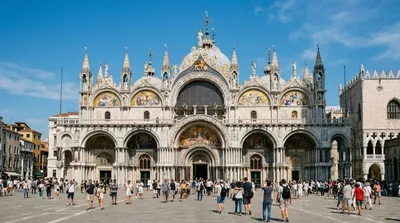
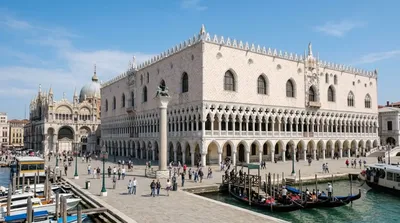
Everything of note here is within a couple of minutes' walk. St Mark's Basilica and the Doge's Palace are both about 0.1km away, making it easy to see all three in one outing, and St Mark's Clocktower sits on the same square. Piazza San Marco itself, at the base of the tower, is worth time on its own before or after going up.
Updated September 20, 2026 · Edited by the World by City editors
 GetYourGuide
 Klook
Klook
 Tiqets
 KKday
KKday
 WeGoTrip
 Booking.com
 Hotels.com