Tempel & Sakralbauten
Japanische Brücke
Japanese Bridge
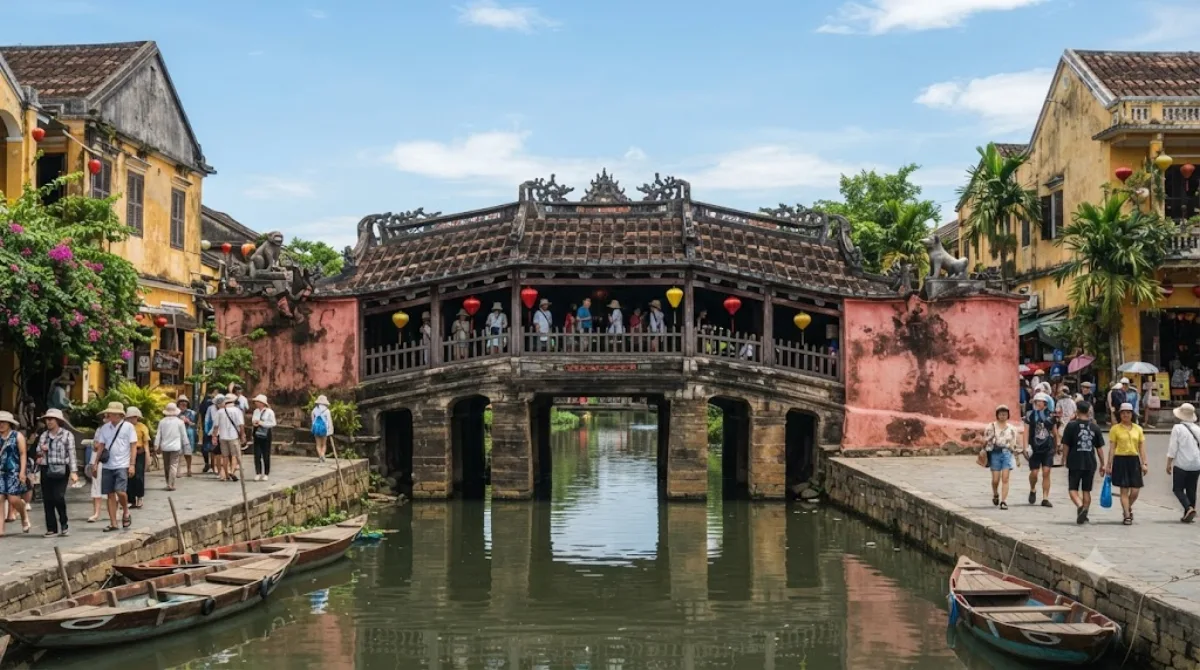
Die Japanische Brücke in Hoi An
Die Japanische Brücke ist eine überdachte Holzbrücke, die einen kleinen Bach in der Altstadt von Hoi An überspannt. In der Mitte der Konstruktion befindet sich ein kleiner Tempel. Die Brücke wurde vermutlich Ende des 16. Jahrhunderts von japanischen Händlern errichtet, die in der Region ansässig waren. Im Laufe der Zeit wurde das Bauwerk mehrfach repariert und restauriert, um seinen heutigen Zustand zu erhalten.
Anreise und Zeitplanung
Die Brücke liegt zentral in der historischen Altstadt. Da sie sich innerhalb des Fußgängerbereichs befindet, ist sie vom Stadtzentrum aus bequem zu Fuß erreichbar. Die Gehzeit beträgt je nach Startpunkt nur wenige Minuten.
Für den Besuch der Brücke und das Betrachten der Architektur sollten etwa 30 bis 60 Minuten eingeplant werden.
Besucherinformationen
Die Brücke ist ein beliebter Anlaufpunkt und wird daher oft sehr stark frequentiert. Um Menschenmengen zu vermeiden, empfiehlt sich ein Besuch in den frühen Morgenstunden. Die beste Reisezeit für die Region ist die Trockenzeit, um wetterbedingte Einschränkungen zu vermeiden.
Kombinationsmöglichkeiten
Aufgrund der zentralen Lage lassen sich weitere kulturelle Stätten in unmittelbarer Nähe besichtigen:
- Museum der Sa Huynh Kultur: 0,1 km entfernt
- Hoi An Museum: 0,4 km entfernt
- Museum für Handelskeramik: 0,4 km entfernt
- Precious Heritage Art Gallery Museum: 0,9 km entfernt
Aktualisiert 20. September 2026 · Redaktion die World by City-Redaktion
 GetYourGuide
 Klook
Klook
 Tiqets
 KKday
KKday
 WeGoTrip
 Booking.com
 Hotels.com