World by City

Natur

Vesuv-Observatorium

Vesuvius Observatory
Vesuv-Observatorium

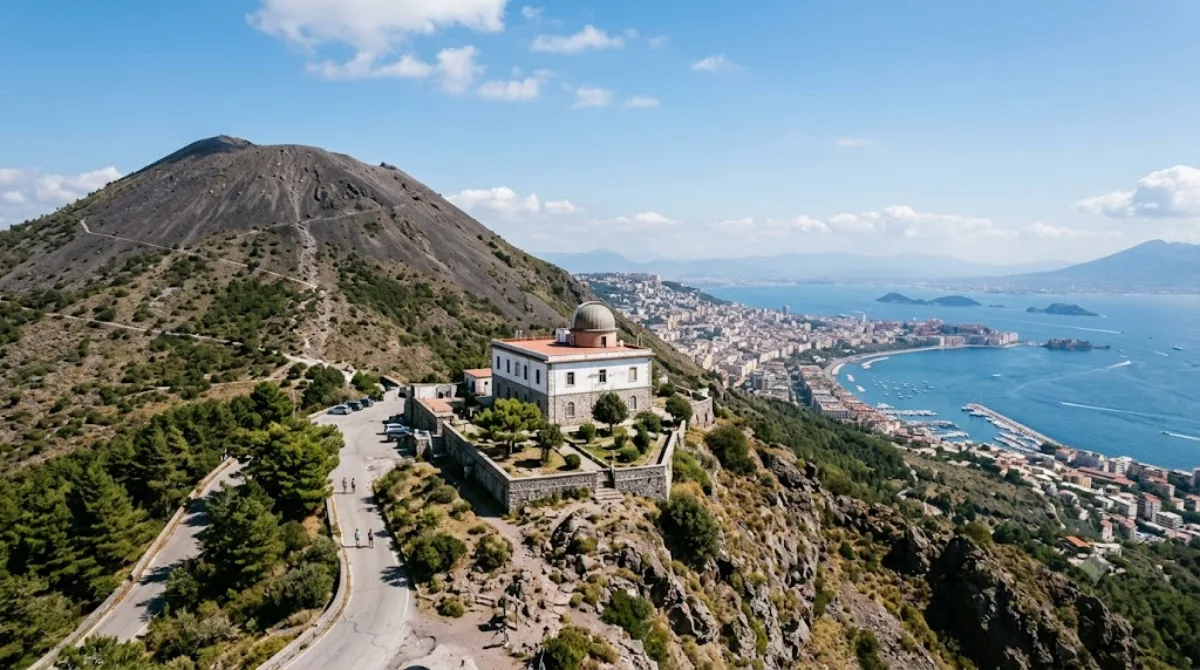
Das Vesuv-Observatorium ist ein wissenschaftliches Institut zur Erforschung und Beobachtung vulkanologischer und geophysikalischer Vorgänge und zur Beobachtung von Vulkanen. Zu seinen Aufgaben gehört insbesondere die Beobachtung der Gebiete Kampaniens mit aktivem Vulkanismus.

Vesuvius Observatory

This is the historic seismological and volcanological institute built on the slopes of Mount Vesuvius, founded in 1841 to monitor the volcano. It is one of the oldest institutions of its kind, and its original building still stands on the mountain, though the working scientific center has since moved into Naples. Visitors come mainly for the building itself and its setting on the volcano's slope, along with exhibits on its history of observing eruptions, rather than for an active research facility.

Getting there

The observatory sits on the upper slopes of Vesuvius, reached by the same access road used to approach the crater rim. From central Naples, allow around 45 minutes to an hour by car or organized tour, following the road up through the Vesuvius National Park. There is no direct public transit line to the observatory itself; most visitors arrive as part of a Vesuvius crater excursion, whether self-driven, by tour bus, or via a taxi/shuttle combination from Naples or the Circumvesuviana train stations at Ercolano or Pompei.

How much time to allow

A visit to the observatory building and its immediate grounds takes roughly 30 to 45 minutes. Most people combine it with the walk up to the Vesuvius crater rim, which adds a couple of hours round trip depending on pace and stops.

When to go

Mornings tend to be clearer and cooler for the uphill walk, and the crater area can get busy with tour groups by midday, especially in summer. Weather on the mountain changes quickly, so clear conditions are worth checking before setting out, since cloud and wind can limit visibility at the top.

Combine with

Given the distances listed for this area of Naples, the observatory is not within easy walking range of the other nearby sites, which cluster closer to the coast: Bagnoli (1.5km), the Cave of Dogs (2km), Posillipo (2.4km), and Nisida (3.2km). These are better treated as a separate day along the western coastline, while a Vesuvius visit is best planned as its own outing focused on the volcano and crater.

Quellen: offene Daten von Wikipedia und OpenStreetMap · Aktualisiert 5. August 2026 · Redaktion die World by City-Redaktion

Tickets & Touren

Eintrittspreise und Öffnungszeiten ändern sich häufig und stehen daher nicht hier. Unten sehen Sie, was gerade angeboten wird – vorab buchen spart mancherorts Wartezeit.

Dieser Ort erscheint womöglich nicht in den Ergebnissen – manche Ziele sind kostenlos oder verkaufen nur vor Ort.

Unterkünfte nahe Vesuv-Observatorium

Nach Entfernung sortiert, fußläufige zuerst. Angaben als Luftlinie.

Karte © OpenStreetMap-Mitwirkende. Linien sind Luftlinien, keine echten Routen.

Vesuv-Observatorium Unterkünfte in der Nähe

Lage und Namen stammen aus OpenStreetMap. Preise und Verfügbarkeit bitte auf den Buchungsseiten prüfen.

Passt gut dazu

Bagnoli

Shopping & Viertel

Bagnoli

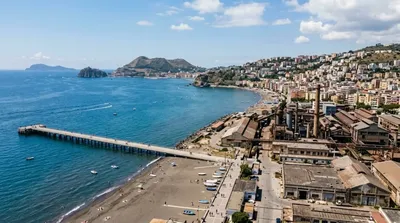
Bagnoli ist der 18. von den 30 Stadtteilen (Quartieri) der süditalienischen Hafenstadt Neapel. Er liegt am Meer in der Bucht von Pozzuoli und gehört zur westlichen Peripherie Neapels.

1.5 km entfernt

Grotta del Cane

Natur

Grotta del Cane

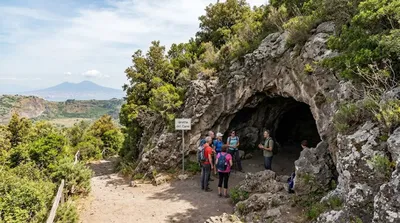
Die Grotta del Cane, deutsch Hundsgrotte oder Hundehöhle, ist eine zu der Gruppe der Mofetten zählende Lavahöhle in den Phlegräischen Feldern, westlich von Neapel. Die Höhle ist etwa 8 bis 9 Meter lang und am Eingang 2 Meter hoch und 1,1 Meter breit. Der Boden fällt nach hinten ab, so dass der Eingang der höchste Punkt der Höhle ist.

2.0 km entfernt

Posillipo

Shopping & Viertel

Posillipo

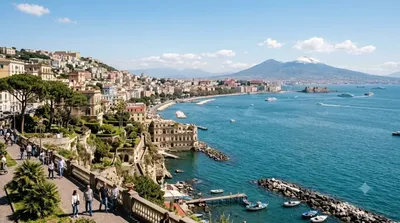
Posillipo ist der 15. von den 30 Stadtteilen (Quartieri) der süditalienischen Hafenstadt Neapel. Er liegt westlich des historischen Zentrums und gehört sozioökonomisch gesehen zu den wohlhabenden Stadtteilen von Neapel.

2.4 km entfernt

Nisida

Natur

Nisida

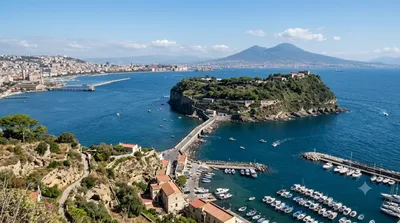
Nisida ist mit einer Oberfläche von 29 ha nach Ischia, Capri, Procida und Vivara die fünftgrößte Insel im Golf von Neapel. Trotz ihrer geringen Größe ist die Insel aus historischen Gründen und wegen ihrer reizvollen Lage bedeutsam.

3.2 km entfernt

Solfatara

Natur

Solfatara

Die Solfatara ist ein holozänes Trockenmaar im Stadtgebiet von Pozzuoli. Das Maar liegt in Luftlinie etwa 9 km westlich des Stadtkerns der italienischen Großstadt Neapel und hat einen Durchmesser zwischen 610 und 710 m. Es bedeckt eine Fläche von etwa 35 Hektar und weist an drei Seiten steile bis zu 80 m hohe Wände auf. Im Süden öffnet sich die Umrandung in Richtung Stadt und auf den Golf von Neapel. Unter dem Maar liegt ein etwa 3 km tiefer Schlot. An der Solfatara liegt das etwas mehr als 4 ha große NATURA 2000 Naturschutzgebiet Stazioni di Cyanidium caldarium di Pozzuoli, das einzige Schutz...

3.7 km entfernt

Phlegräische Felder

Natur

Phlegräische Felder

Die Phlegräischen Felder sind ein etwa 20 km westlich des Vesuvs gelegenes dichtbesiedeltes Gebiet mit hoher vulkanischer Aktivität in der italienischen Region Kampanien. Die Phlegräischen Felder sind ein klassisches Beispiel eines Vulkanfeldes und werden als Supervulkan eingestuft. Sie lösten die größte explosive Eruption der letzten 200.000 Jahre im Mittelmeerraum aus. Der bislang letzte Ausbruch auf den Phlegräischen Feldern fand 1538 mit der Monte-Nuovo-Eruption statt.

3.7 km entfernt