Nature
Vesuvius Observatory
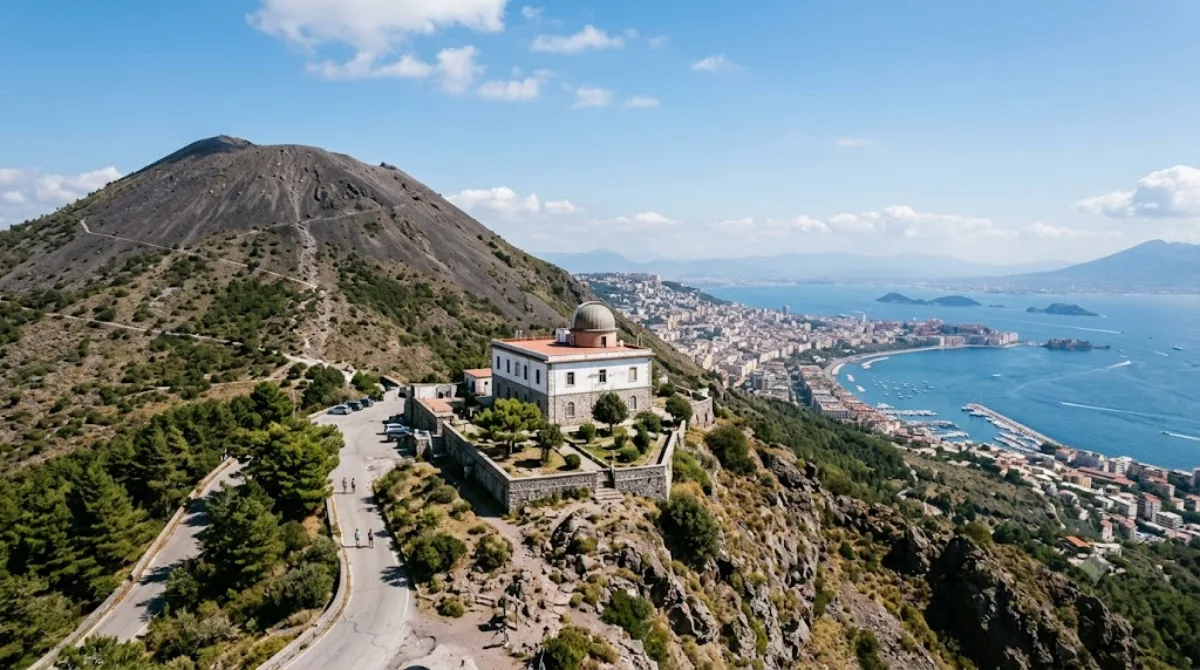
Vesuvius Observatory
This is the historic seismological and volcanological institute built on the slopes of Mount Vesuvius, founded in 1841 to monitor the volcano. It is one of the oldest institutions of its kind, and its original building still stands on the mountain, though the working scientific center has since moved into Naples. Visitors come mainly for the building itself and its setting on the volcano's slope, along with exhibits on its history of observing eruptions, rather than for an active research facility.
Getting there
The observatory sits on the upper slopes of Vesuvius, reached by the same access road used to approach the crater rim. From central Naples, allow around 45 minutes to an hour by car or organized tour, following the road up through the Vesuvius National Park. There is no direct public transit line to the observatory itself; most visitors arrive as part of a Vesuvius crater excursion, whether self-driven, by tour bus, or via a taxi/shuttle combination from Naples or the Circumvesuviana train stations at Ercolano or Pompei.
How much time to allow
A visit to the observatory building and its immediate grounds takes roughly 30 to 45 minutes. Most people combine it with the walk up to the Vesuvius crater rim, which adds a couple of hours round trip depending on pace and stops.
When to go
Mornings tend to be clearer and cooler for the uphill walk, and the crater area can get busy with tour groups by midday, especially in summer. Weather on the mountain changes quickly, so clear conditions are worth checking before setting out, since cloud and wind can limit visibility at the top.
Combine with
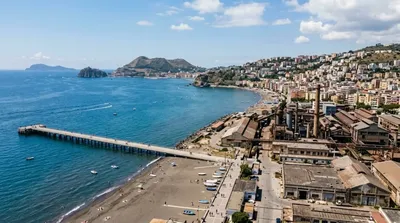
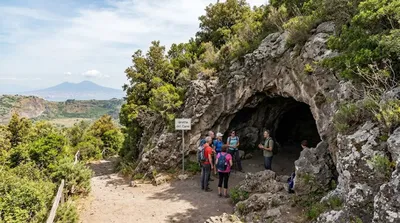
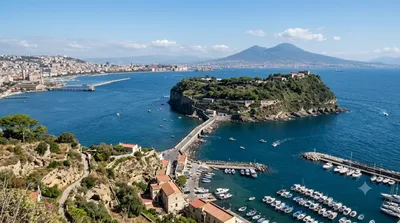
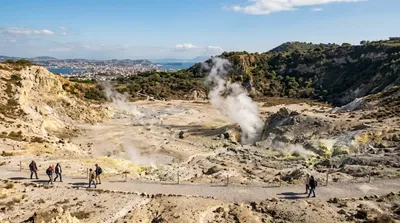
Given the distances listed for this area of Naples, the observatory is not within easy walking range of the other nearby sites, which cluster closer to the coast: Bagnoli (1.5km), the Cave of Dogs (2km), Posillipo (2.4km), and Nisida (3.2km). These are better treated as a separate day along the western coastline, while a Vesuvius visit is best planned as its own outing focused on the volcano and crater.
Updated September 20, 2026 · Edited by the World by City editors
 GetYourGuide
 Klook
Klook
 Tiqets
 KKday
KKday
 WeGoTrip
 Booking.com
 Hotels.com