
Bissau · First-time guide
How to Navigate Bissau on Your First Visit: Districts, Transport, and Planning
August 29, 2026 · last updated · about 3 min read
Understanding the City Layout
Bissau sits on the Geba River estuary. The capital is compact and divided into three key areas:
- Bissau Velho: The old colonial core near the port, marked by fading Portuguese architecture, quiet streets, and the waterfront.
- The Central Plaza: Anchored by Praça dos Heróis da Pátria, hosting key government ministries, banks, and the cathedral.
- Bandim: The commercial district northeast of downtown, defined by the sprawling Mercado de Bandim.
Airport Arrival and Transport
Osvaldo Vieira International Airport lies northwest of town. Taxis wait outside arrivals; negotiate your destination and agree on a private hire before boarding, as cabs do not use meters.
- Taxis: Blue-and-white cabs take shared passengers along main routes or run as private hires (corridas). Specify a private trip before departing.
- Toca-Tocas: Shared minibuses on set suburban routes. They are crowded and unsuited for travelers with bags.
What First-Timers Get Wrong
- Relying on cards: Card payments are virtually nonexistent and ATMs frequently fail. Bring cash in euros to exchange for West African CFA francs.
- Photographing sensitive sites: Taking pictures of soldiers, police, ministries, or the Fortaleza de São José da Amura is strictly forbidden.
- Neglecting ferry schedules: Boats to the Bijagós Archipelago depend on tides and limited weekly slots. Check schedules at the port right away.
Sensible First-Trip Flow
Spend your first day walking through Bissau Velho and the central plaza, securing cash and confirming port ferry schedules. Dedicate day two to Mercado de Bandim. Save trips to Quinhamel or the Bijagós Islands for later days.
Pick your dates — we'll search Bissau hotels for you
Choose dates and guests, and the buttons below will open search results with your criteria. Prices differ between sites, so compare before you book.
 View on Booking.com
 View on Hotels.com
Things to see in Bissau
See all →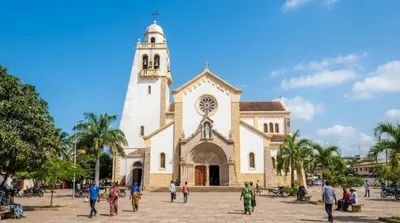
Temples & religious sites
The Cathedral of Bissau
This Catholic cathedral in the heart of Bissau serves as the center of Guinea-Bissau's Catholic Church. It also doubles as a lighthouse, making it a distinctive sight.
Castles & palaces
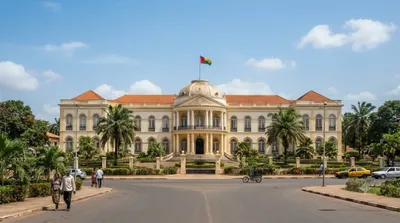
Presidential Palace, Bissau
This presidential palace in Bissau, the capital of Guinea-Bissau, was once one of the city's grandest buildings. It was heavily damaged during the 1998-99 civil war and now stands in ruins.
Castles & palaces
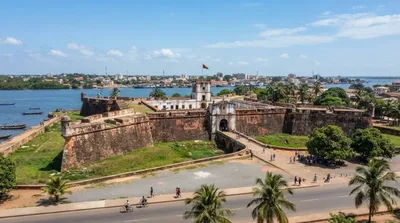
Fortaleza de São José da Amura
This fortress in Bissau, the capital of Guinea-Bissau, once defended the West African coastal city. It's a good spot to explore while learning about the city's history.
Temples & religious sites
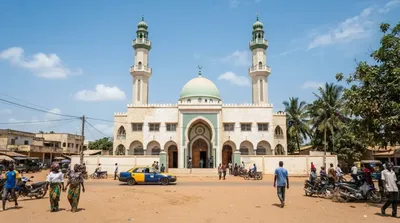
Mesquita de Attadamun
This is Bissau's largest mosque, serving as the center of the city's faith and community life. An adjoining school makes it a place of local education as well as worship.
More Bissau guides
Best value
Where to stay in Bissau for the best value
5-star & luxury
Where to Stay in Bissau for Luxury and High-End Accommodation
Pool villas & resorts
Where to stay in Bissau for pool villas and resort accommodations
Family travel
Where to Stay in Bissau with Family: Best Areas and Booking Advice
Couples & honeymoon
Where to stay in Bissau for a couple's trip or honeymoon
Central & near stations
Where to stay in Bissau for central access and local transport links
Best time to visit
When is the best time to visit Bissau, Guinea-Bissau?
Getting around
How to get around Bissau by taxi, minibus, and airport transfer
First-time guide guides for other destinations
Guantánamo
First-Timer Guide to Guantánamo, Cuba: Layout, Transport, and Practical Tips
Cetinje
How to Plan Your First Trip to Cetinje: Layout, Transport, and Key Sights
North Nicosia
First-timer's guide to visiting North Nicosia: borders, layout, and transit
Cienfuegos
First-Timer Guide to Cienfuegos: Layout, Transport, and Practical Tips