Museums & galleries
Boboli Gardens
What it is
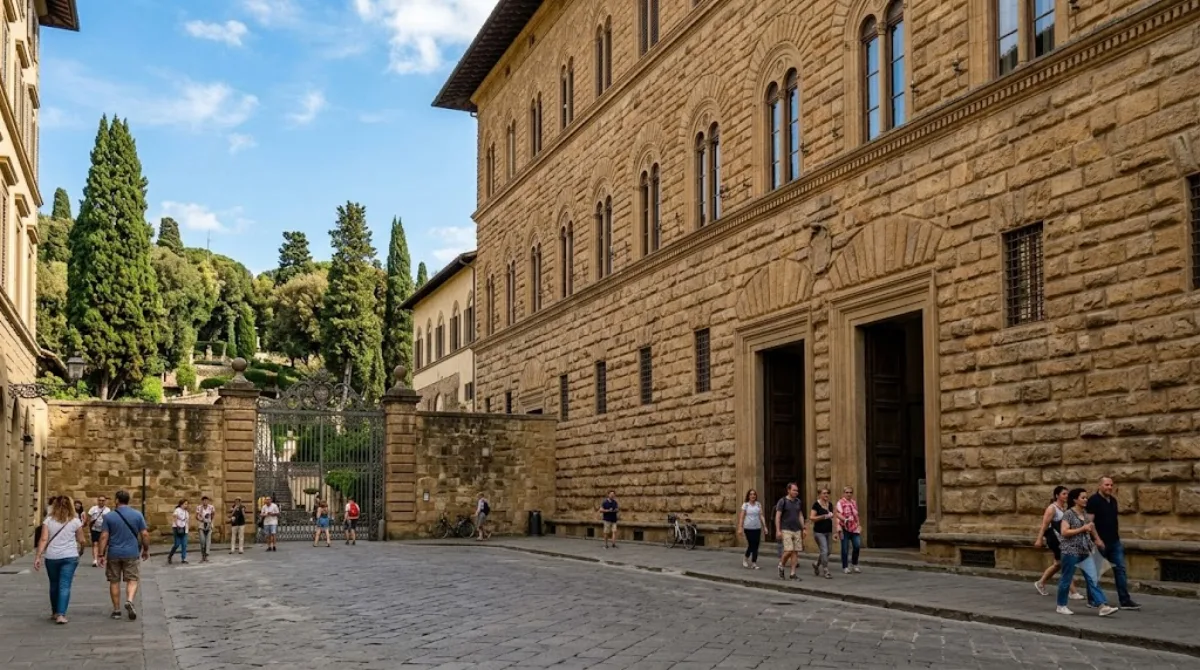
The Boboli Gardens are the formal gardens behind Palazzo Pitti, laid out for the Medici family starting in the mid-16th century. Rather than a single sight, it's a hillside park of clipped hedges, long avenues, and terraces, dotted with Renaissance and Baroque statuary, fountains, and artificial grottoes. It's worth visiting for the landscape design itself and the views over Florence from the upper terraces, more than for any single artwork.
Getting there
The entrance is part of the Palazzo Pitti complex on the south side of the Arno, a walk of about 15-20 minutes from the Duomo through the Oltrarno district, crossing at Ponte Vecchio. There's no need for public transport if you're staying centrally.
Time to allow
Plan on 1.5 to 2.5 hours. The gardens are large and hilly, with real elevation change between the lower parterre and the upper Forte di Belvedere viewpoint, so a full loop takes longer than the map suggests.
When to go
Go earlier in the day, especially in spring and autumn when the gravel paths and shade make walking comfortable. Summer afternoons can be hot with little shade in the open sections. The gardens draw fewer crowds than the Uffizi or Palazzo Pitti's interior museums, but paths near the main entrance and amphitheater get busy when tour groups pass through.
What to combine it with
- Palazzo Pitti shares the same grounds, so it pairs naturally either before or after.
- Santo Spirito (0.3km) is a short walk away in the same neighborhood, good for a quieter church visit afterward.
- Ponte Vecchio (0.4km) is on the walking route back toward the city center.
- Uffizi Gallery (0.5km) can be combined on the same day, though it deserves separate time given its size.
Updated September 20, 2026 · Edited by the World by City editors
 GetYourGuide
 Klook
Klook
 Tiqets
 KKday
KKday
 WeGoTrip
 Booking.com
 Hotels.com